Adding Wet Compression to Existing Fog System Eagle Point Power Generation – Westville, NJ
Case Study: Eagle Point Power Generation (EPPG) in Westville, NJ is a 225 MW combined-cycle facility with two GE Frame 7EA turbine generators.
Existing Customers Call 626-359-4550 Or Visit Customer Care

Wet compression is the process of injecting pure water fog into the inlet of a gas turbine engine to boost power output and improve heat rate. Unlike upstream fogging, which cools and densifies the inlet air before it reaches the compressor, wet compression injects atomized water directly into the gas turbine compressor. The droplets evaporate inside the compressor, cooling the air and reducing the work required for compression. This effect frees more energy for the output shaft, resulting in higher power production. Every one percent of injected water (relative to air mass flow) can yield a 5% to 10% power boost.
Challenge
Standard inlet air cooling can recover power lost during hot weather, but its evaporative cooling effect is limited by ambient wet-bulb conditions and cannot cool the inlet air below the saturation point.
Solution
Result
A nearly instant power boost of up to 20%, an improvement in heat rate of up to 10%, and a reduction in NOx emissions by up to 30%.
Click the different areas of the diagram below to learn more information about our system.
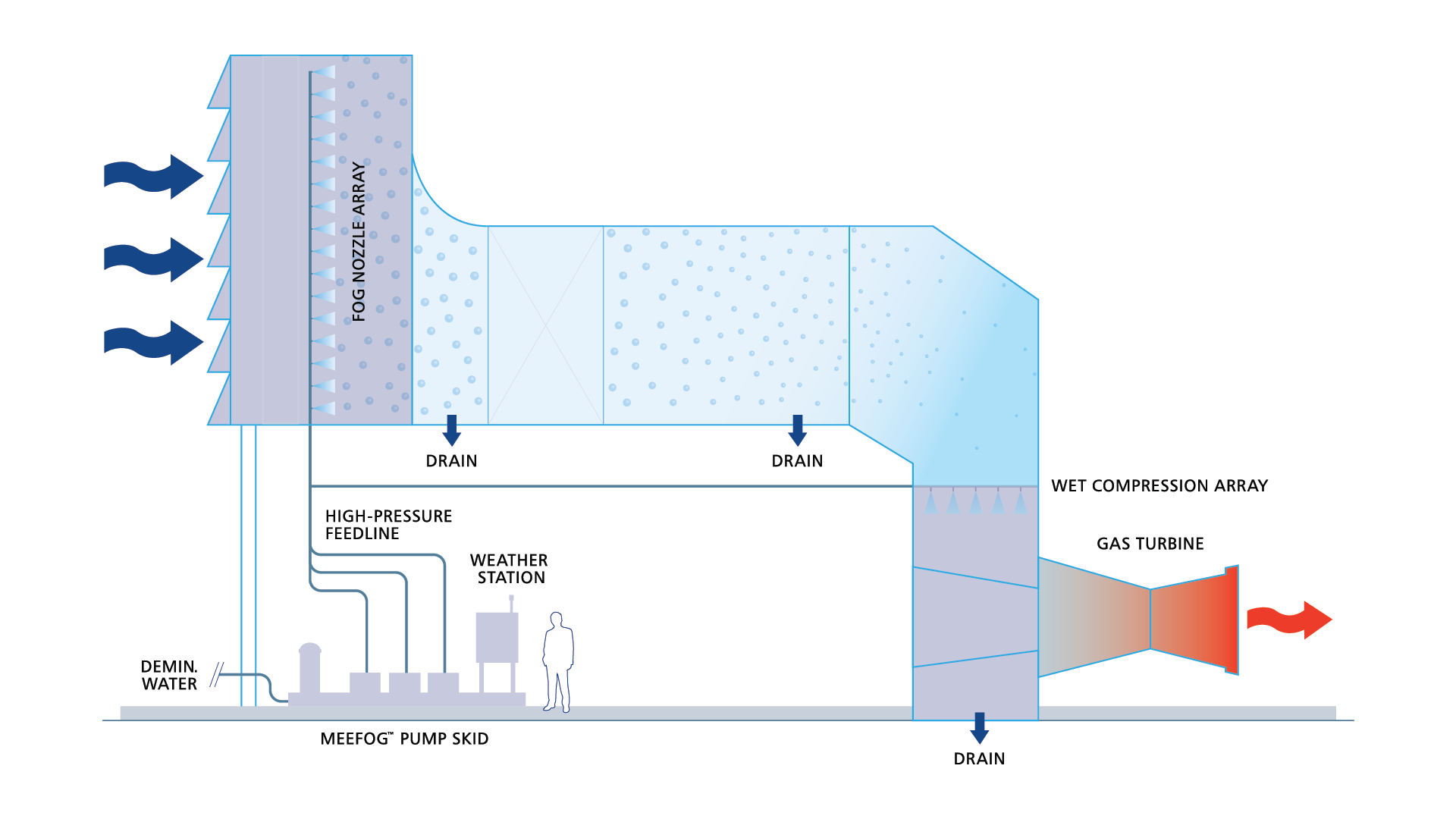
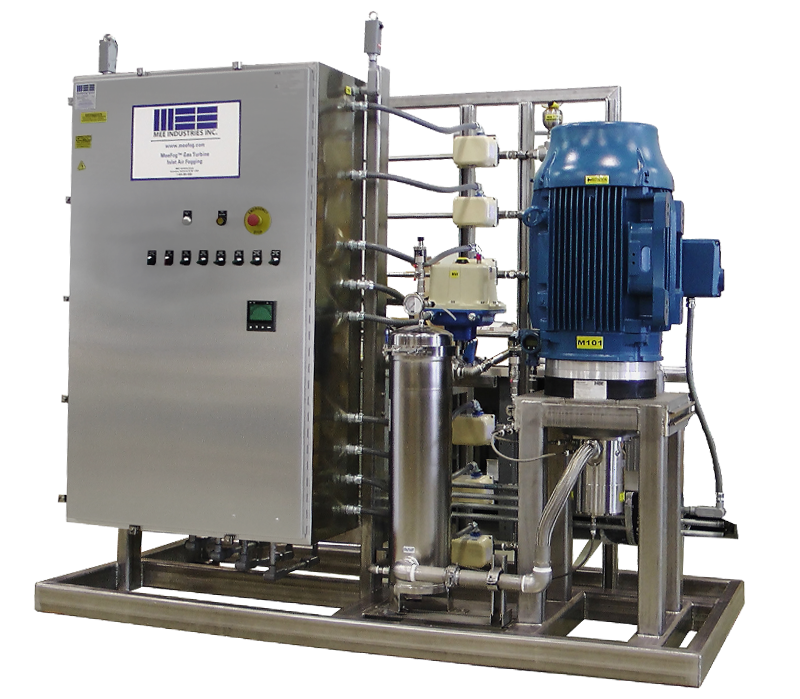
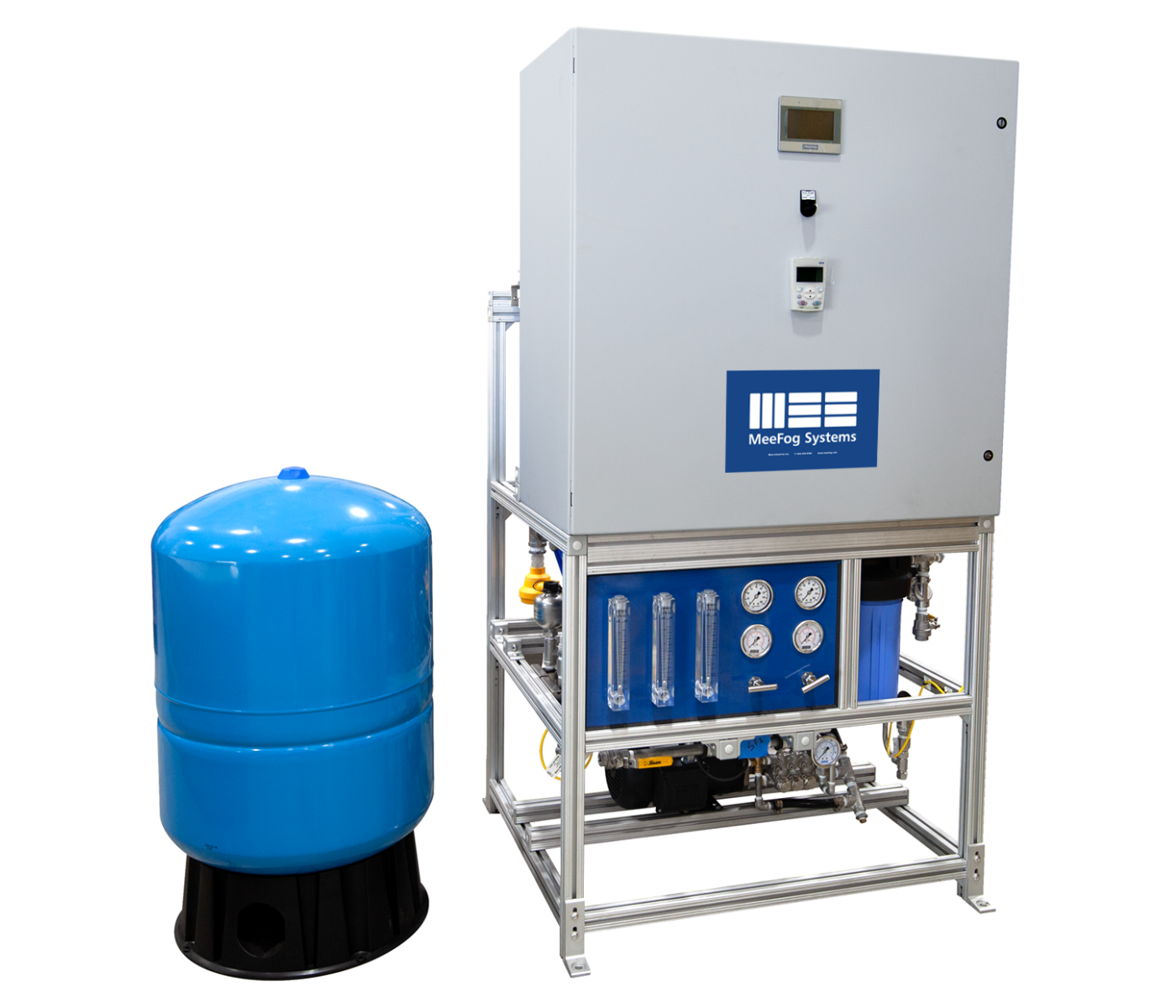
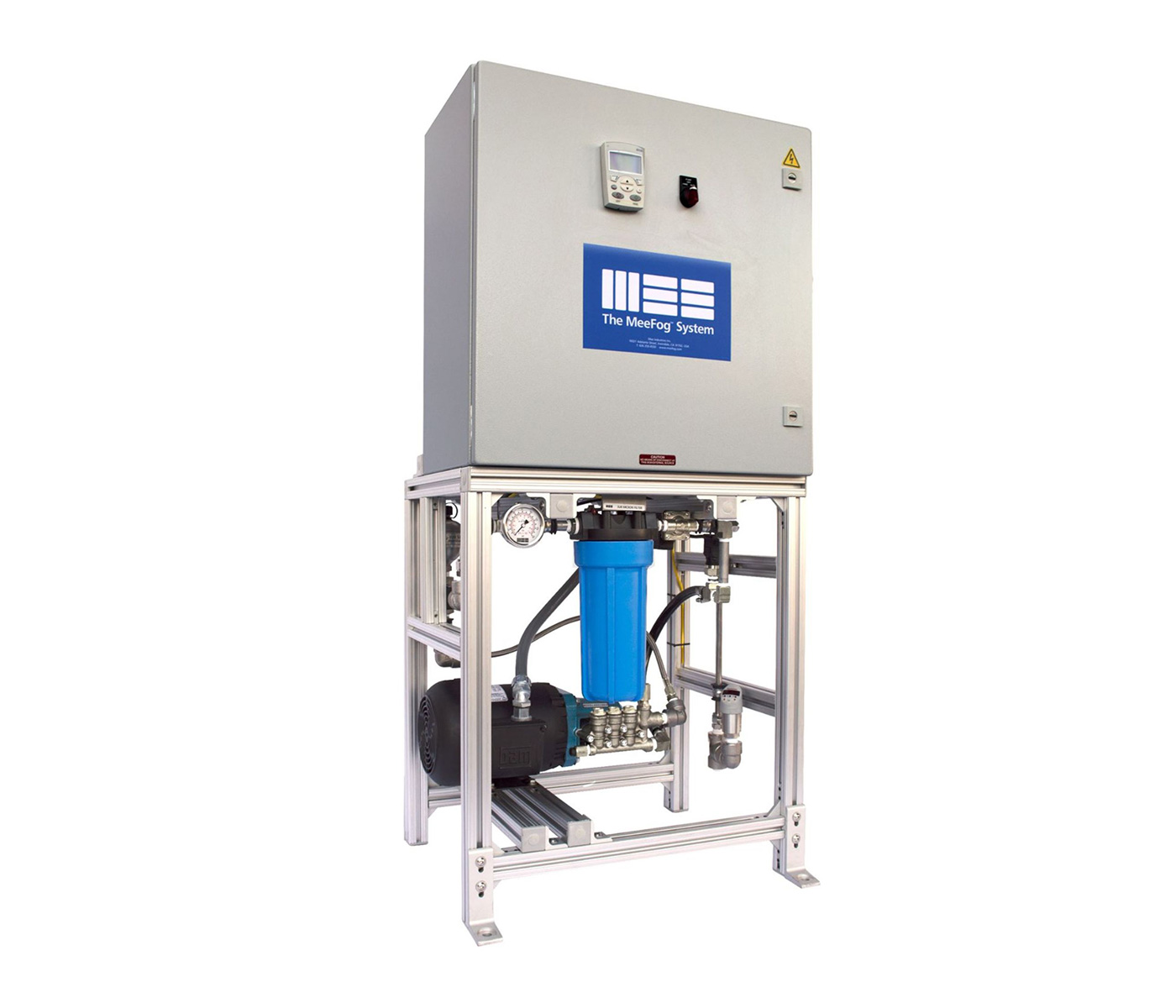
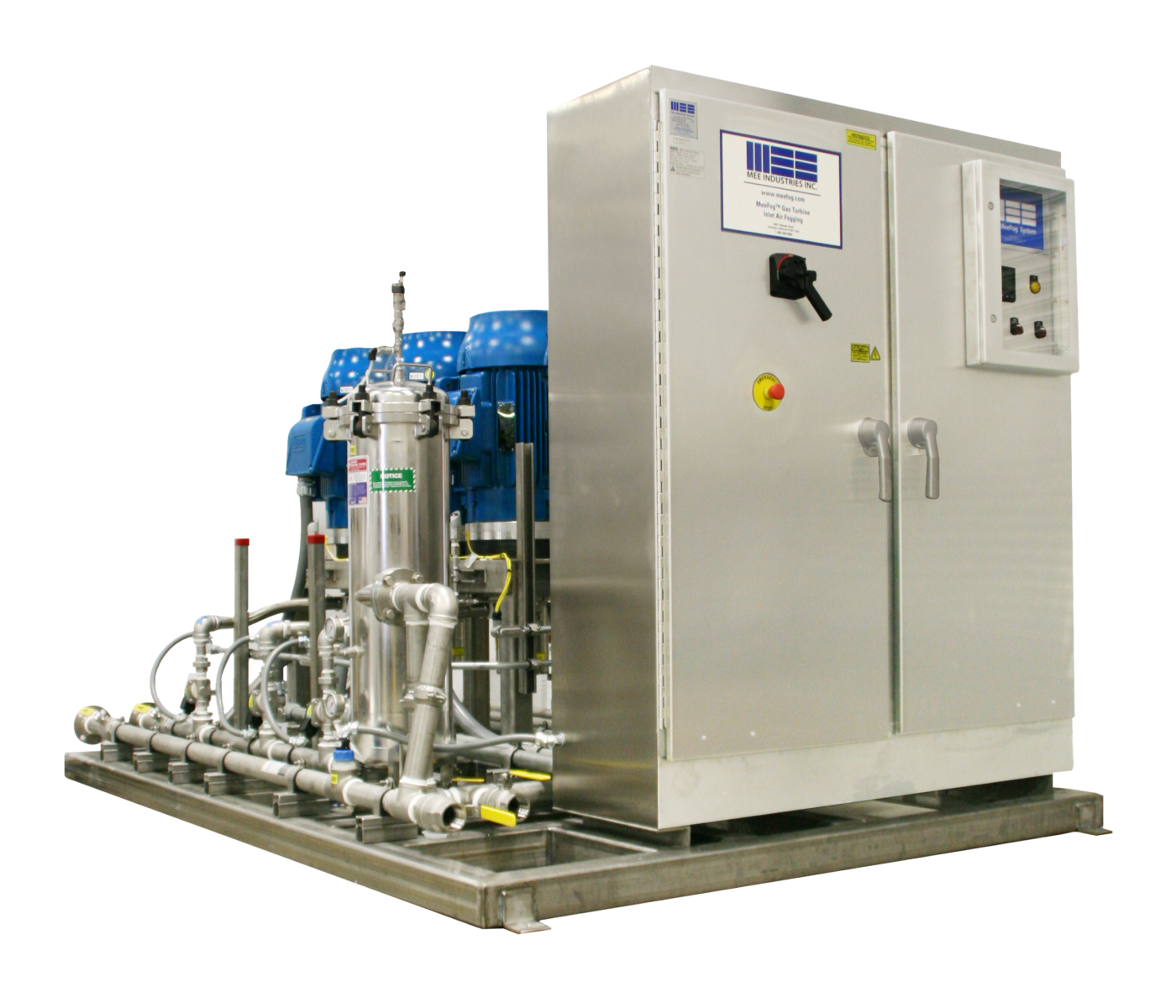
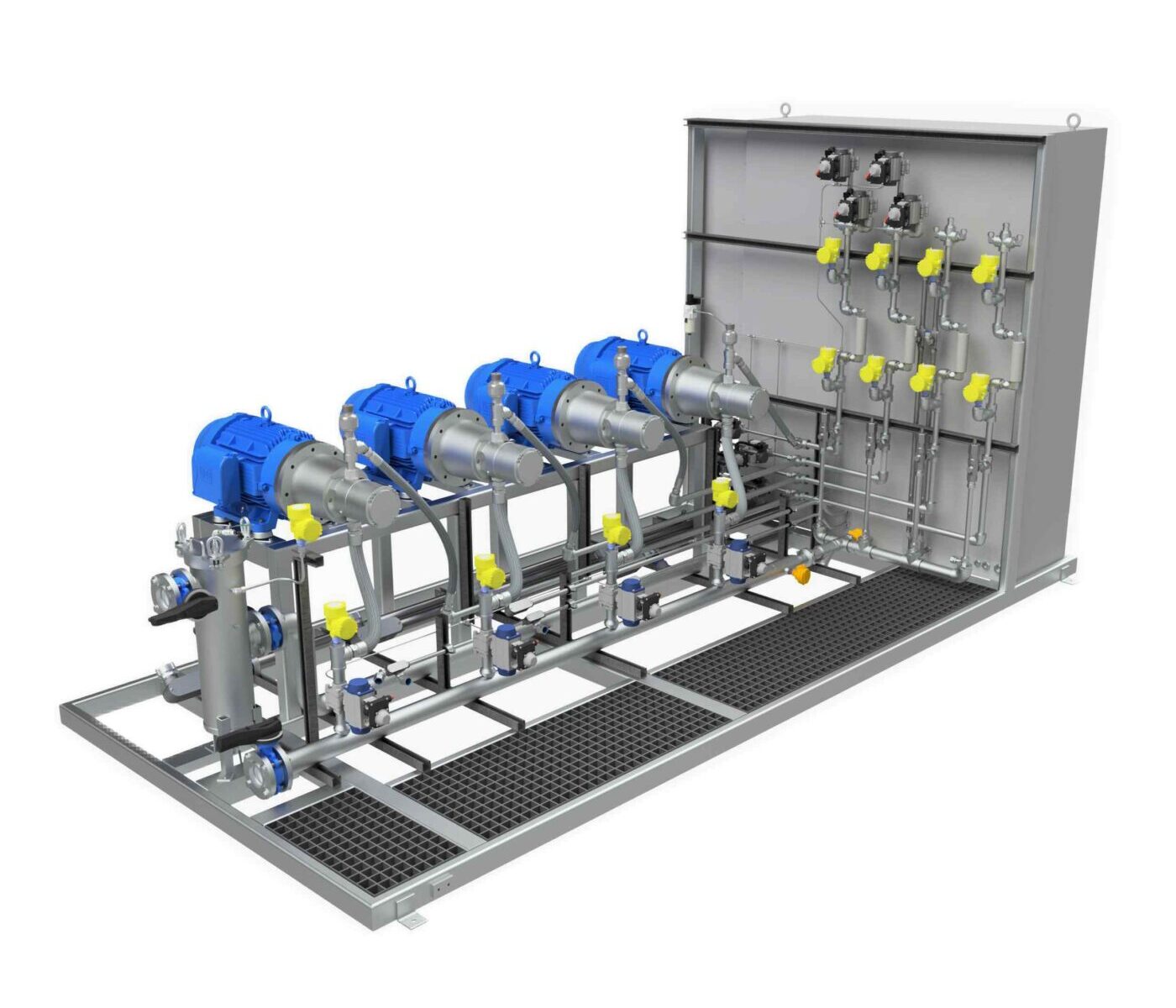
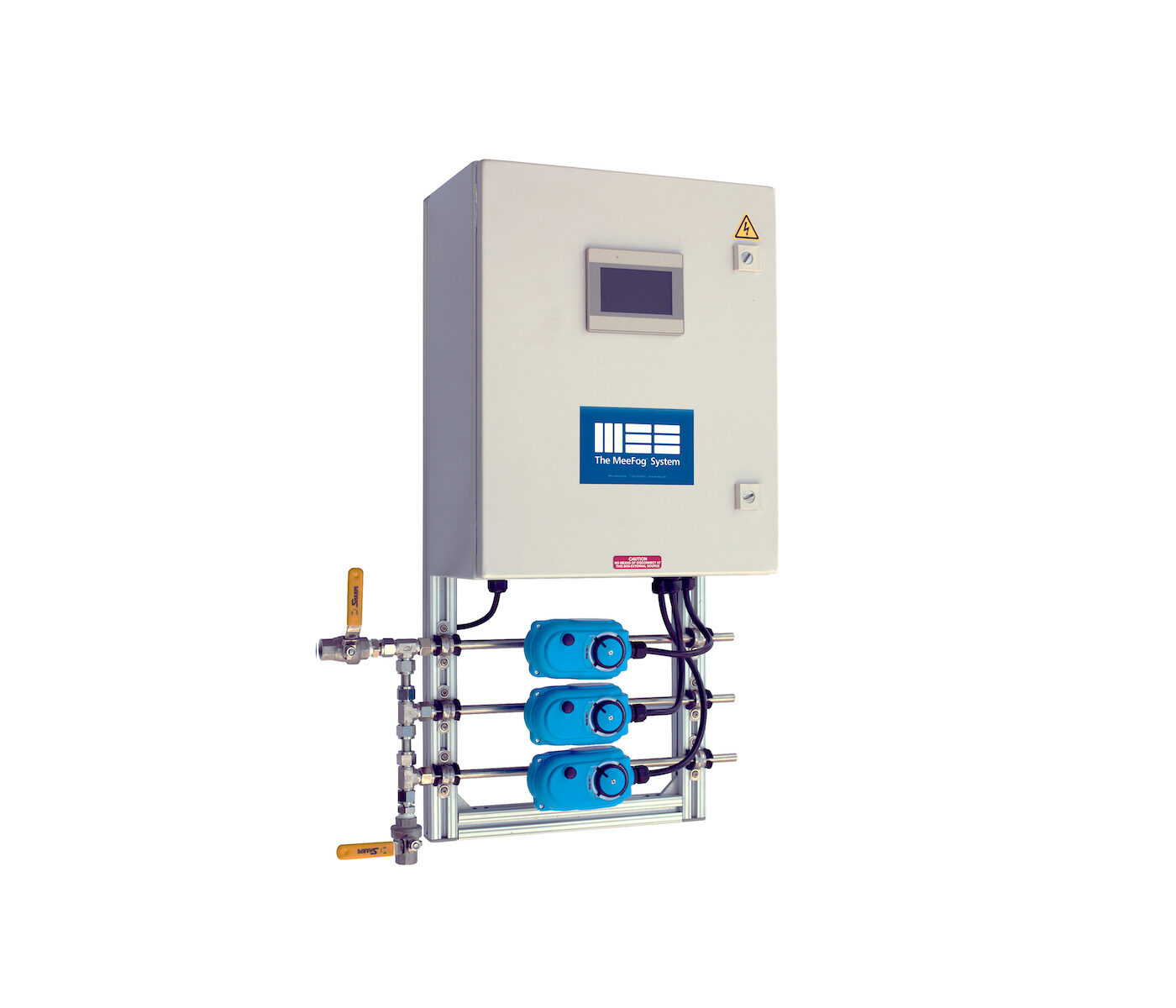
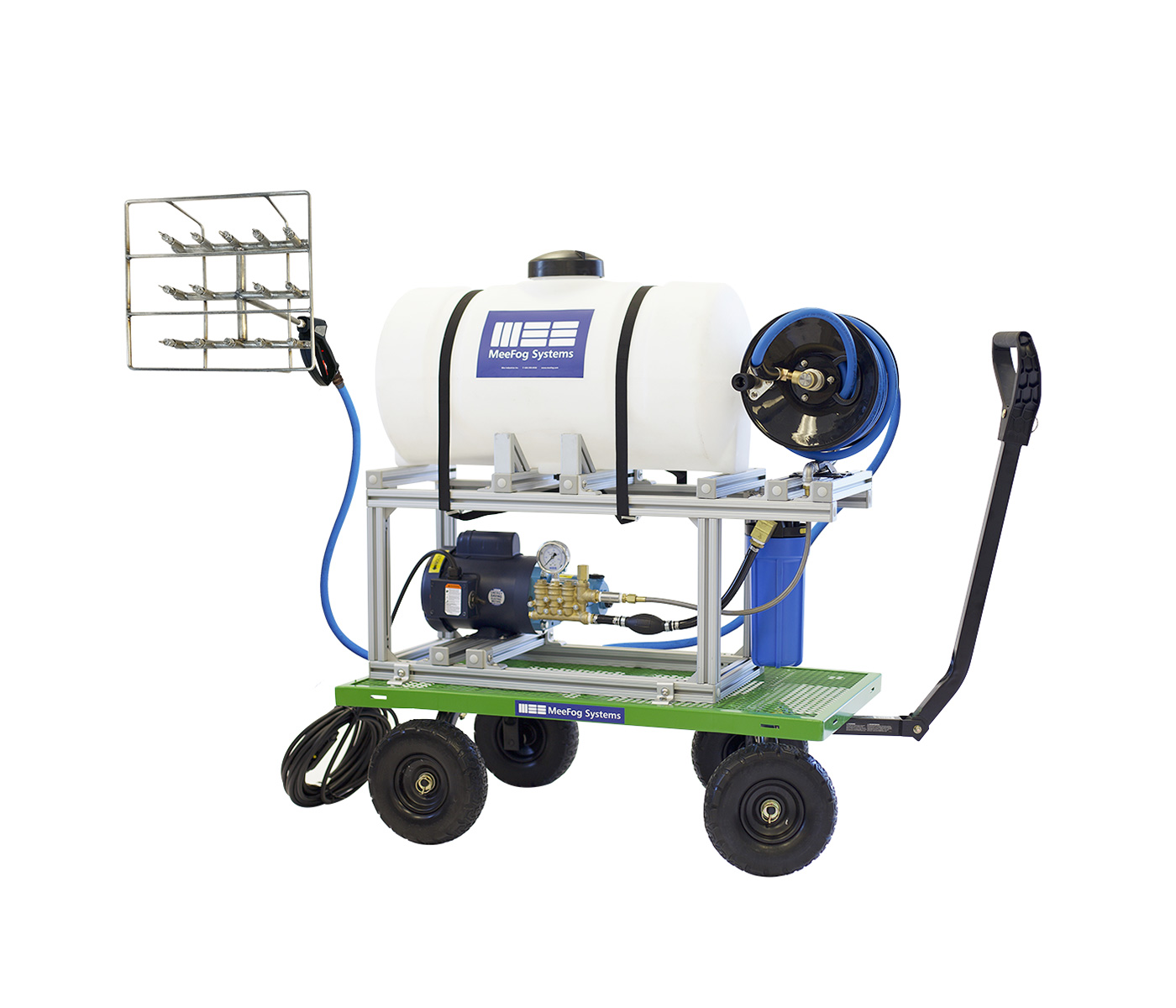
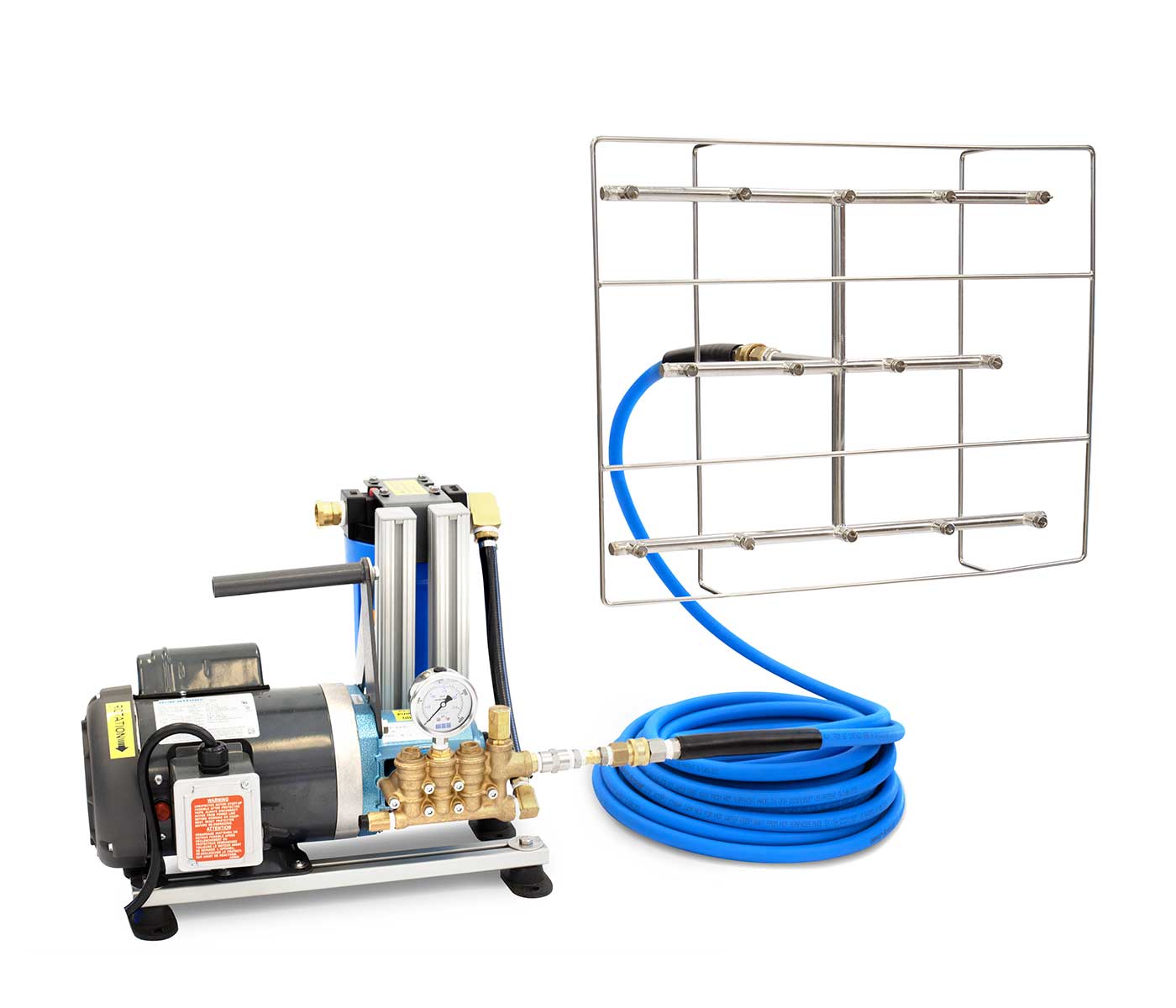
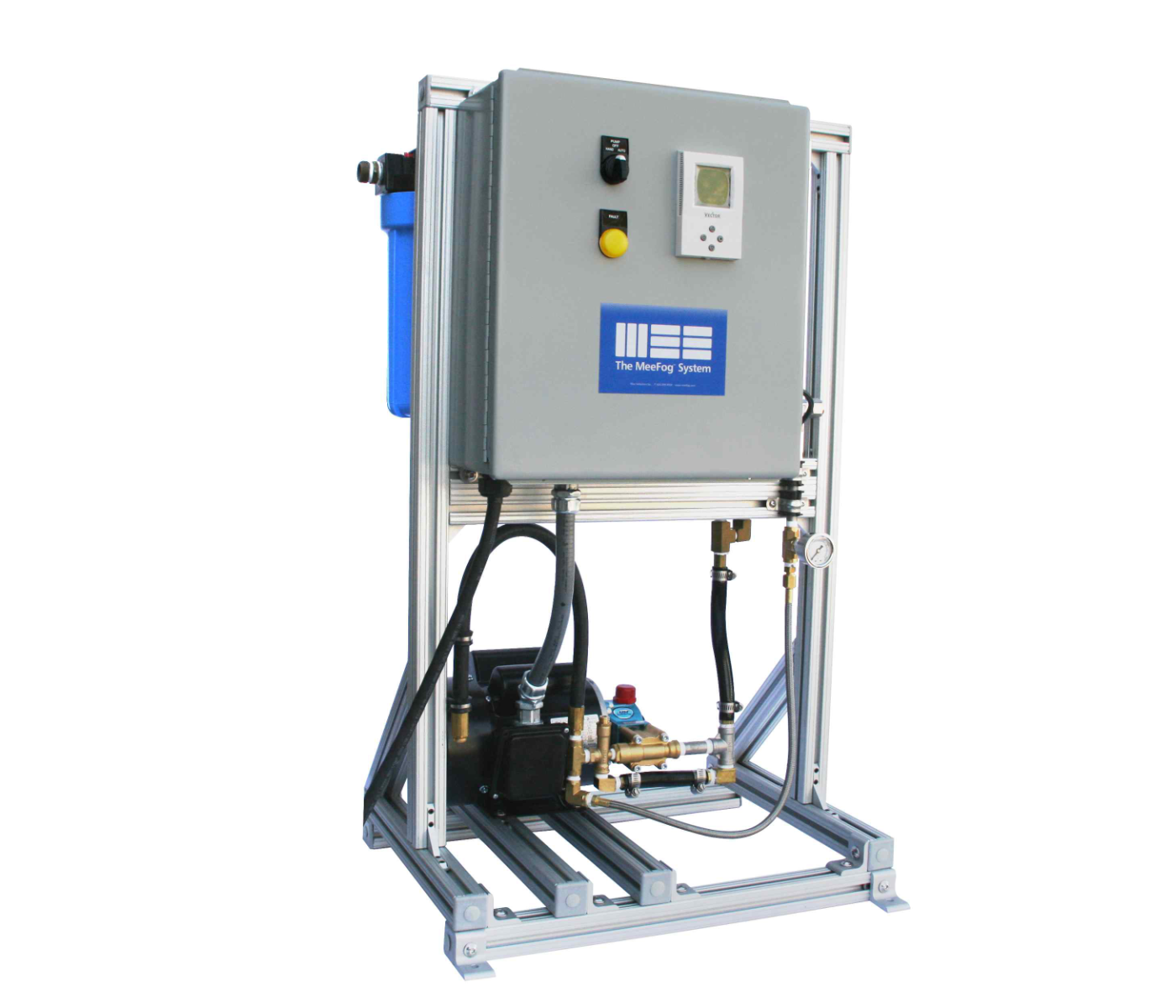
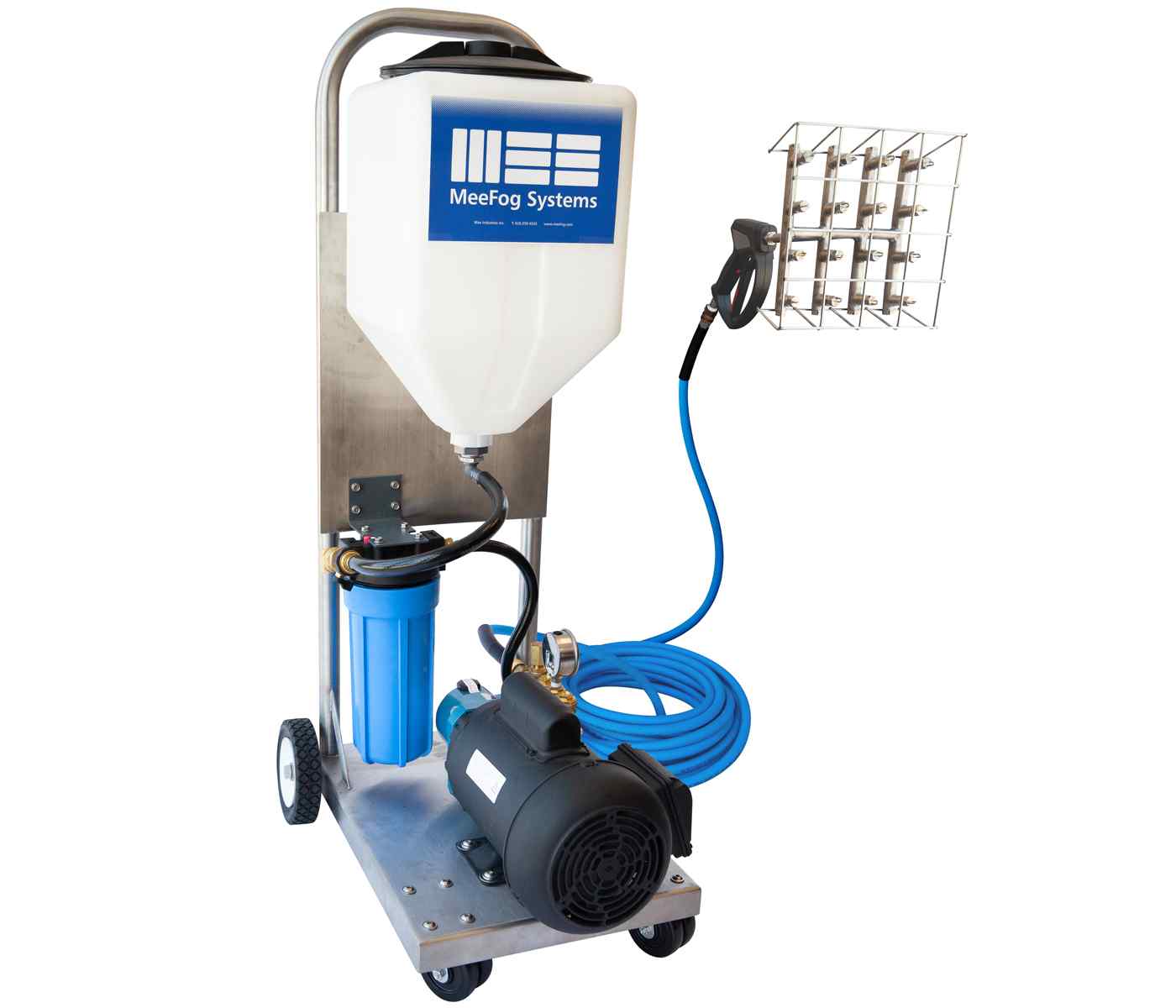
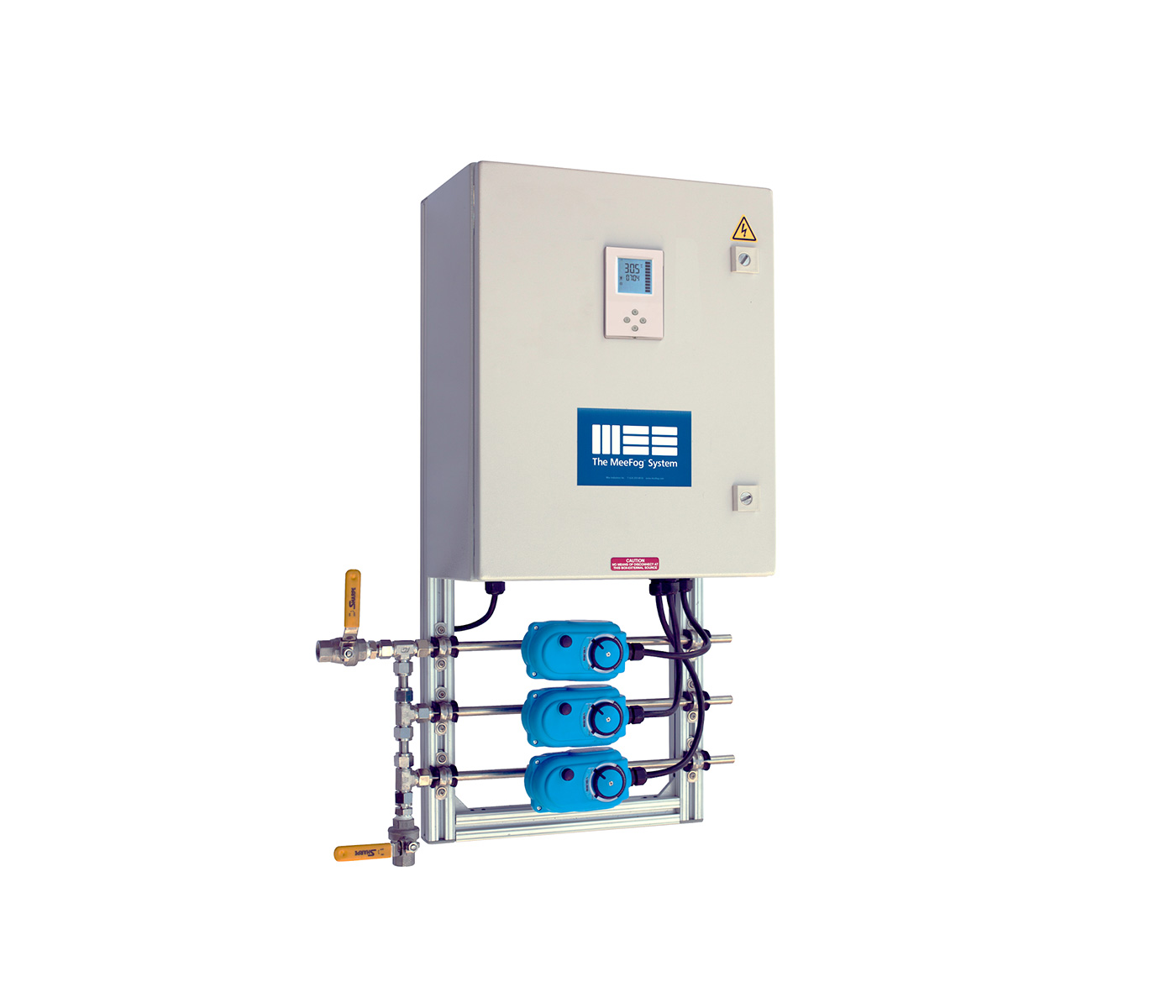
Stainless-steel welded frame with oversized inlet water filter. Water lubricated direct drive pumps means no oil or drive belts to change. Variable frequency drives are used to reduce flow for staging.
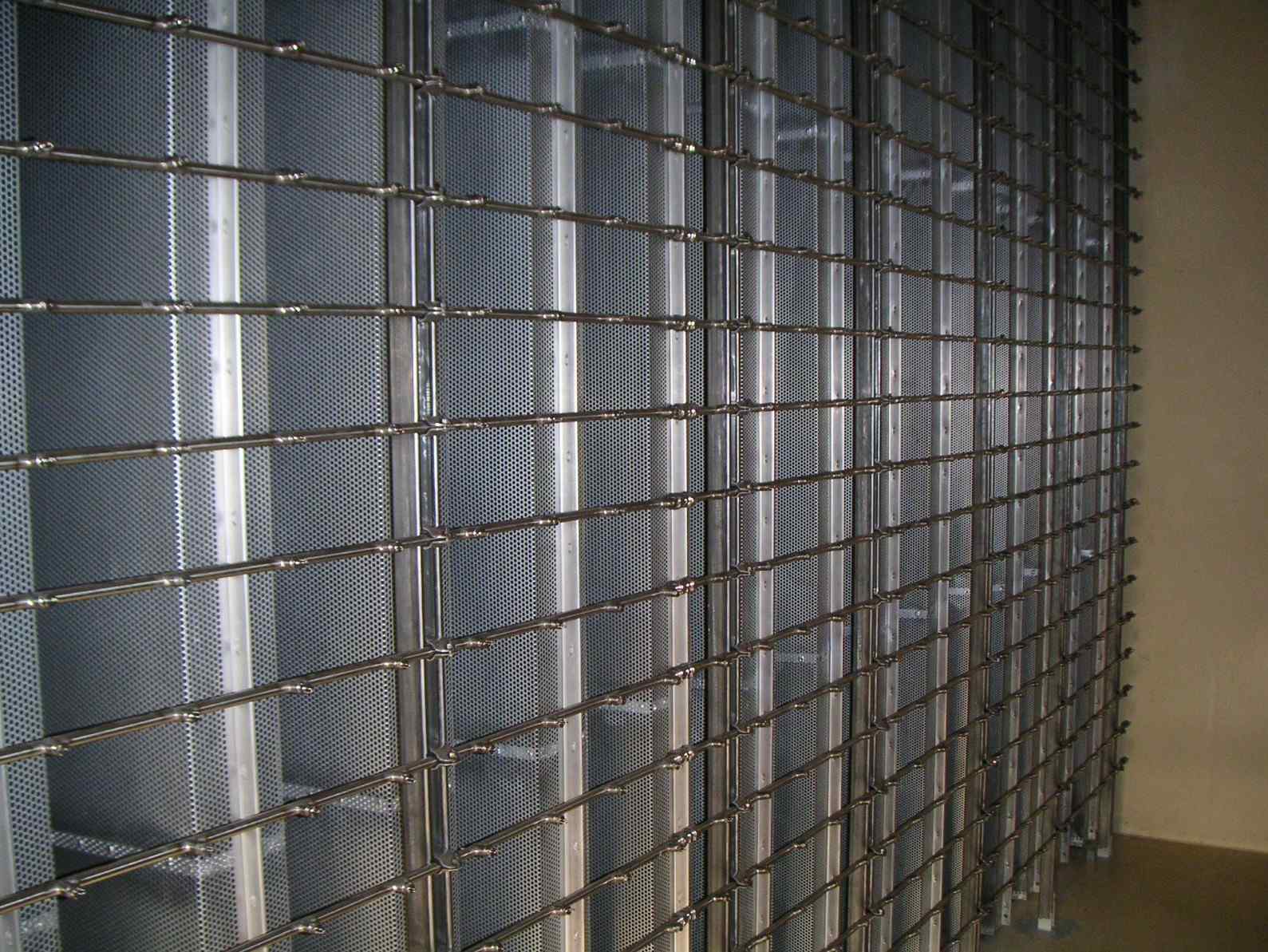
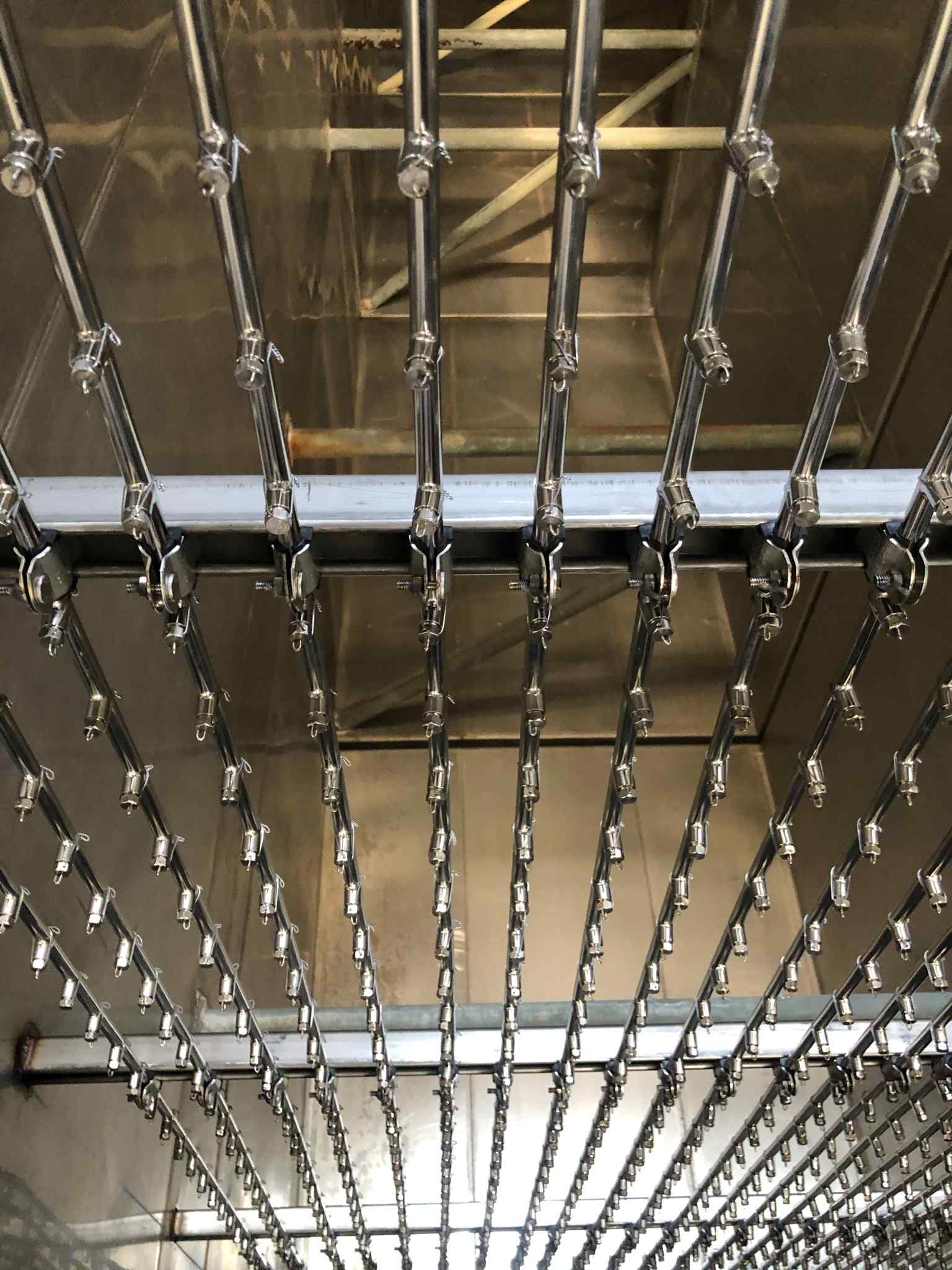
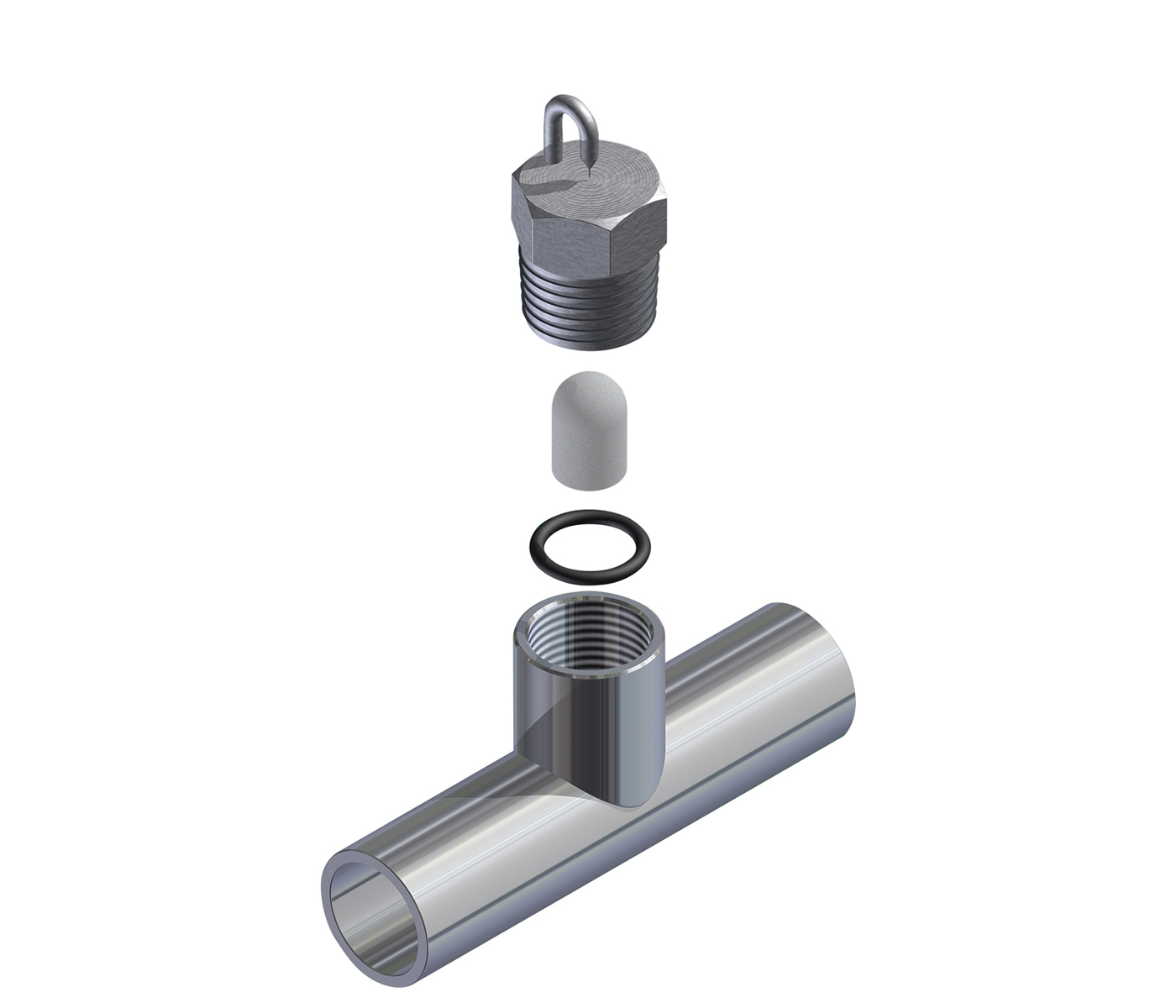
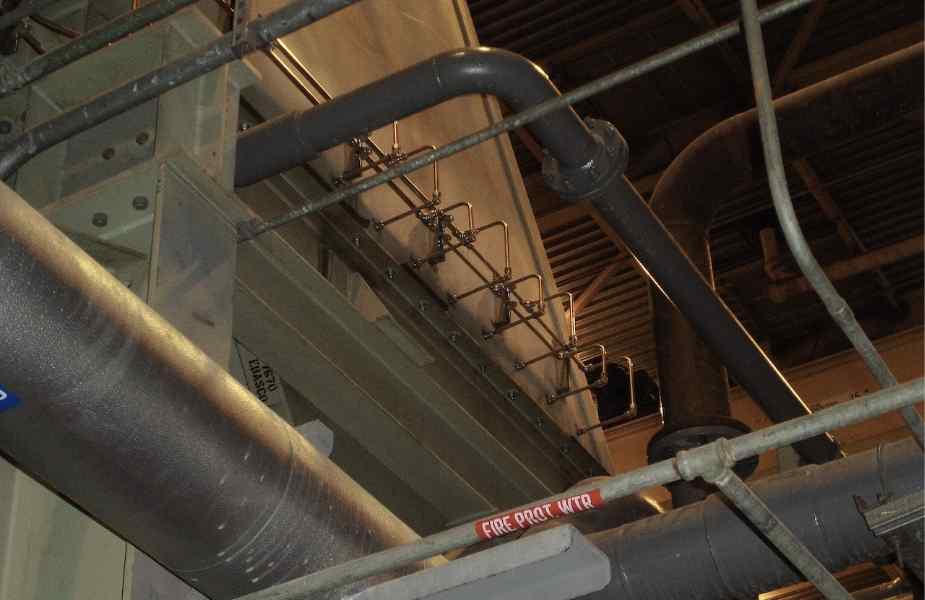
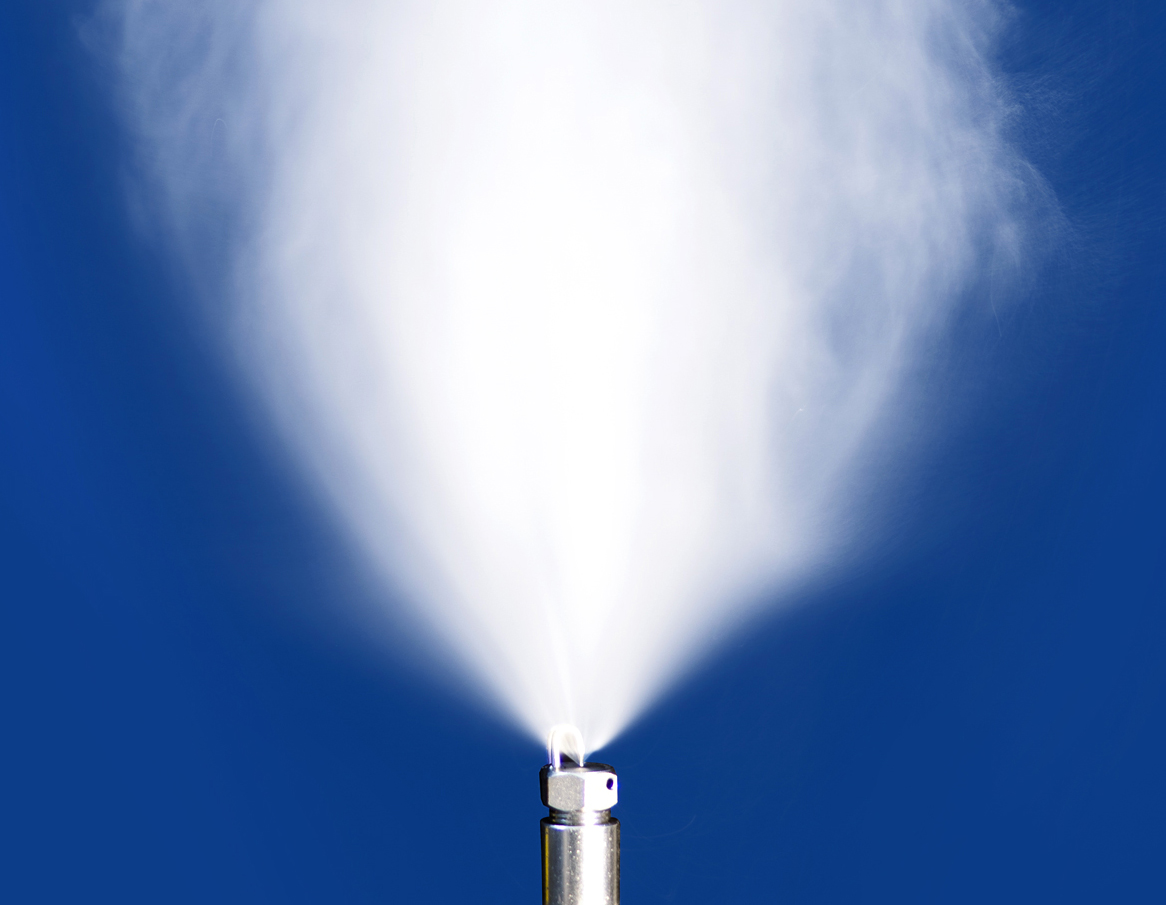
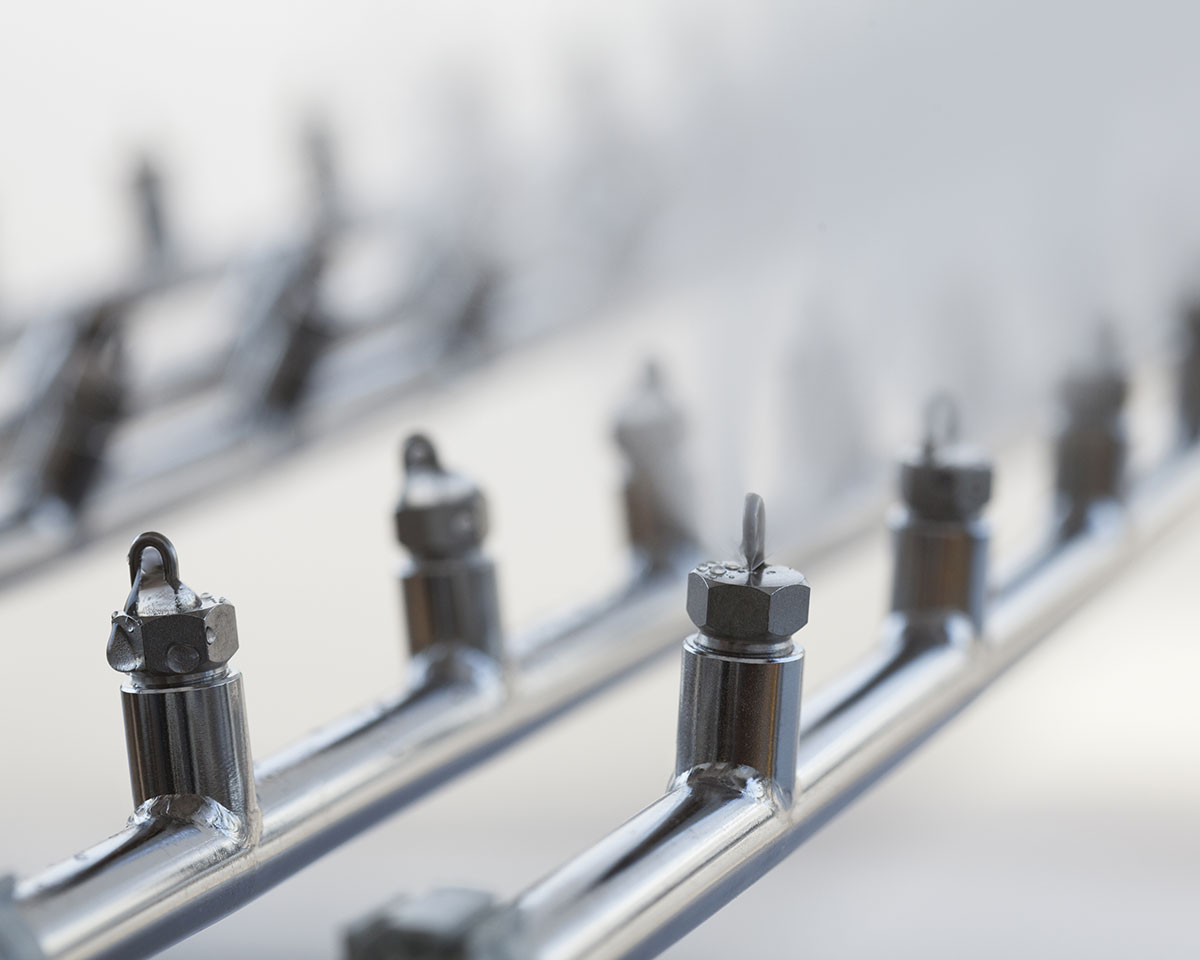
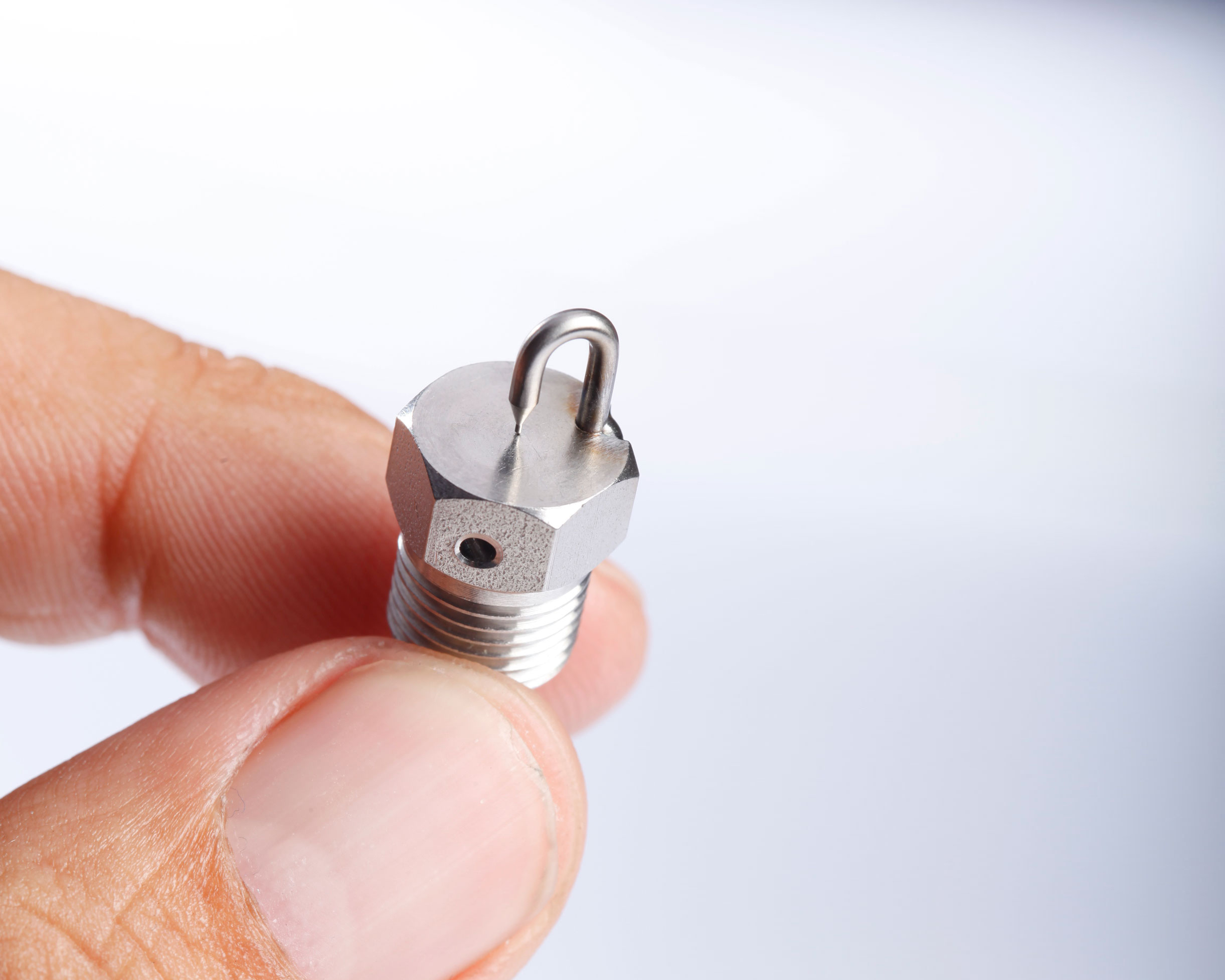
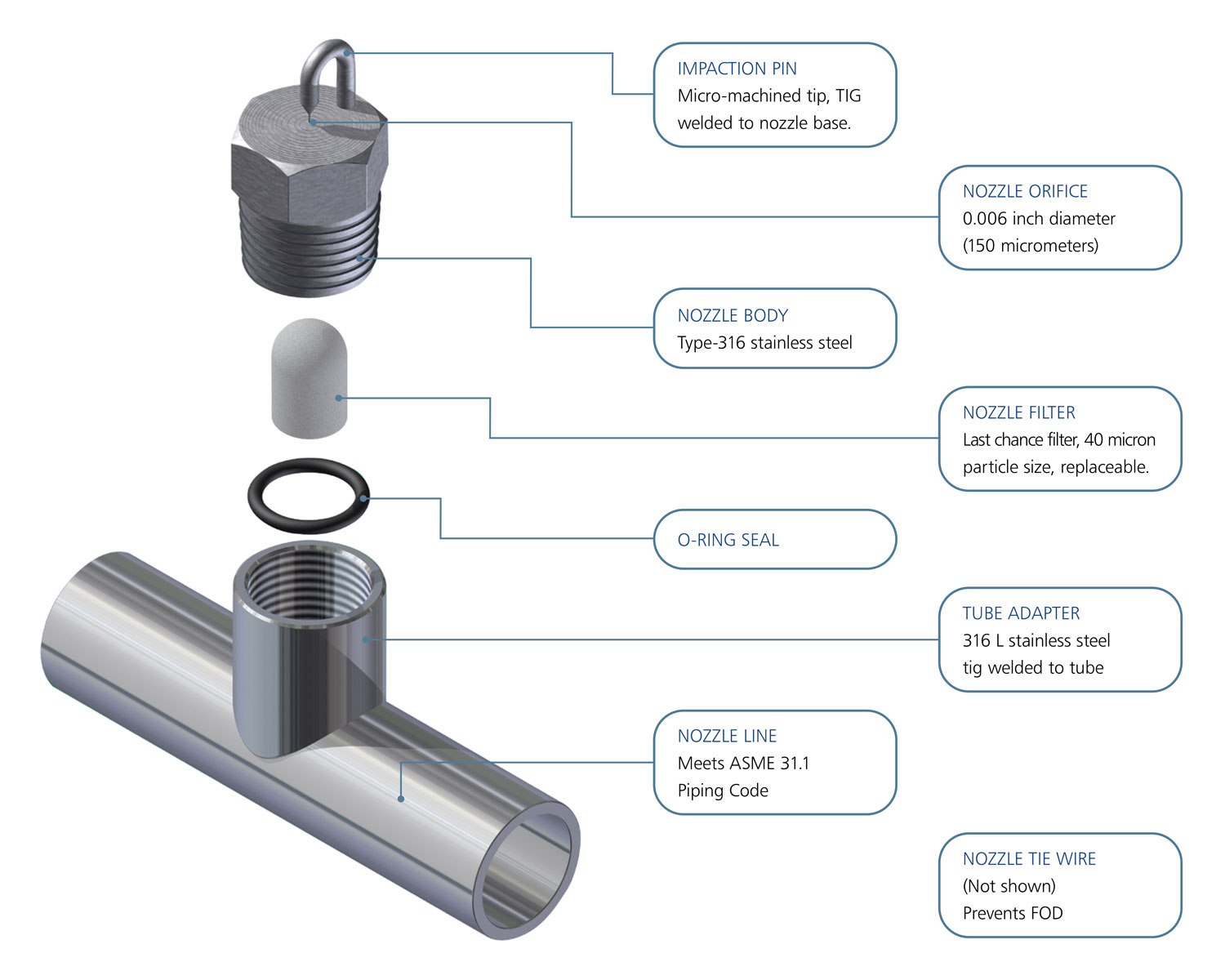
Cools to wet bulb temperature with droplets evaporating prior to entering compressor. Fog nozzles mounted on stainless steel tubing are wired for FOD avoidance. These precision nozzles are manufactured and tested in our own facility.
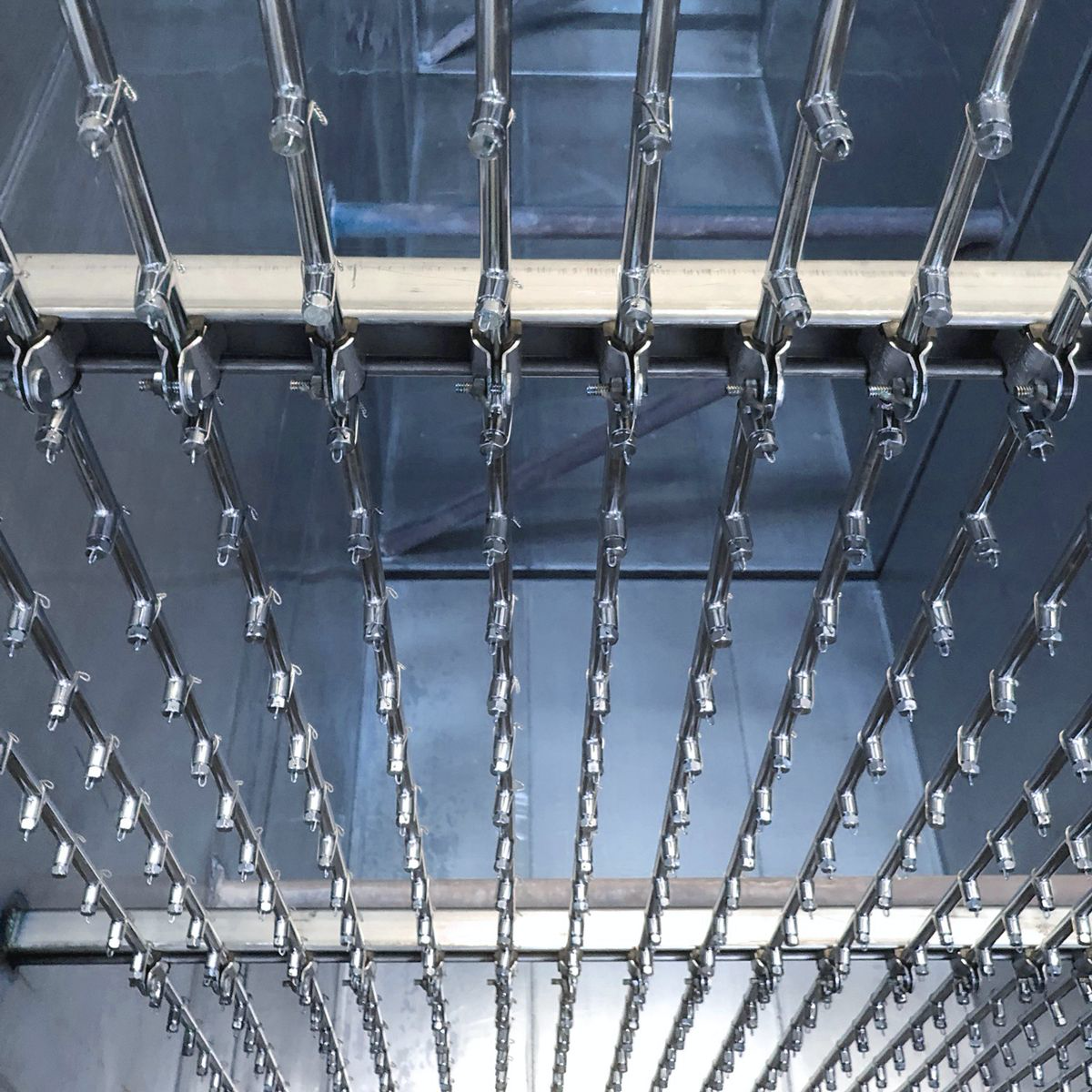
Fog droplets evaporate inside the compressor, giving an intercooling effect that reduces the work of compression. Water sprayed into the compressor will reduce NOx as well, but only about half as much as water sprayed into the combustors, because much of the air bypasses the combustion process.
| 1% air mass flow | 1% air mass flow | 1% air mass flow | 1% air mass flow | 2% air mass flow | 2% air mass flow | 2% air mass flow | 2% air mass flow | |||
|---|---|---|---|---|---|---|---|---|---|---|
| Model | ISO Output (MW) | No Fog (MW) [1] | Output (MW) | Boost (MW) | Fog Flow (gpm) | Fog Flow (m3/hr) | Output (MW) | Boost (MW) | Fog Flow (gpm) | Fog Flow (m3/hr) |
| GE Frame 6 | 40.34 | 36.83 | 40.4 | 3.5 | 21.9 | 5.1 | 43.39 | 6.55 | 43.68 | 10.18 |
| GE 7EA | 84.92 | 77.53 | 84.7 | 7.2 | 46.6 | 10.87 | 90.91 | 13.38 | 92.98 | 21.68 |
| GE 7FA | 174.6 | 159.56 | 172.7 | 13.1 | 71.3 | 16.61 | 184.05 | 24.49 | 142.16 | 33.14 |
| MHPS 501F | 188.29 | 172.42 | 186.1 | 13.7 | 73.5 | 17.13 | 193.19 | 20.77 | 146.62 | 34.18 |
| GE GT-11 N | 115.4 | 106.11 | 117.0 | 10.9 | 63.1 | 14.71 | 126.67 | 20.55 | 125.92 | 29.35 |
| GE GT-13E2 | 172.3 | 157.54 | 172.2 | 14.7 | 84.6 | 19.72 | 184.90 | 27.36 | 168.83 | 39.35 |
| P&W FT8 | 25.6 | 22.74 | 25.5 | 2.7 | 13.1 | 3.06 | 26.67 | 3.92 | 25.97 | 6.05 |
| Siemens SGT5-4000F | 188 | 170.09 | 184.1 | 14.0 | 87.0 | 20.29 | 195.20 | 25.11 | 173.51 | 40.45 |
Adding Wet Compression to Existing Fog System
When Rockland Capital assumed control of a 20-year-old combined-cycle plant, the operator sought a cost-efficient method to increase facility performance.
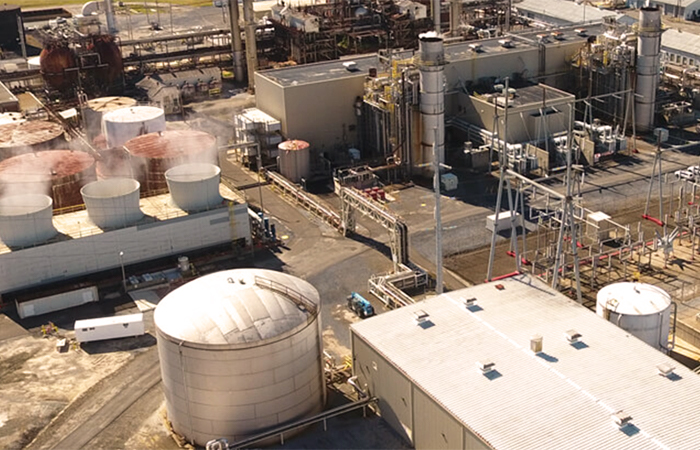
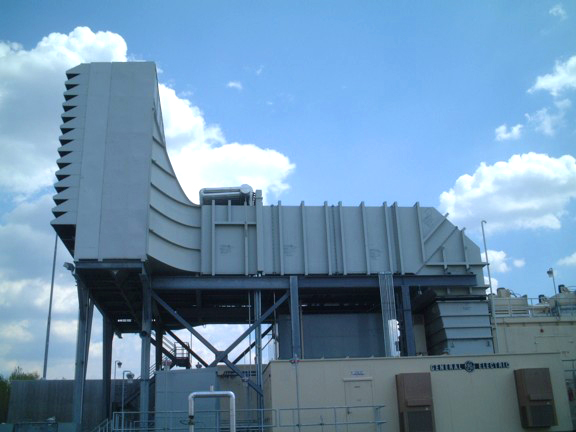
The Eagle Point Power Generation (EPPG) facility in Westville, NJ, is a 225 MW combined-cycle plant equipped with two GE Frame 7EA turbines, two Nooter/Eriksen Heat Recovery Steam Generators, and one 50 MW Alstom condensing steam turbine. The site sells power within the PSE&G zone of the PJM market. It began operations in 1991 as a cogeneration plant providing steam to the Eagle Point Refinery, but transitioned to combined-cycle mode after the refinery closed in 2009.
To get more value out of equipment already in place, the plant implemented a two-step upgrade using MeeFog technology:
Reconditioning: The existing inlet fogging systems were restored to good working order.
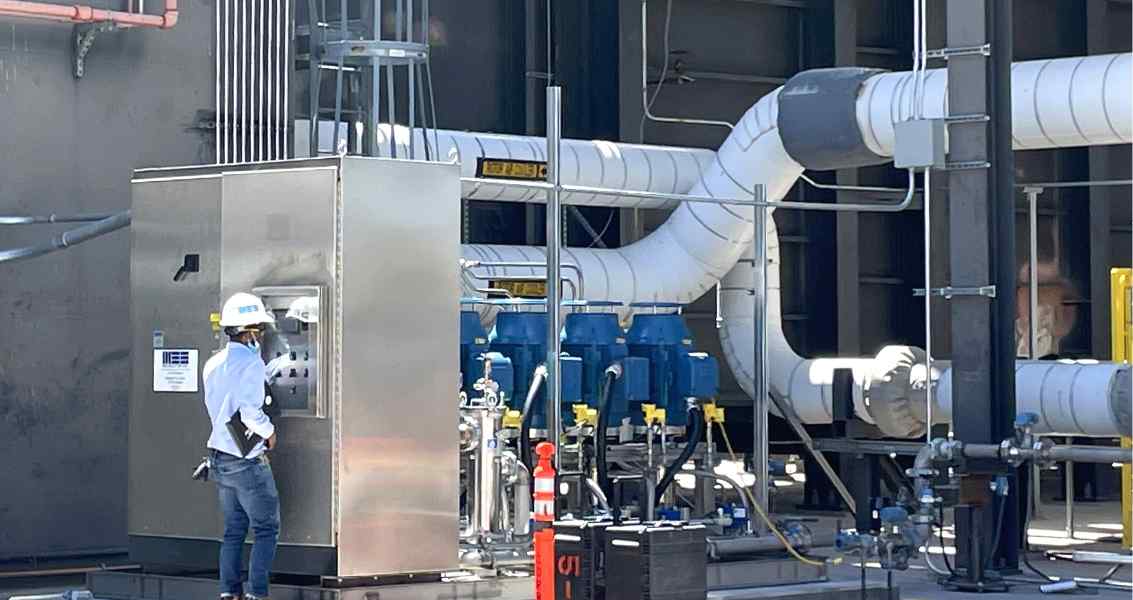
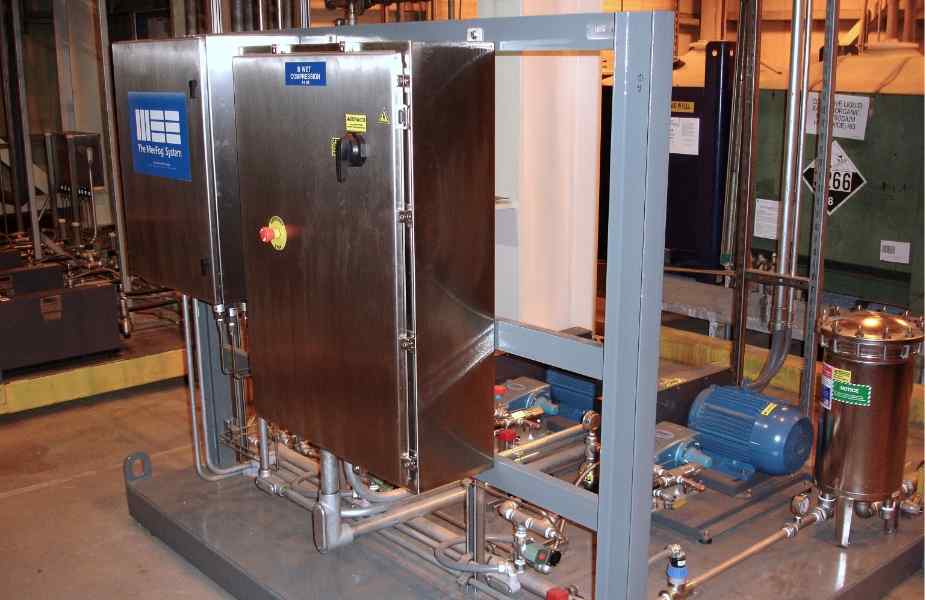
Wet Compression (Overspray): A new wet compression system was added. This involved installing two pump skids (one per turbine) with 10 hp pumps that feed deionized water at 2,000 psi to 280 fogging nozzles. These nozzles create ultra-fine droplets (8.5 microns) that evaporate inside the compressor to counter heat generated during compression.
Click below to learn more and see key borescope findings for the wet compression system:
Want Proof?
We can supply a detailed power recovery report customized for your existing gas turbine setup, including:
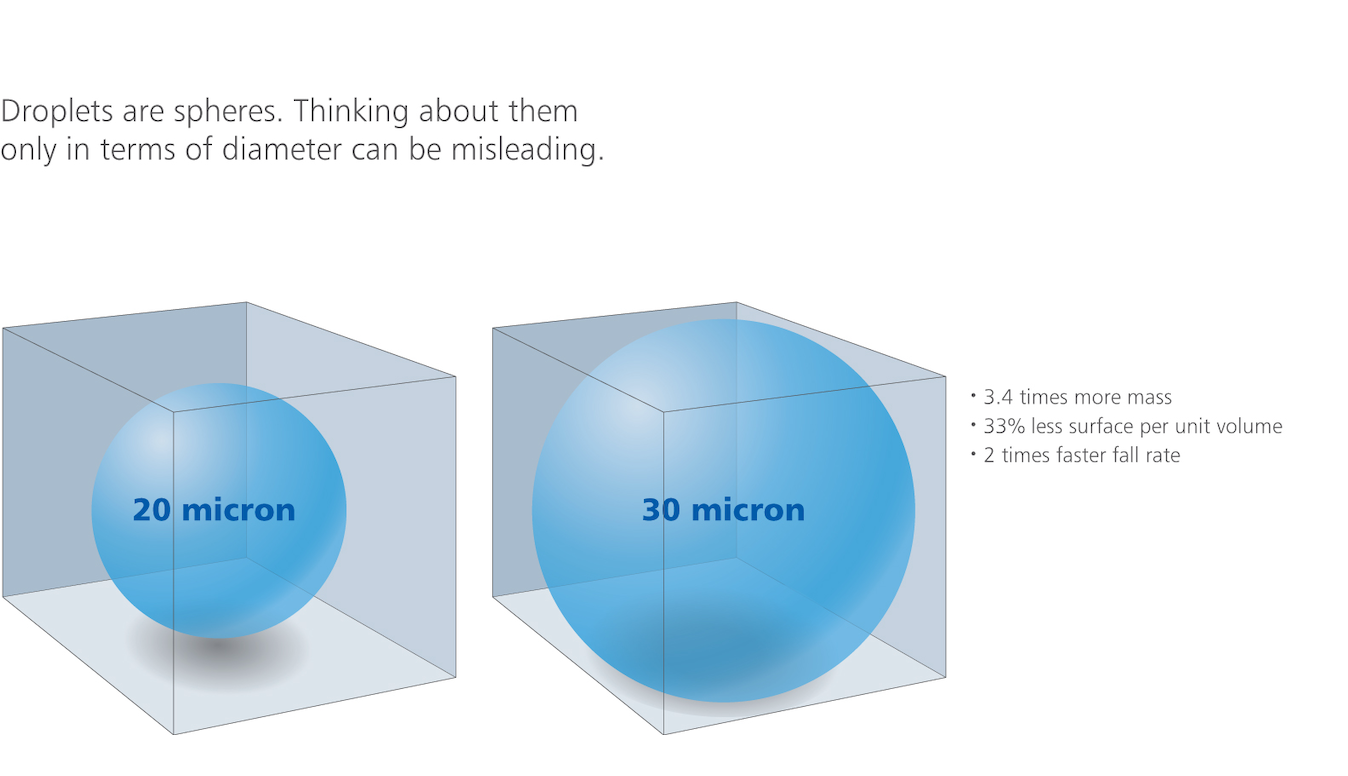
Smaller droplets have a higher surface-to-volume ratio. This allows faster evaporation compared to larger droplets, which is why wet compression is used in gas turbine systems.
Wet compression is a gas turbine power augmentation method that injects atomized water (fog) into the compressor. The fog evaporates giving an intercooling effect, which reduces the work of compression and increases available power, further boosted by allowing more fuel to be burned due to cooler discharge air.
It reduces compressor work, freeing more shaft power for useful output, and cools the compressor discharge so additional fuel can be burned and further increasing turbine power.
Injecting a 2% air mass flow as wet compression spray will boost gas turbine output by as much as 10%. The power increase is greater for turbines with a higher pressure ratio.
When correctly implemented, wet compression in a gas turbine operates safely without shortening equipment life.
Yes, many facilities upgrade their existing MeeFog inlet cooling system to include wet compression for additional output, like the Eagle Point Power Generation (EPPG) facility in Westville.
A turbine is likely a very good candidate for wet compression if it operates in conditions above 45°F and has a high pressure ratio. For a customized power recovery analysis of your specific site and turbine, please contact the Mee Industries expert team.
By improving efficiency, it reduces both NOx and CO2 emissions per kW of power produced.
Consumption varies by turbine size and configuration but usually equals 1%–2.5% of the air mass flow.
No, MeeFog wet compression systems are designed for minimal maintenance due to high-quality materials and a simple design.
You should use high-purity demineralized water to prevent fouling and maintain operation reliability.