Boosting Data Center Efficiency with a MeeFog Humidification System
Case Study: OneNeck IT Solutions wanted to cut its energy costs, but still needed a humidification system that would meet its redundancy…
Existing Customers Call 626-359-4550 Or Visit Customer Care

While liquid cooling handles high-density server racks, air-cooled systems and ambient conditions still require strict management. In addition to liquid-cooling heat-exchanger pre-cooling, MeeFog Systems can support traditional data center HVAC equipment.

Applications include air-handler evaporative cooling, humidification, electrostatic-discharge control and chiller-condenser pre-cooling.
Inlet-Air Cooling: Uses an evaporative method to cool the air entering the building. This energy-efficient process helps maintain consistent cooling performance in hot, dry climates, reducing dependence on mechanical chillers.
Adiabatic Humidification for ESD Control: Adds precise moisture to maintain 40–60% relative humidity, preventing static buildup. It protects servers from electrostatic discharge (ESD) to extend the lifespan of sensitive electronic components.
You can also use our systems to cool rooftop condensers. Reach out to our sales engineer today to find out how a MeeFog system can reduce your operating costs.
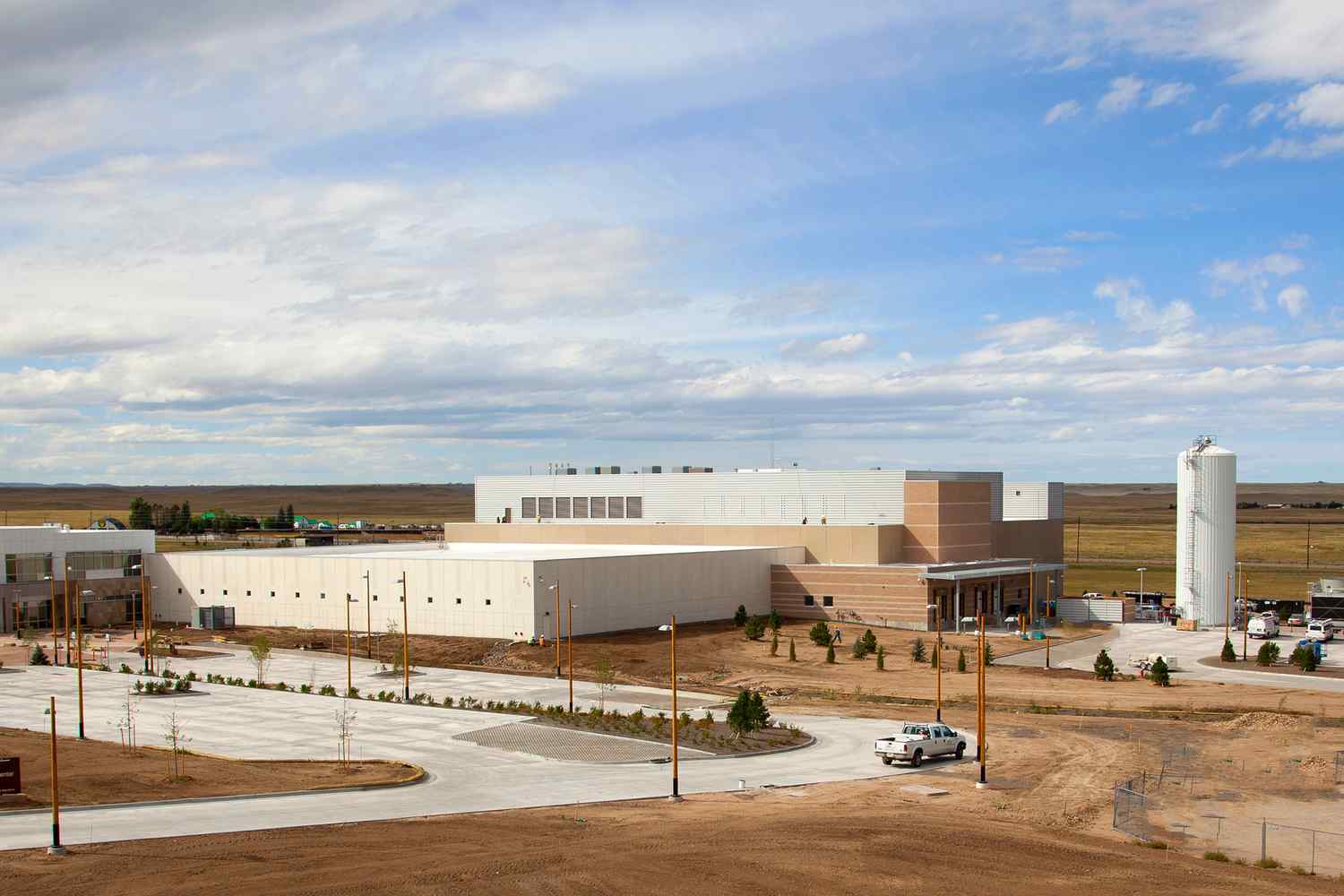
NCAR Uses MeeFog Data Center Cooling System to Prevent Electrostatic Damage to its New Supercomputer
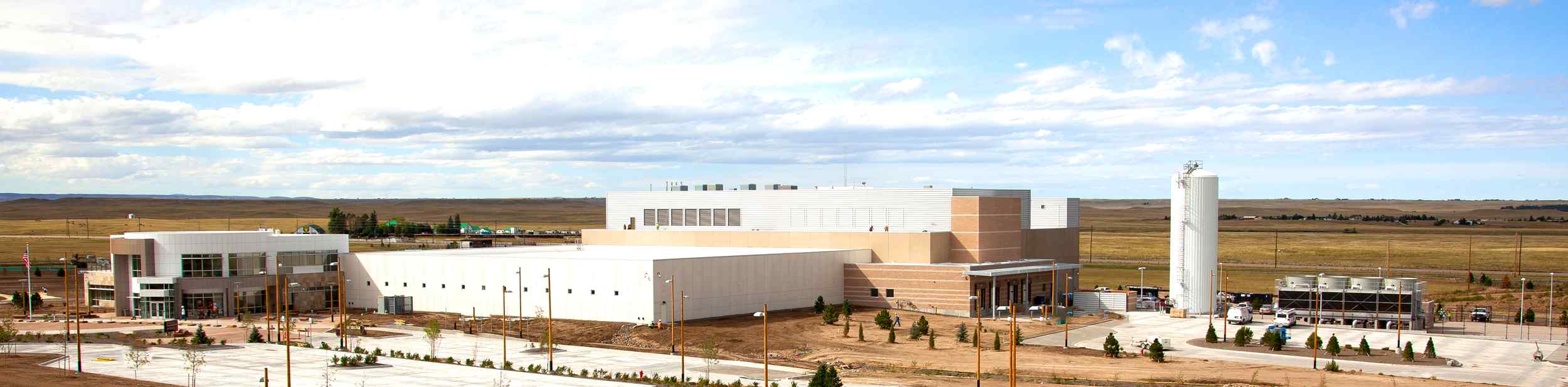
When the National Center for Atmospheric Research (NCAR) decided to build a new supercomputing center, it wanted to take advantage of the free cooling available in the high, dry Wyoming environment. But using that dry air risked electrostatic damage to the $25-$35 million Yellowstone supercomputer, the data analysis and visual systems, and all the other storage, networking, and ancillary equipment in the data center.
For reliable, energy-efficient humidification, NCAR installed a MeeFog data center cooling system with two 1.5 HP ceramic plunger pumps delivering 2 gpm of fog into the air handlers, allowing NCAR to safely use outside air.
Opened in 2012, the NCAR Wyoming Supercomputing Center (NWSC) is a 170,000 square foot data center with two 12,000 square foot raised floor spaces. The site houses the IBM Yellowstone 1.6 Petaflop supercomputer in one of those modules, with the other set aside for future expansion.
In addition to the computing space, the NWSC has 6,000 square feet of data storage and archival space, a 2,500 square foot network operations center, administrative offices, and a visitor center, with 100,000 square feet devoted to mechanical and electrical equipment.
Click the different areas of the interactive MeeFog HVAC diagram below to learn more information about our data center cooling system.
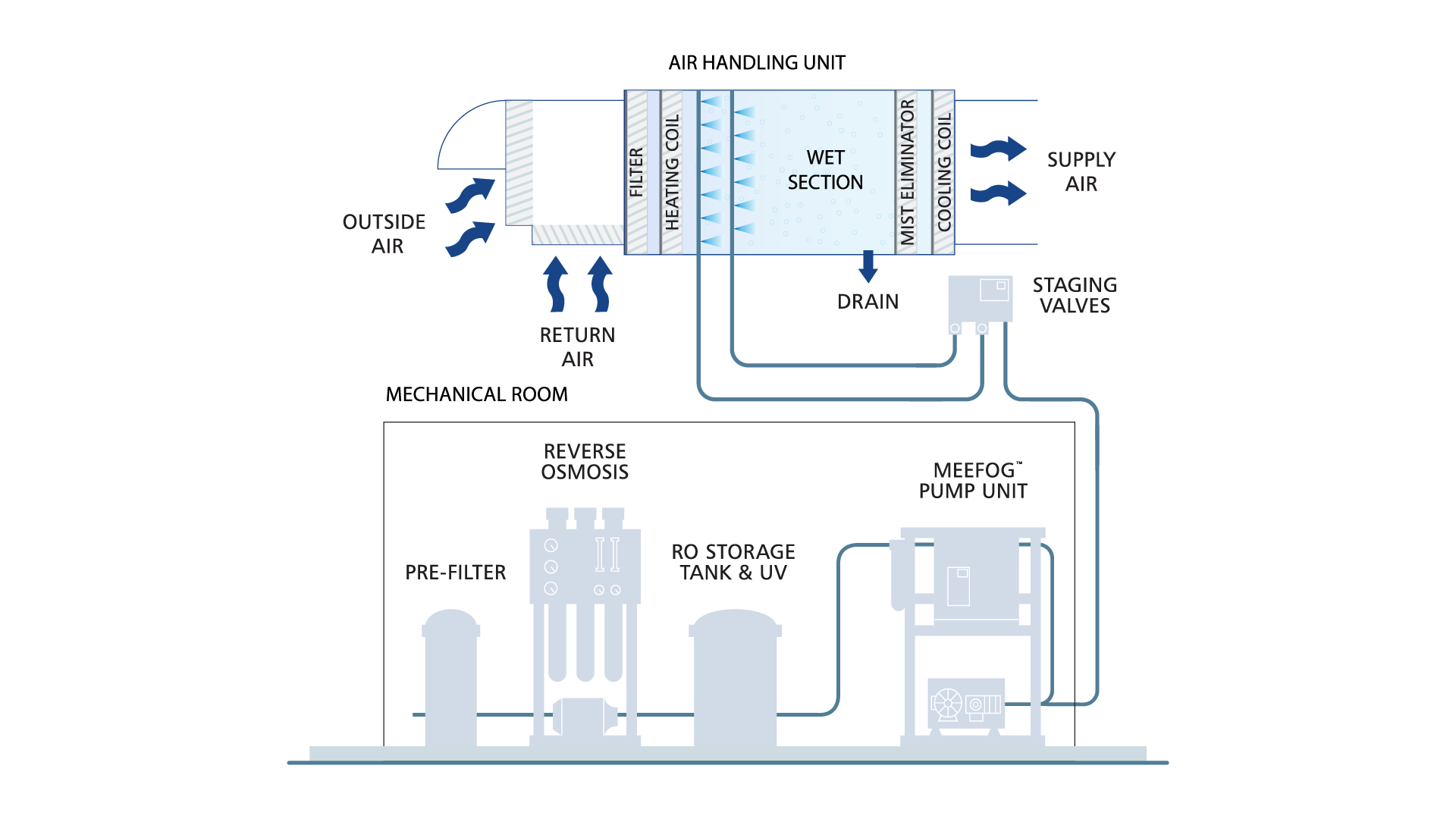
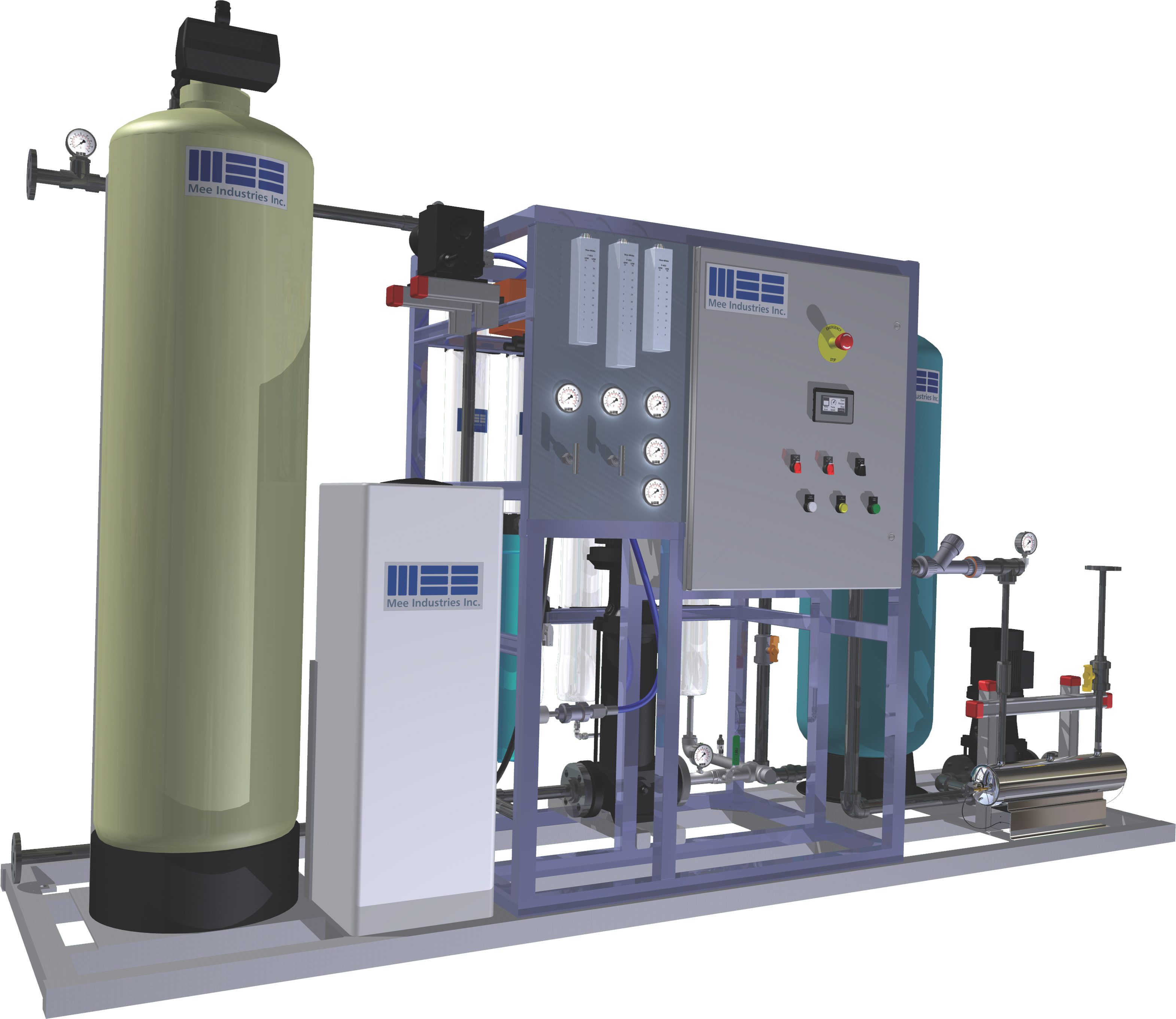
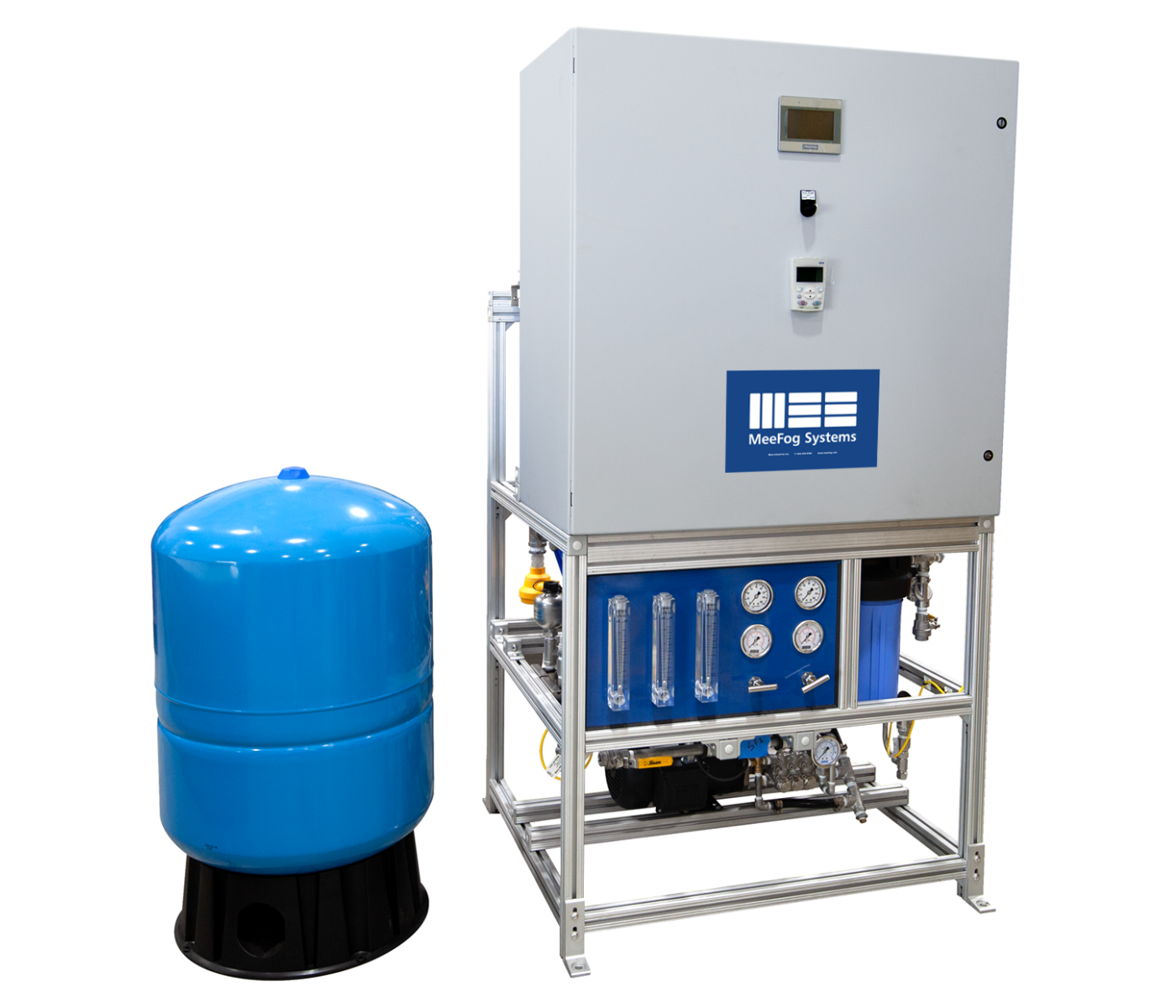
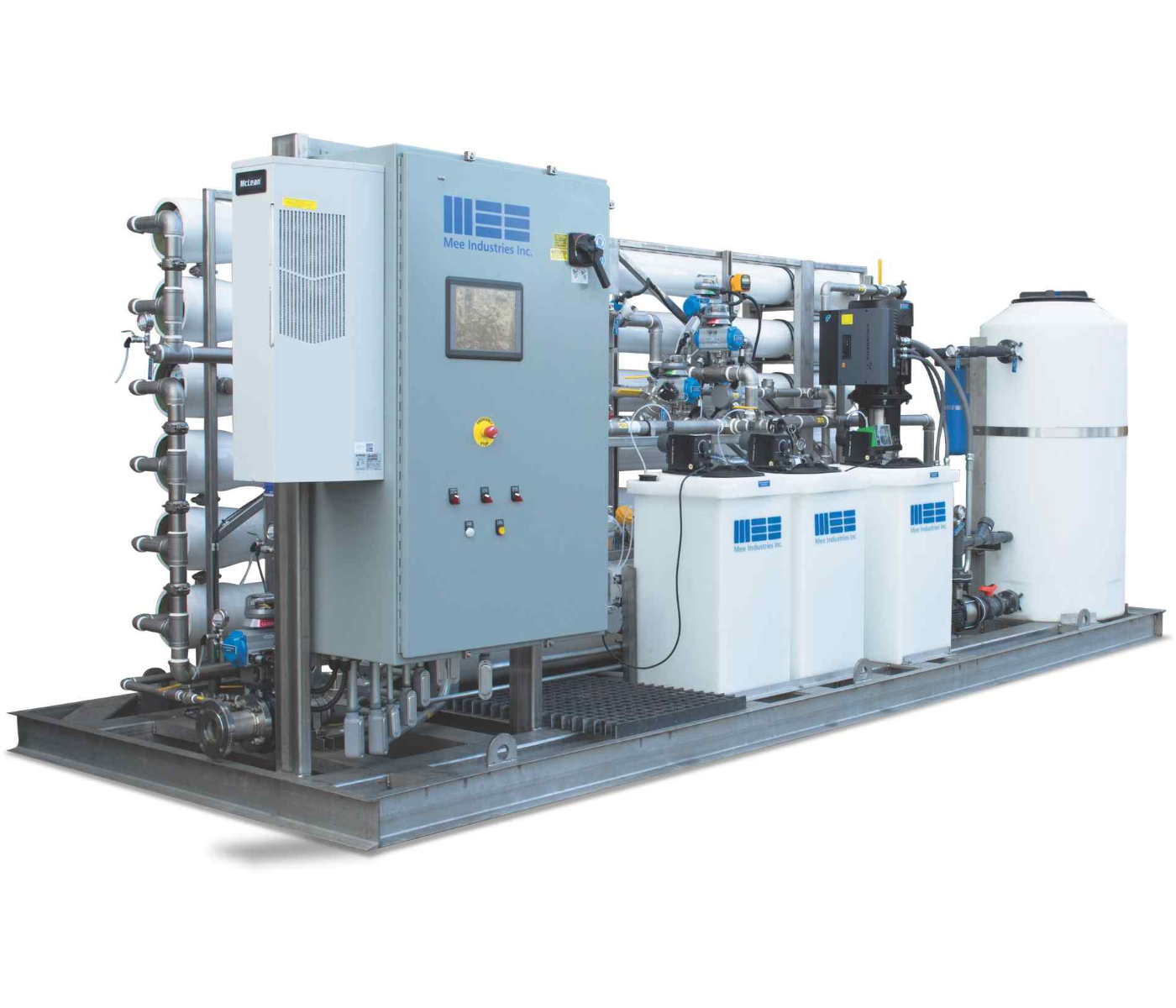
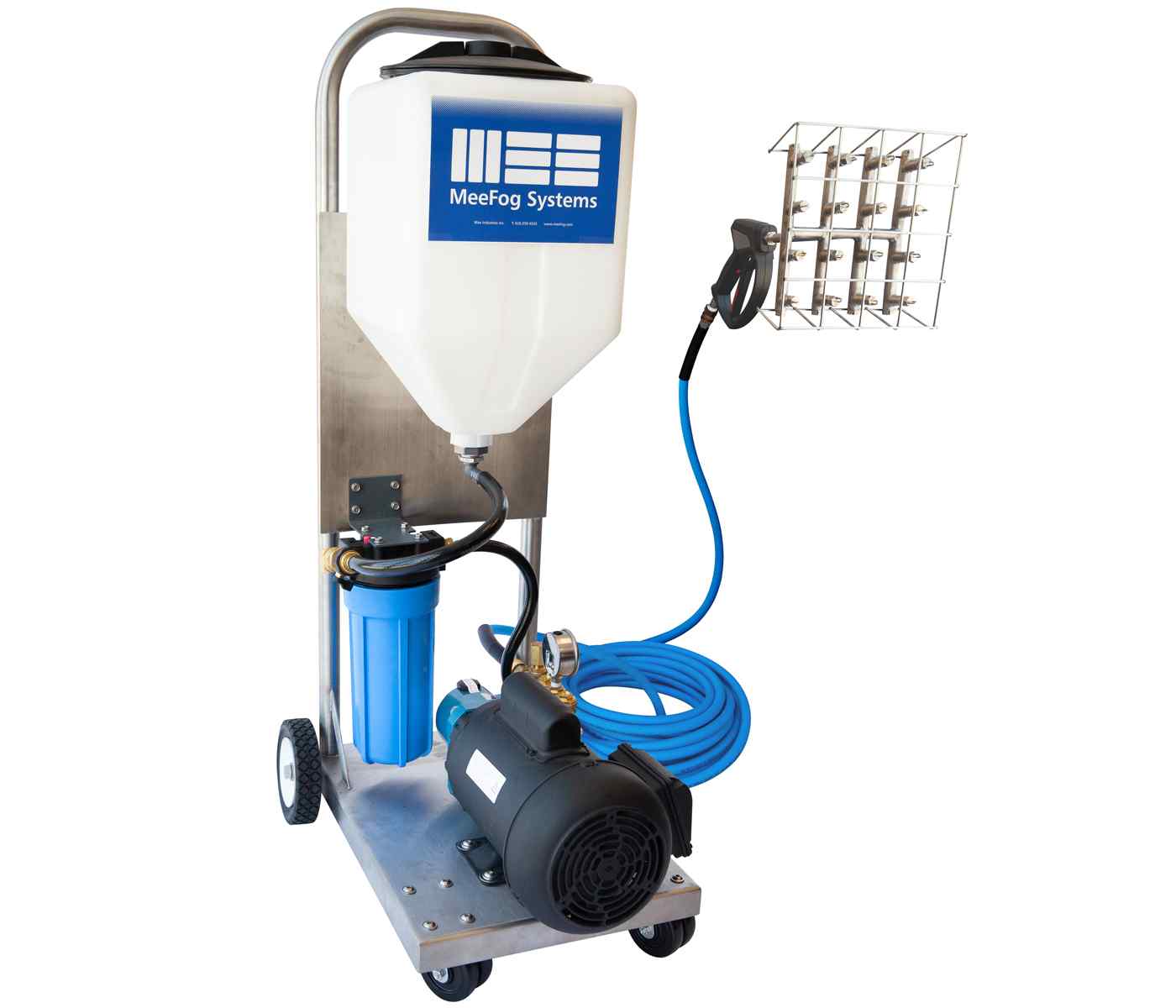
City water is treated using the Reverse Osmosis water treatment rack. This purifies the water, removing minerals, particulate, and microorganisms. Systems include automated membrane flushing, pre-treatment filtration, and UV Re-Circulation.
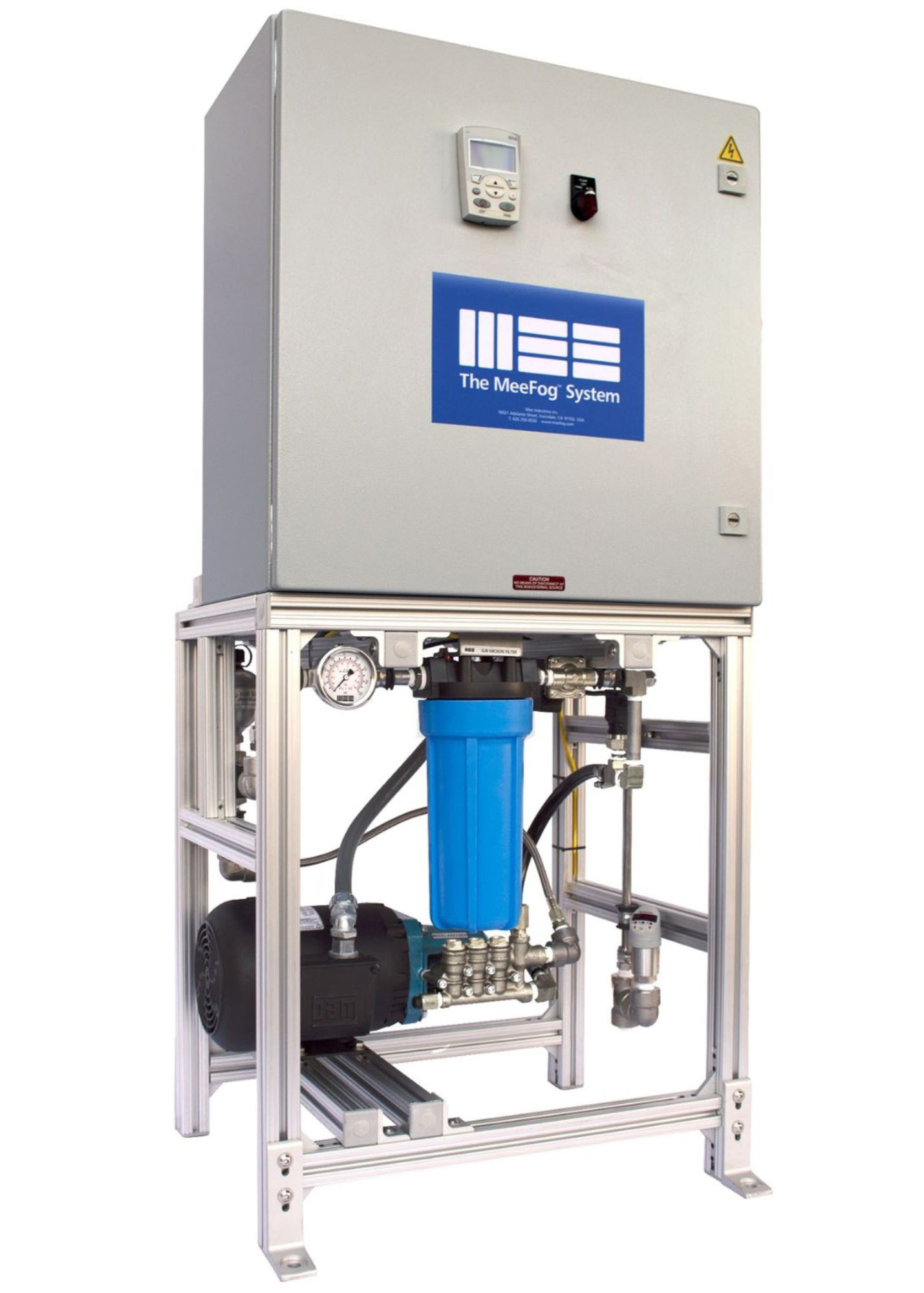
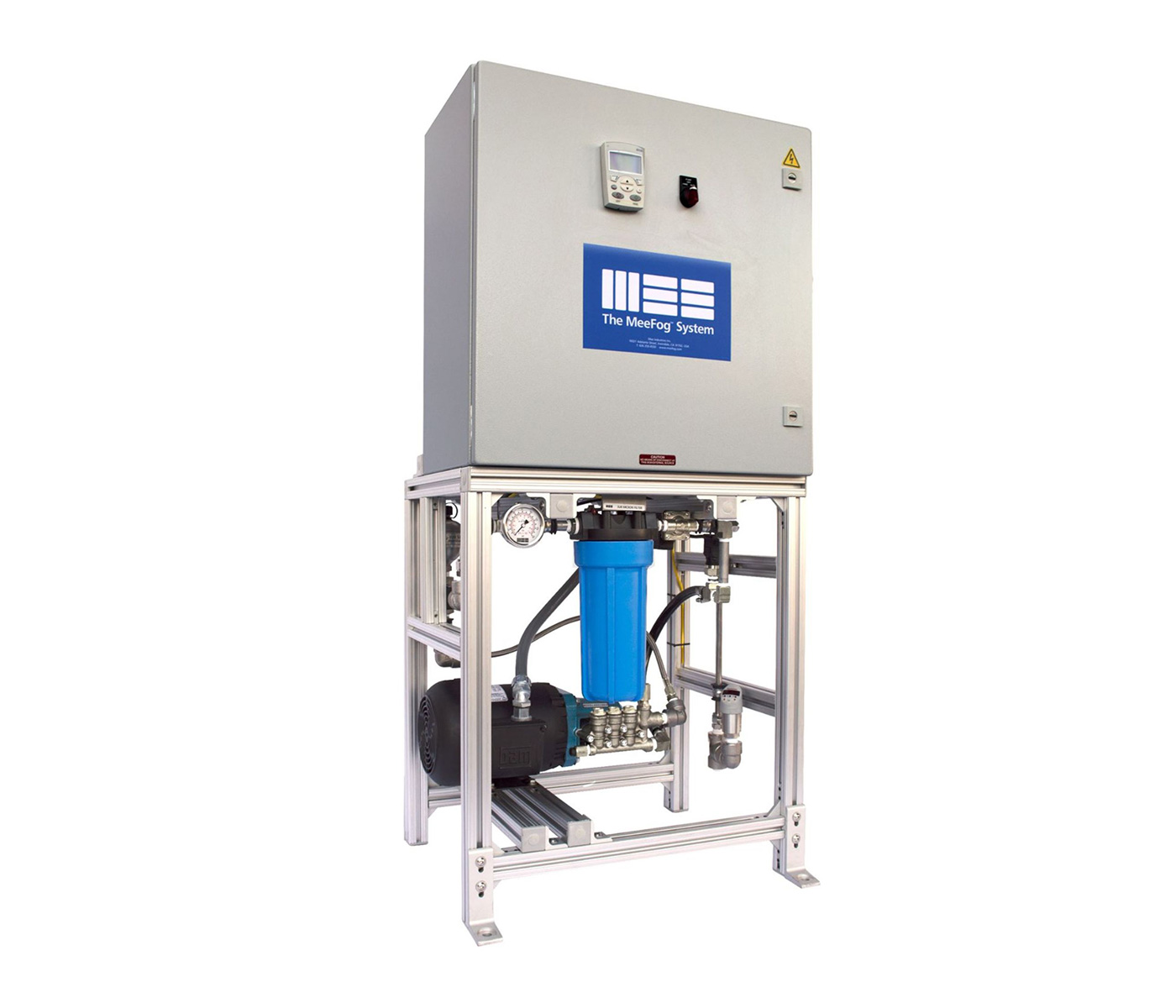
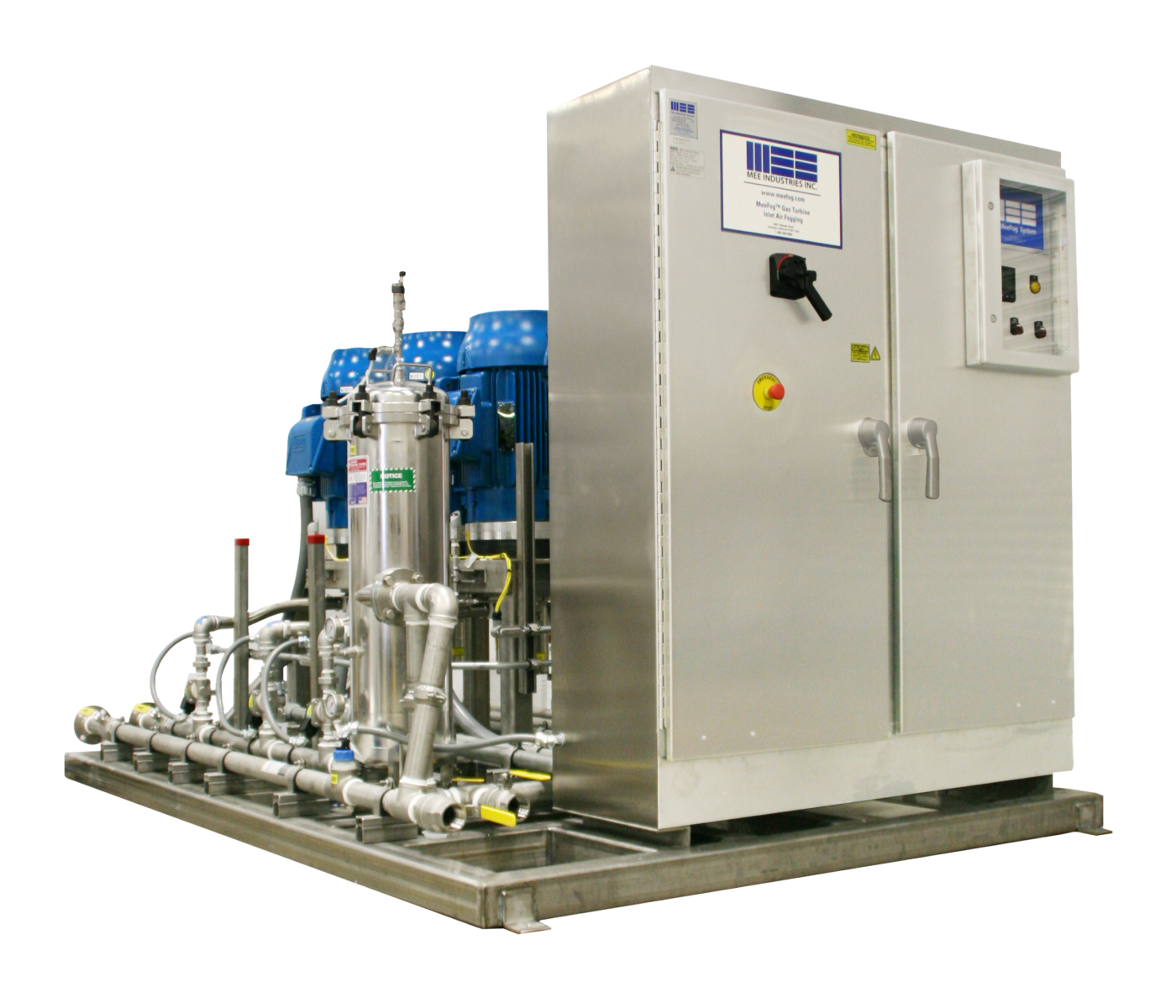
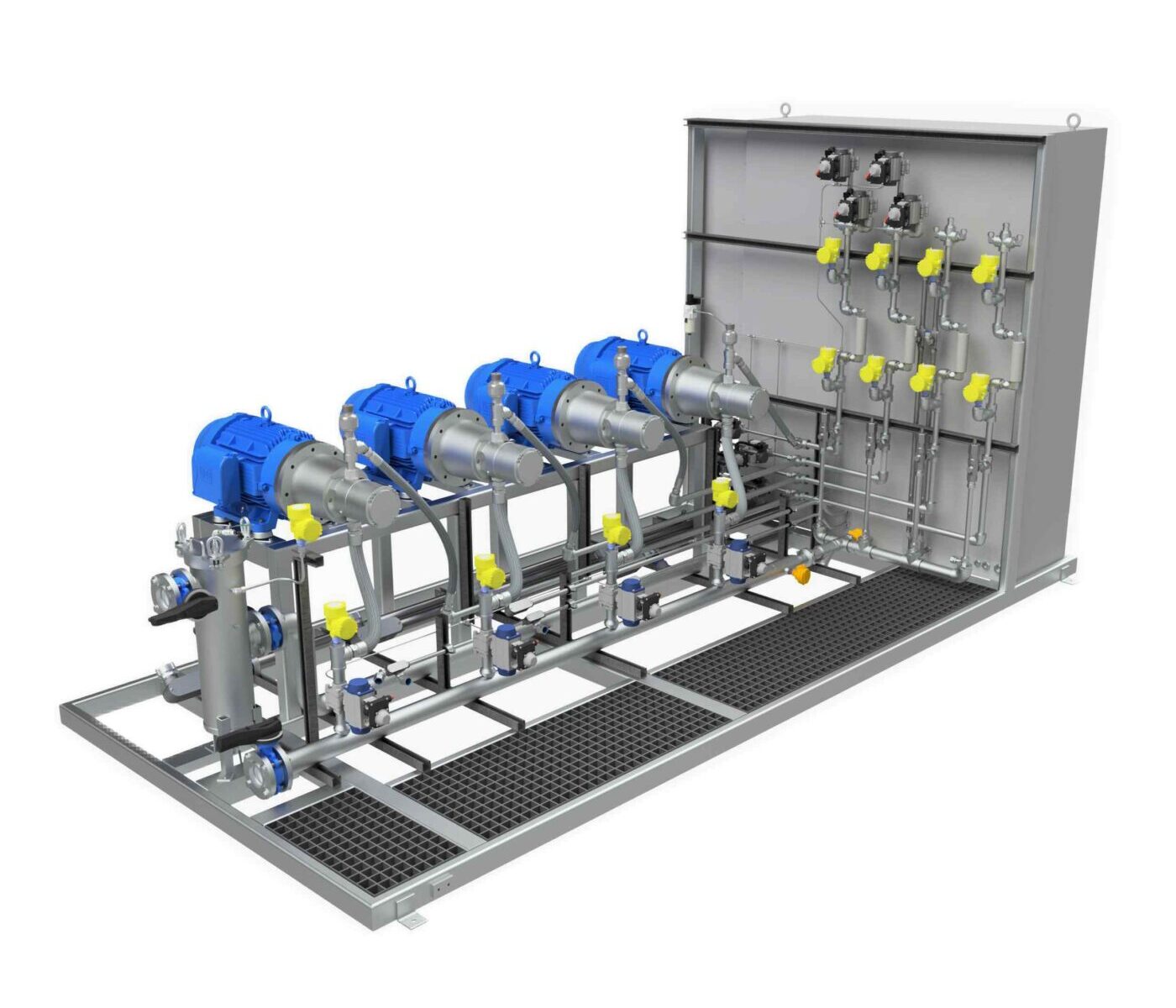
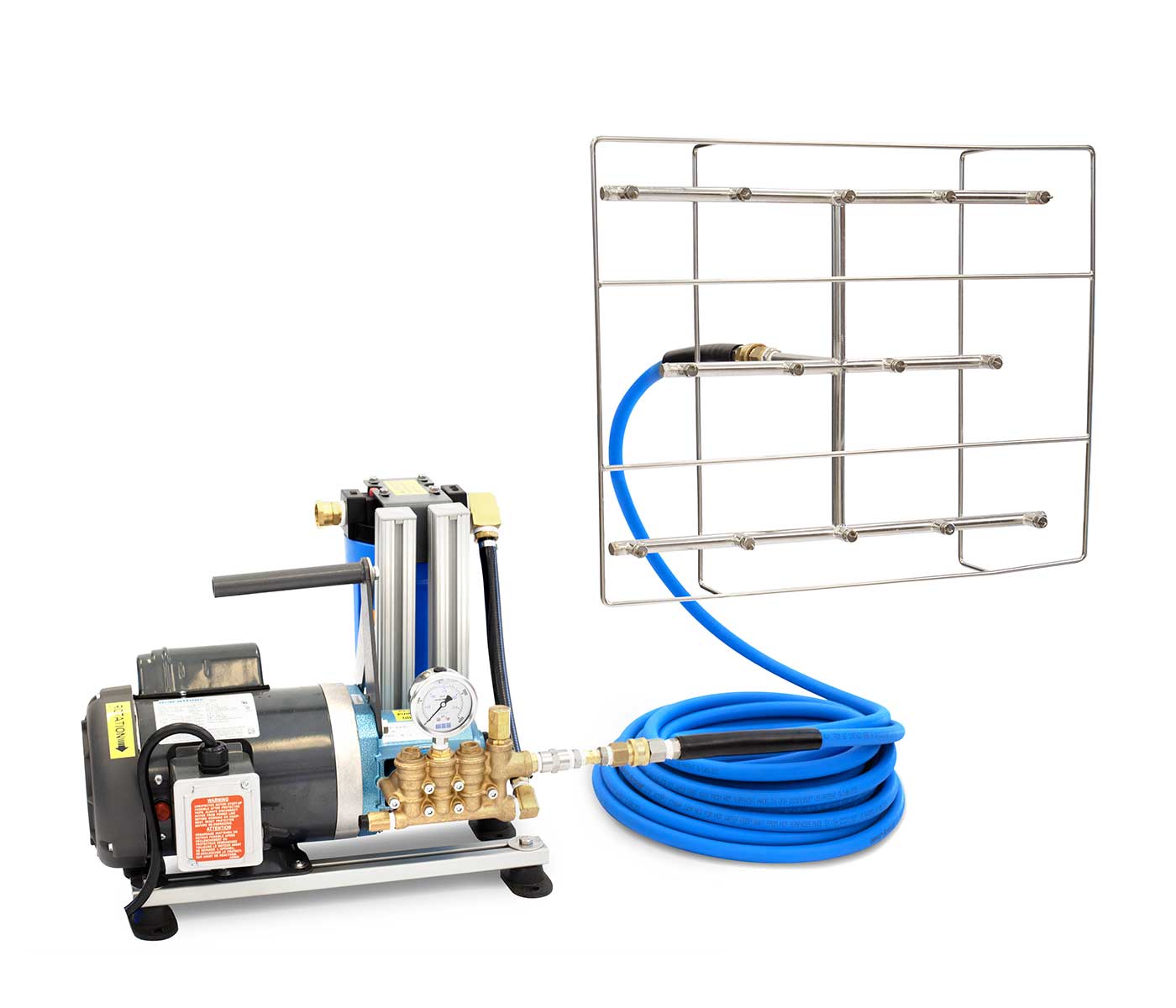
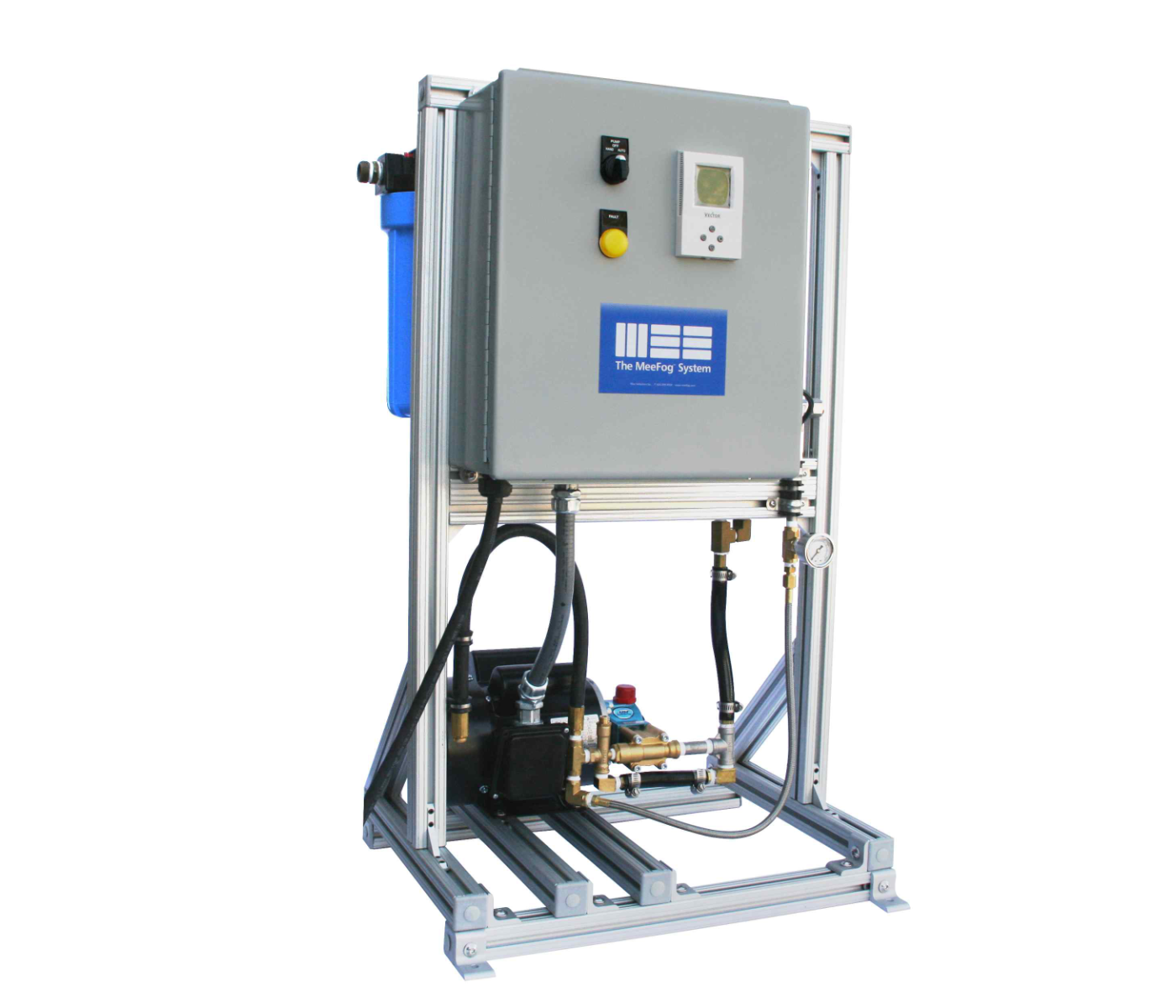
The high-pressure pump maintains 1000 psi water pressure in order to atomize the water into tiny droplets that can evaporate into the air stream. The pump rack has a VFD with panel-mounted controller that maintains pressure when staging valves open and close.
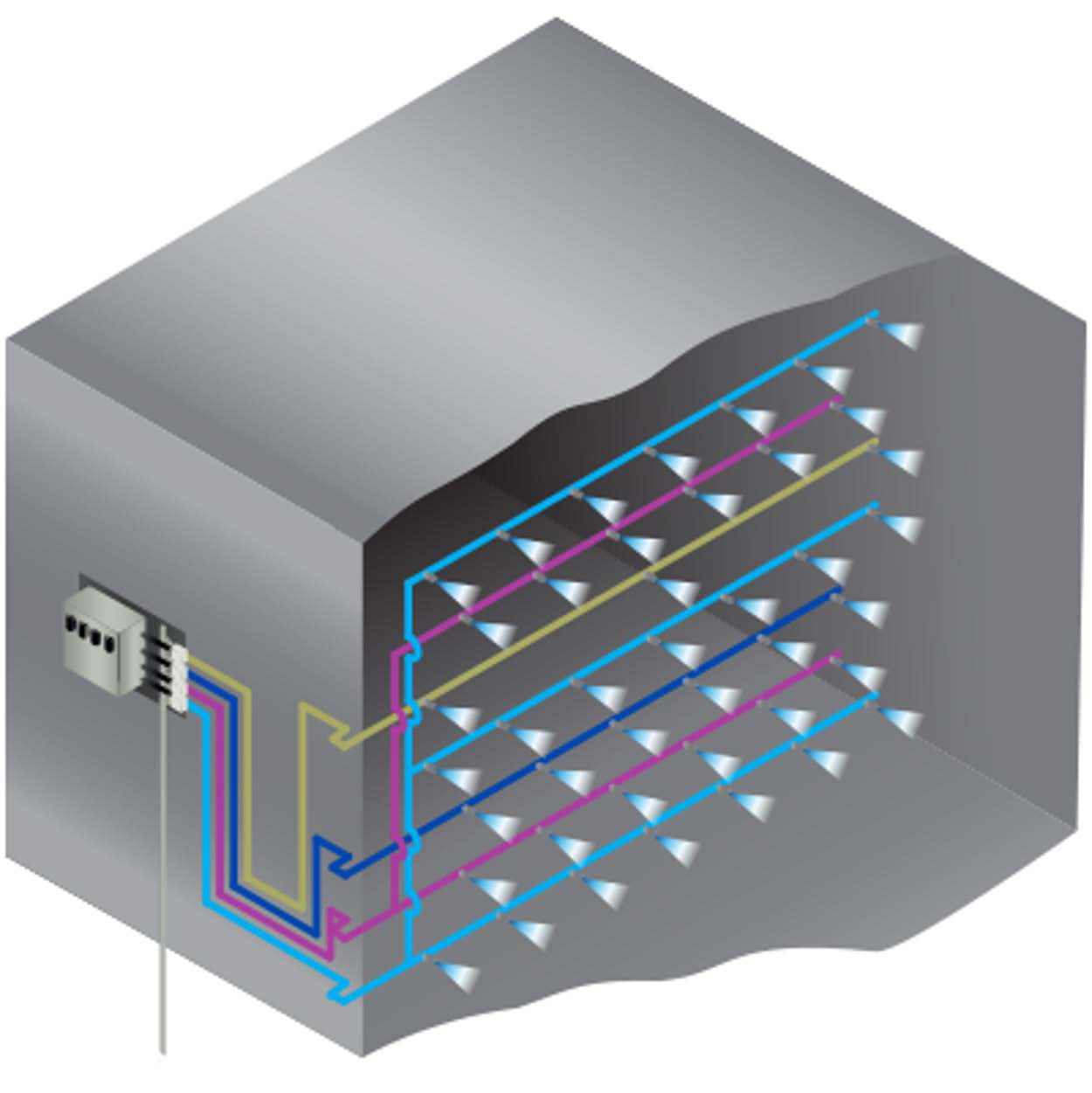
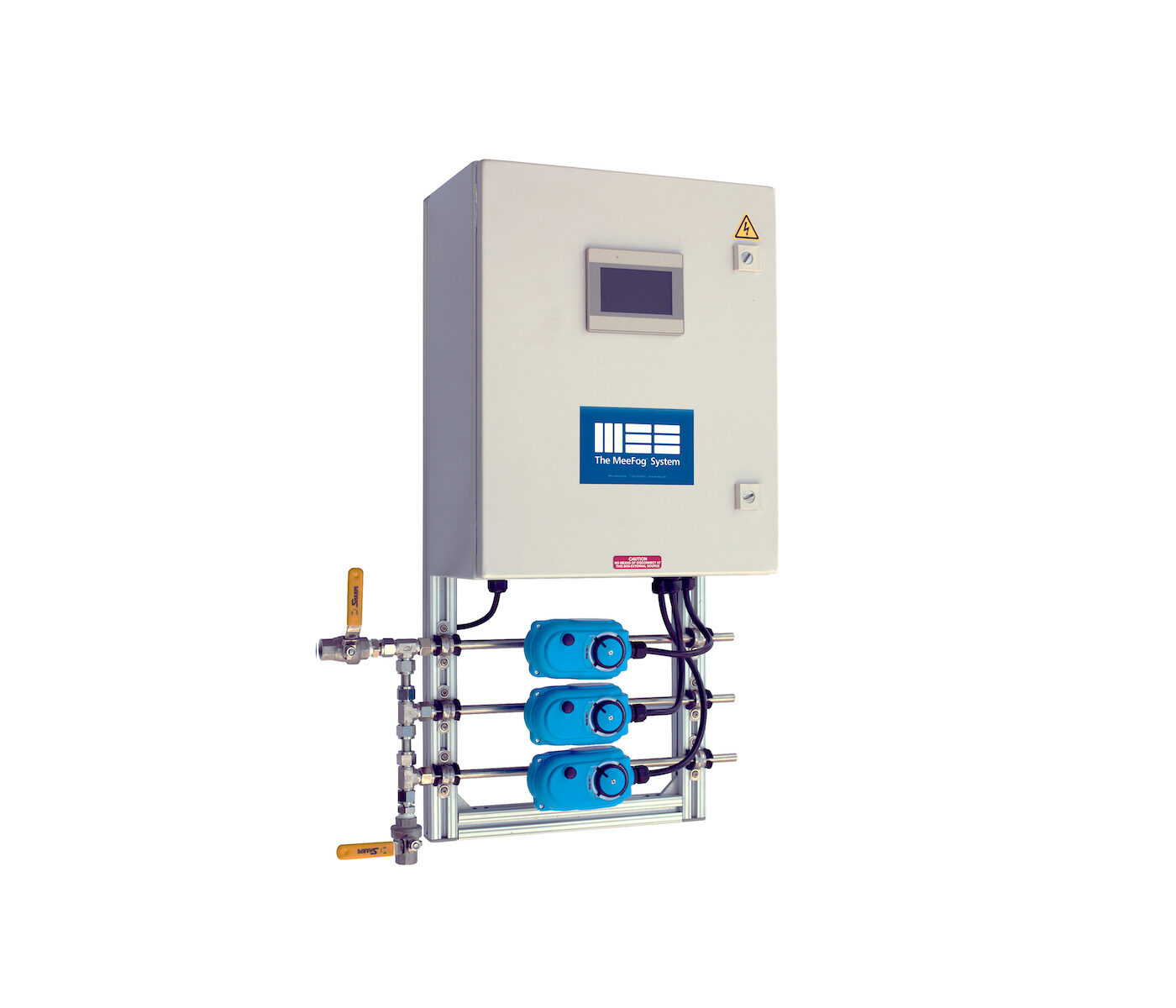
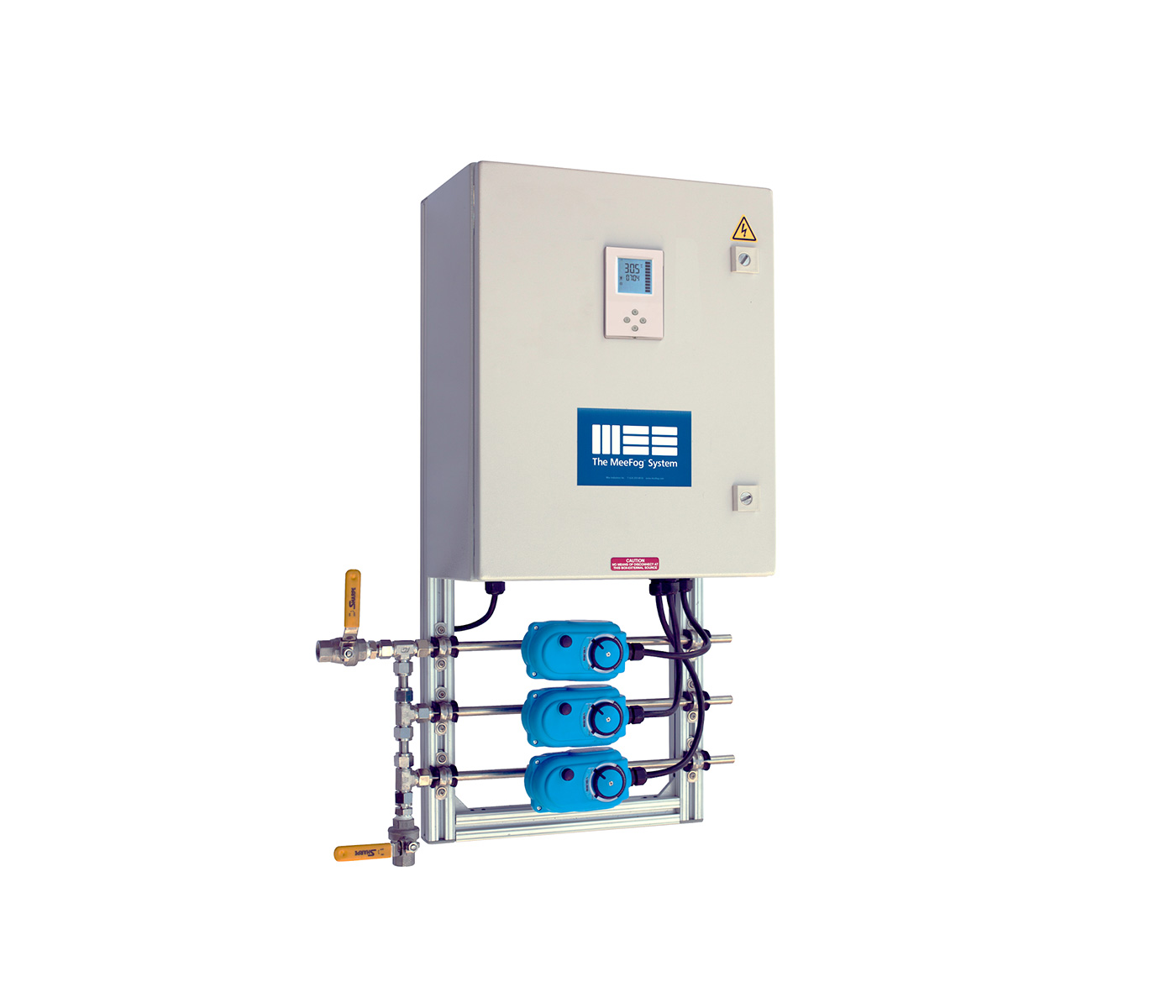
The valve panel allows precise control over how much humidification is injected into the air stream based on a signal from the BMS. It is possible to control the humidification level in the space to plus or minus 1% RH.
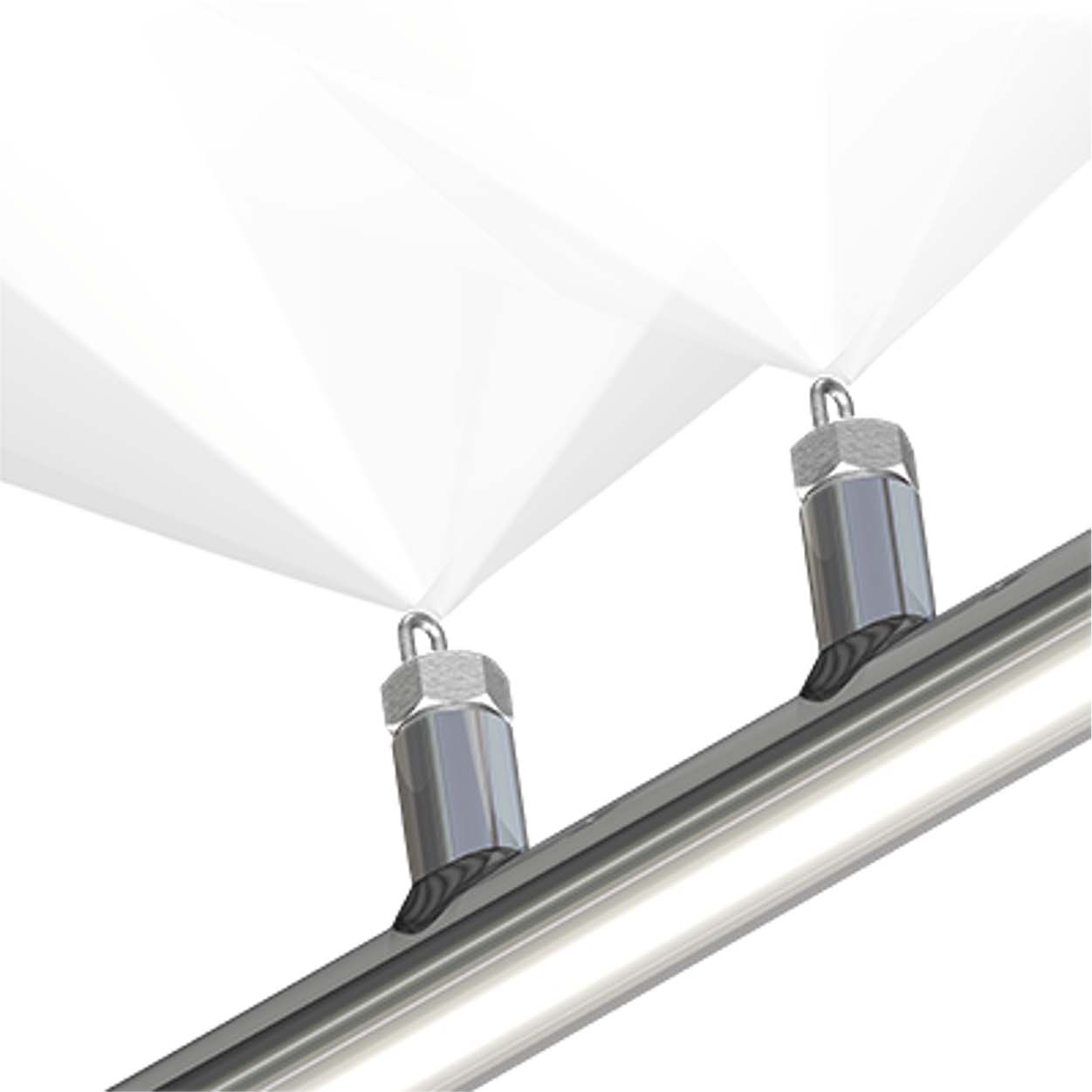
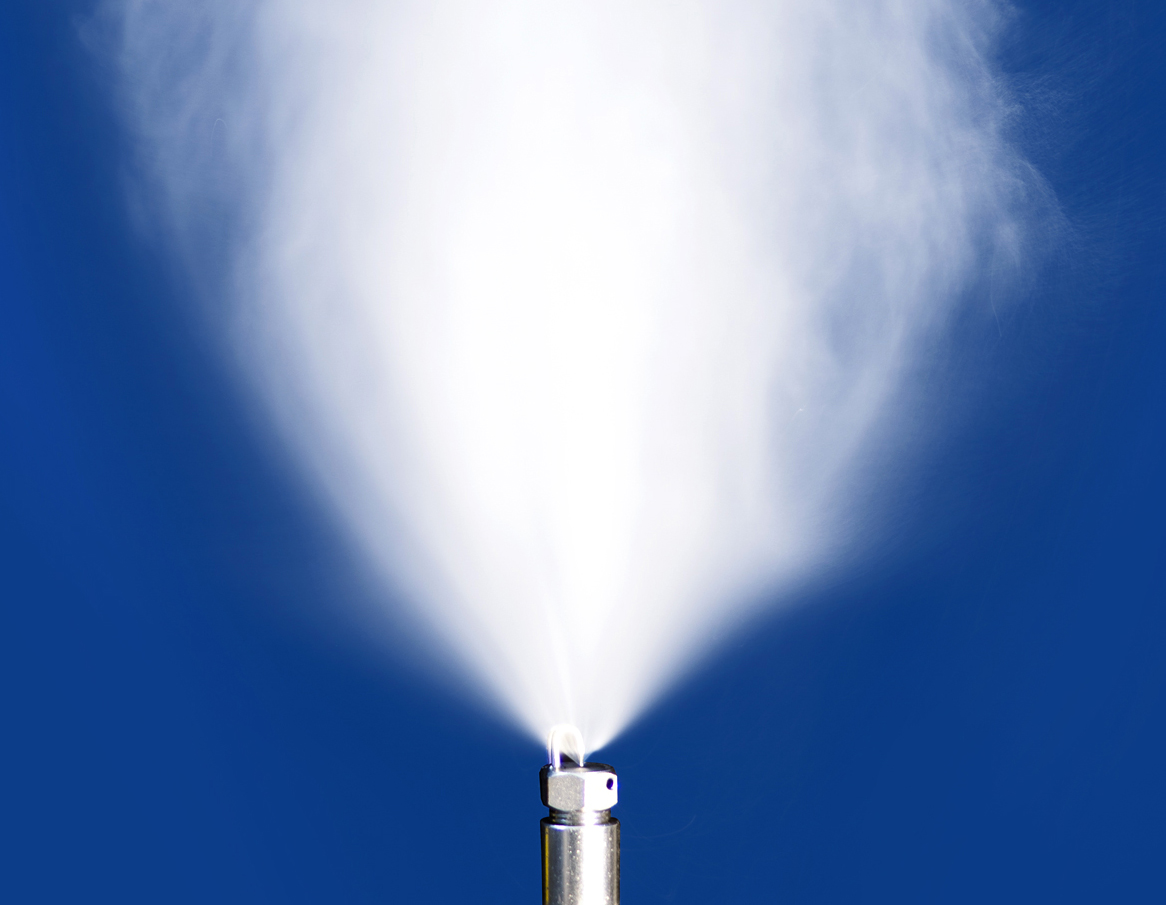
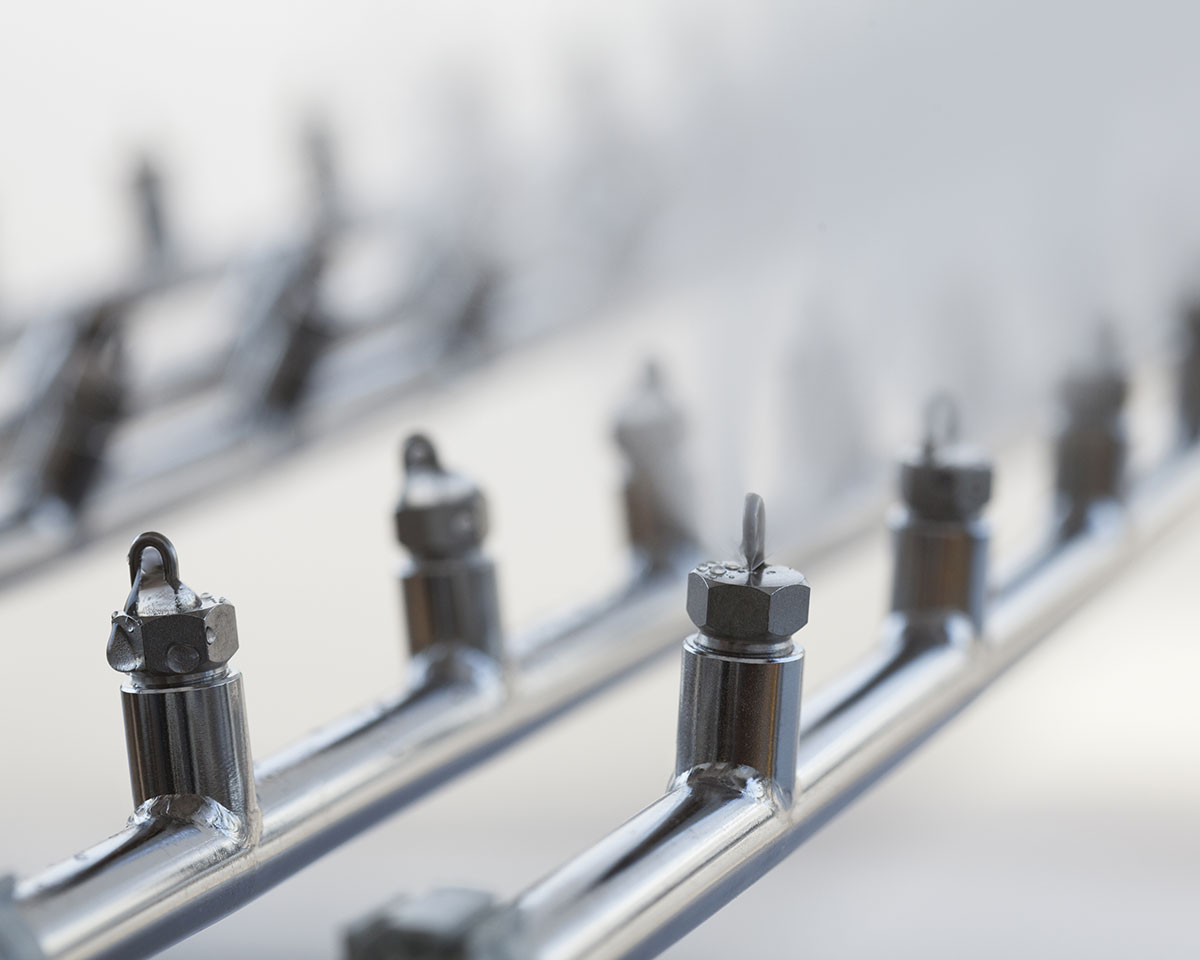
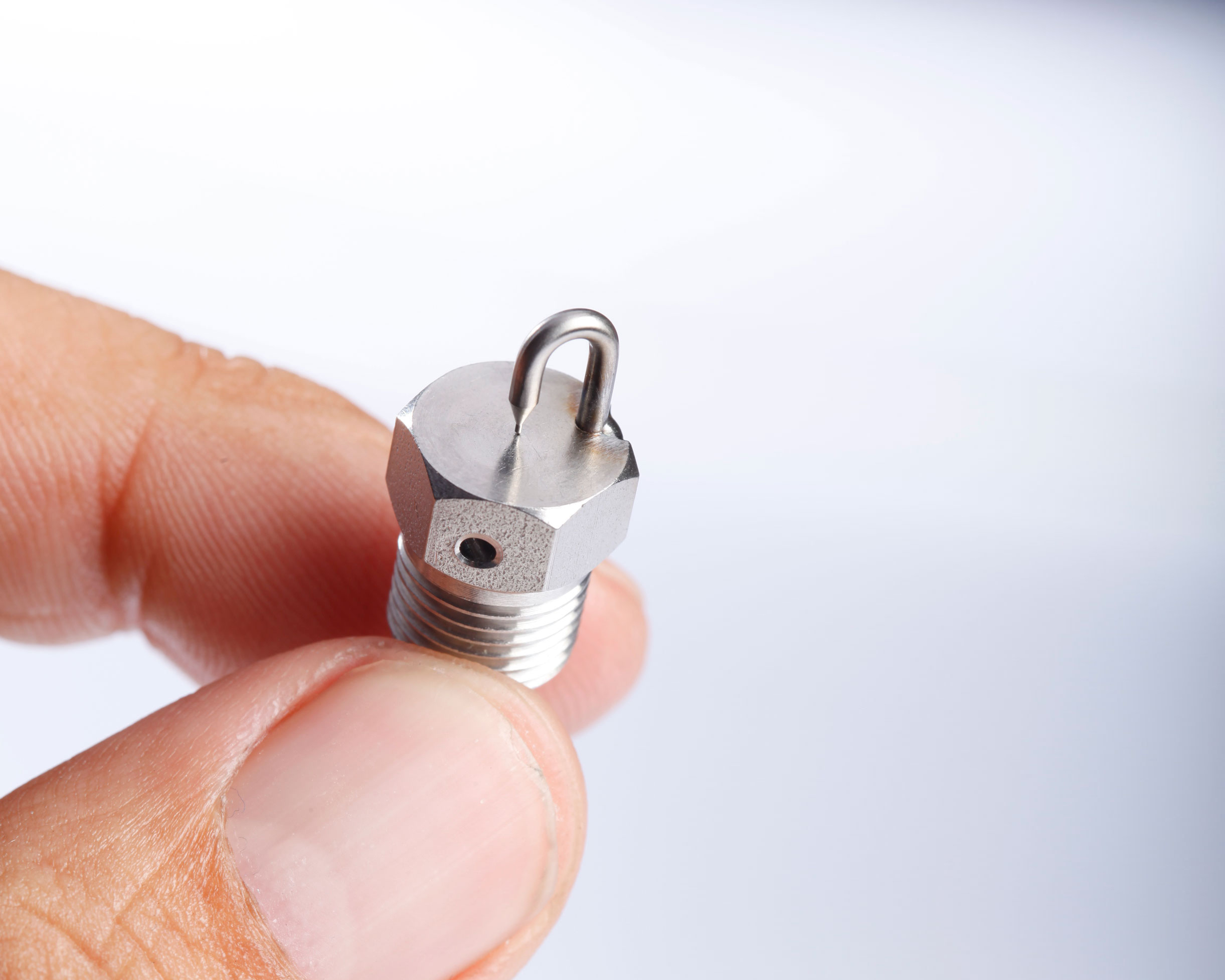
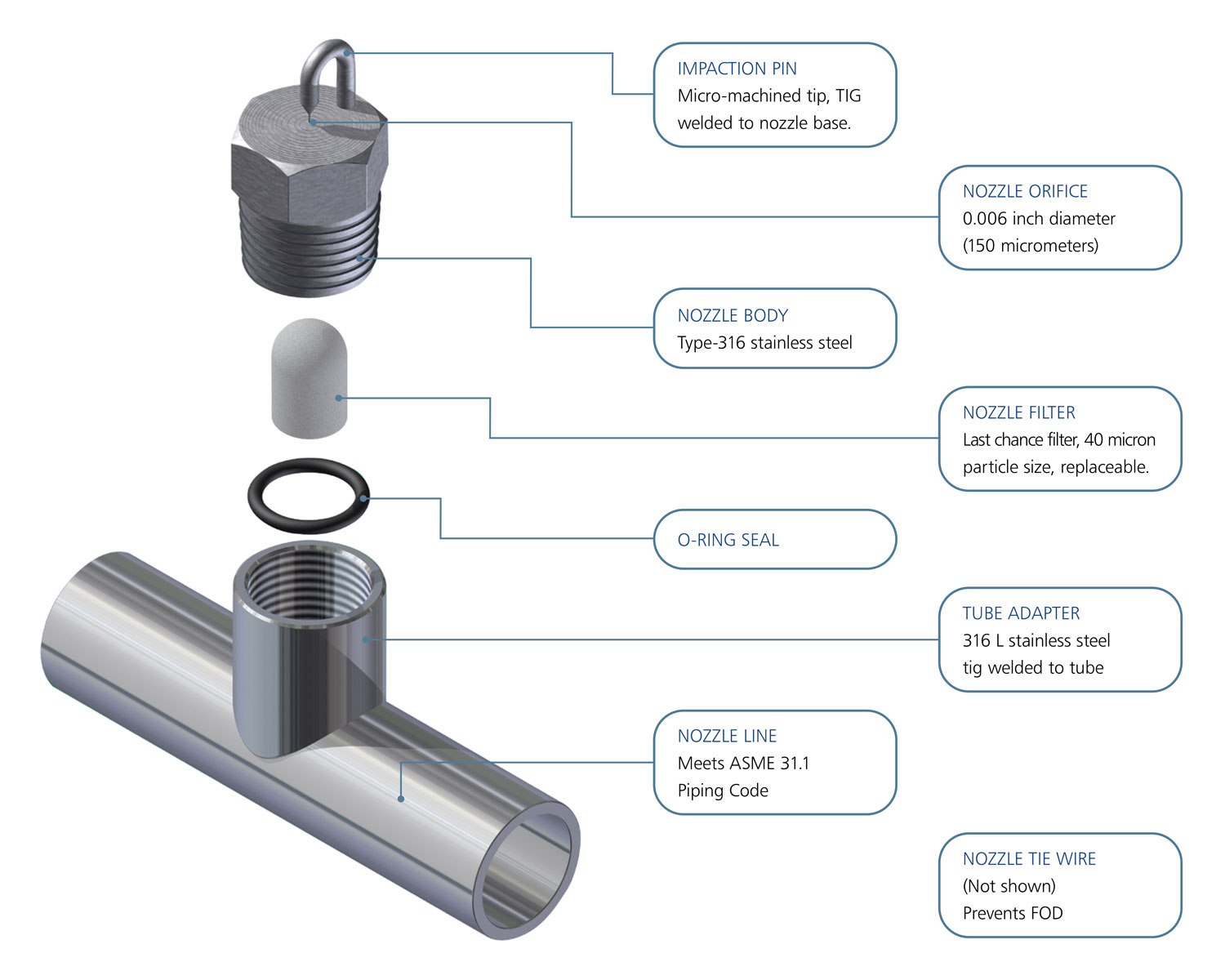
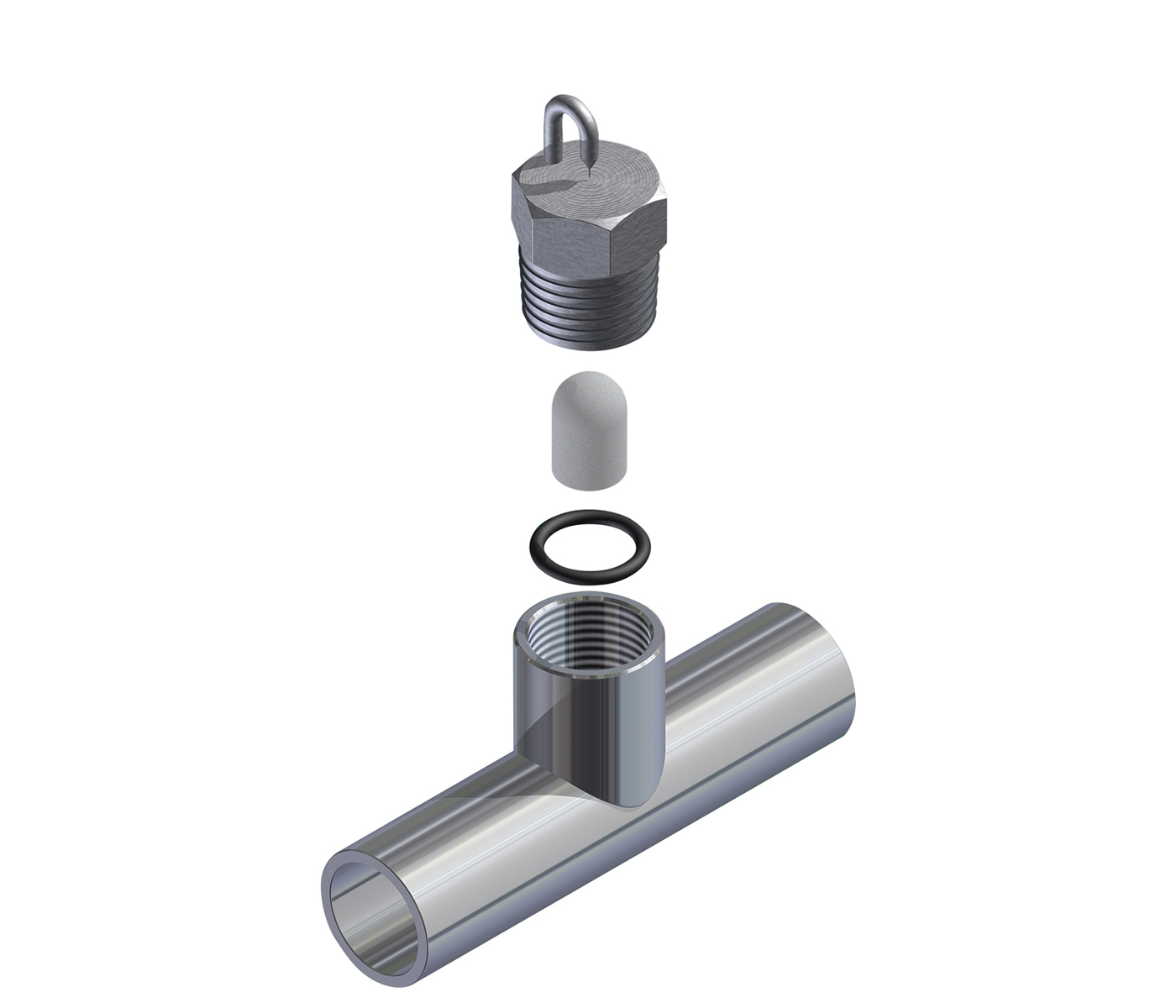
Fog nozzles are mounted on stainless steel tubing inside the air handler. These nozzles produce droplets in the 10-micron range. These precision nozzles are manufactured and tested in Mee Industries' own facility.
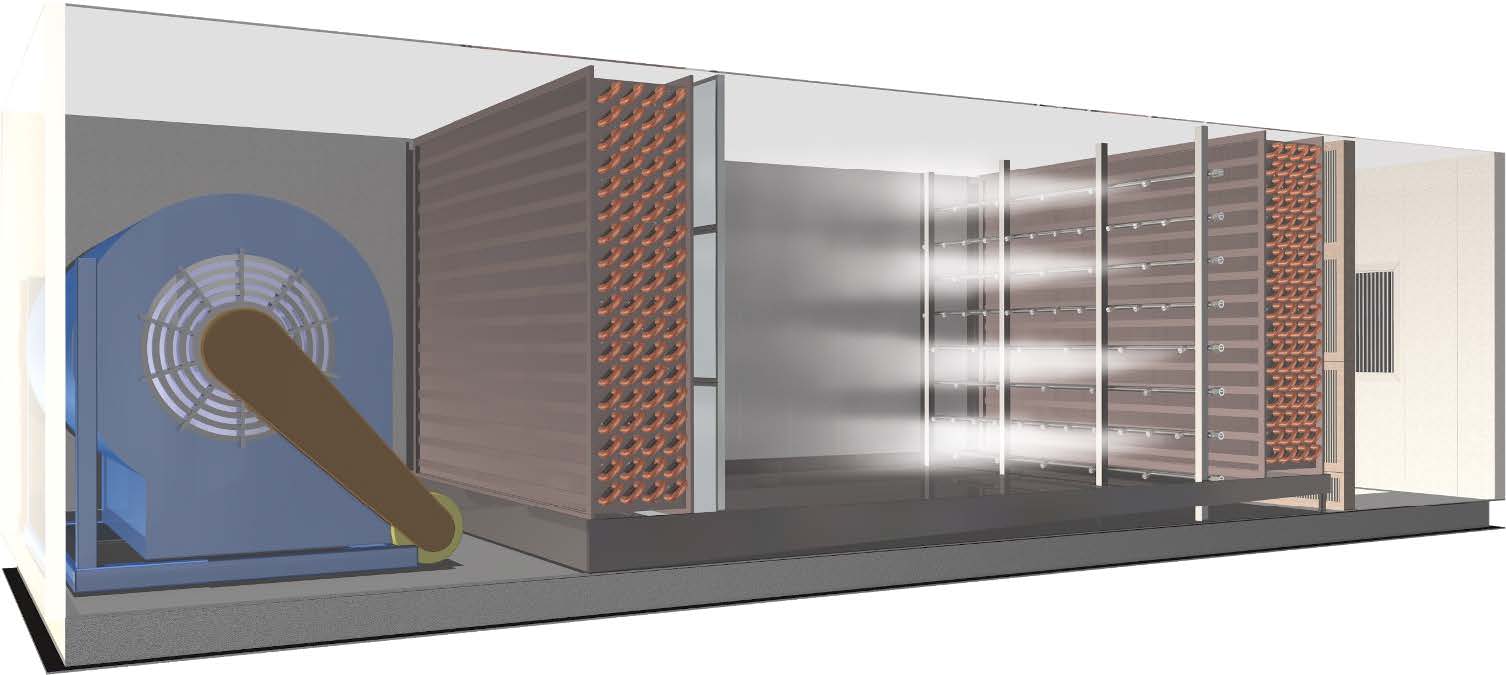
The mist eliminator removes water droplets larger than 5 microns. The filter pads can come off their stainless steel frames and can be washed or replaced easily.
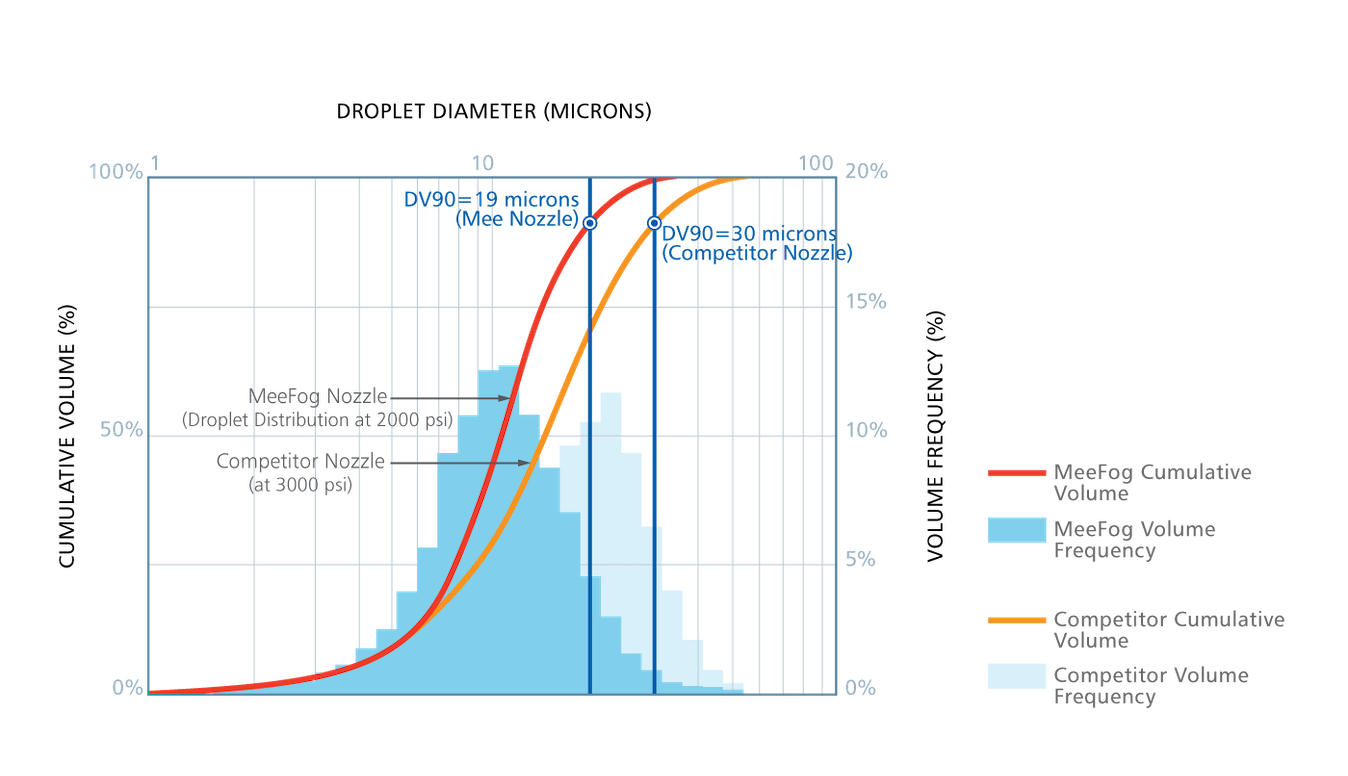 At an operating pressure of 2000 psi, the resulting average droplet size is roughly one-tenth the diameter of a single strand of human hair.
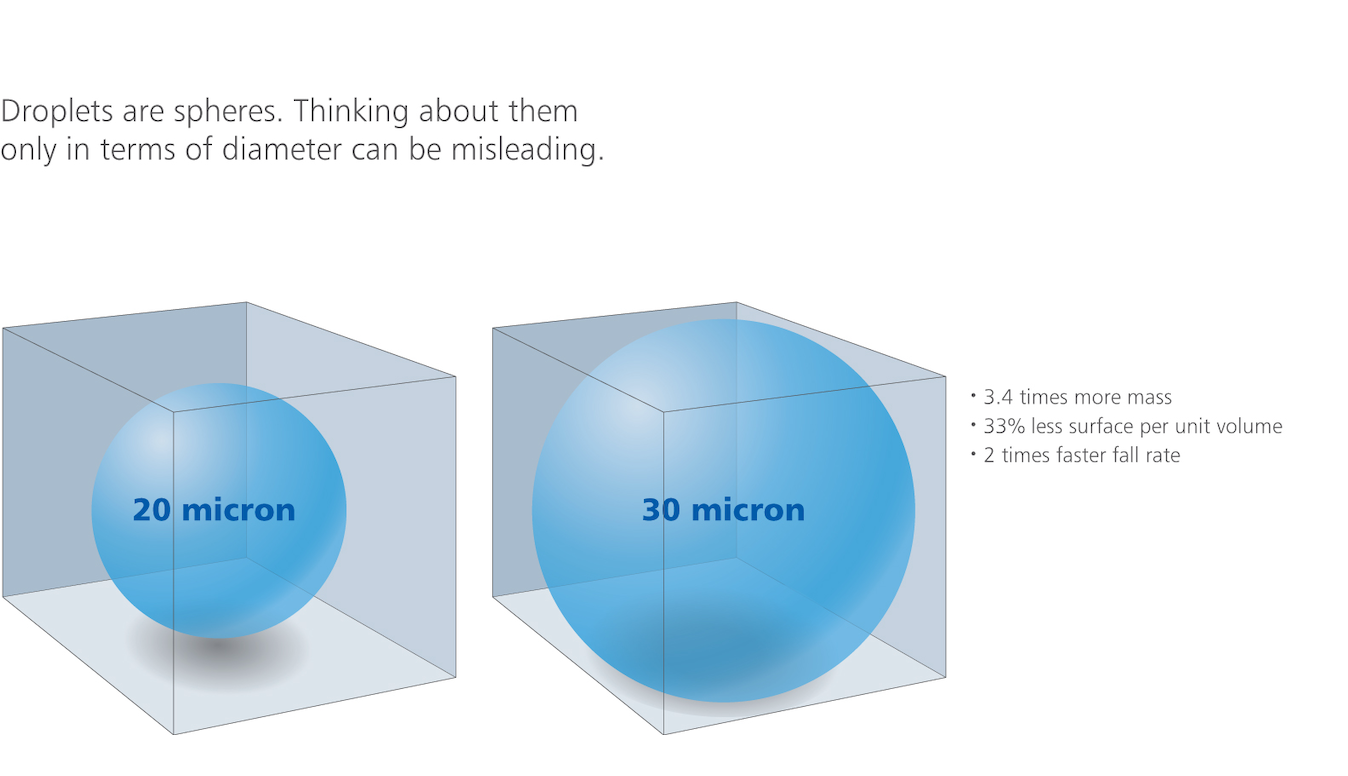 Small droplets have a larger surface-to-volume ratio compared to larger droplets. This allows them to evaporate much more rapidly than larger droplets.
Want Proof?
Still not sure if you want to upgrade your data center cooling infrastructure? We’ll gladly supply a comprehensive payback analysis report for your facility, including:
Data centers contain sensitive servers, storage, and networking equipment that require stable environmental conditions. Low humidity increases the risk of electrostatic discharge (ESD), which can cause catastrophic damage to IT systems. Industry guidelines recommend maintaining around 45% RH to protect equipment and ensure uptime.
Steam humidifiers require large amounts of electricity or gas to boil water, adding unnecessary heat that increases cooling loads. In contrast, MeeFog uses high-pressure fogging, which cools the air as it humidifies. On average, MeeFog data center cooling systems consume 1/100th the energy of electric steam humidifiers, making it one of the most energy-efficient humidification solutions for data centers.
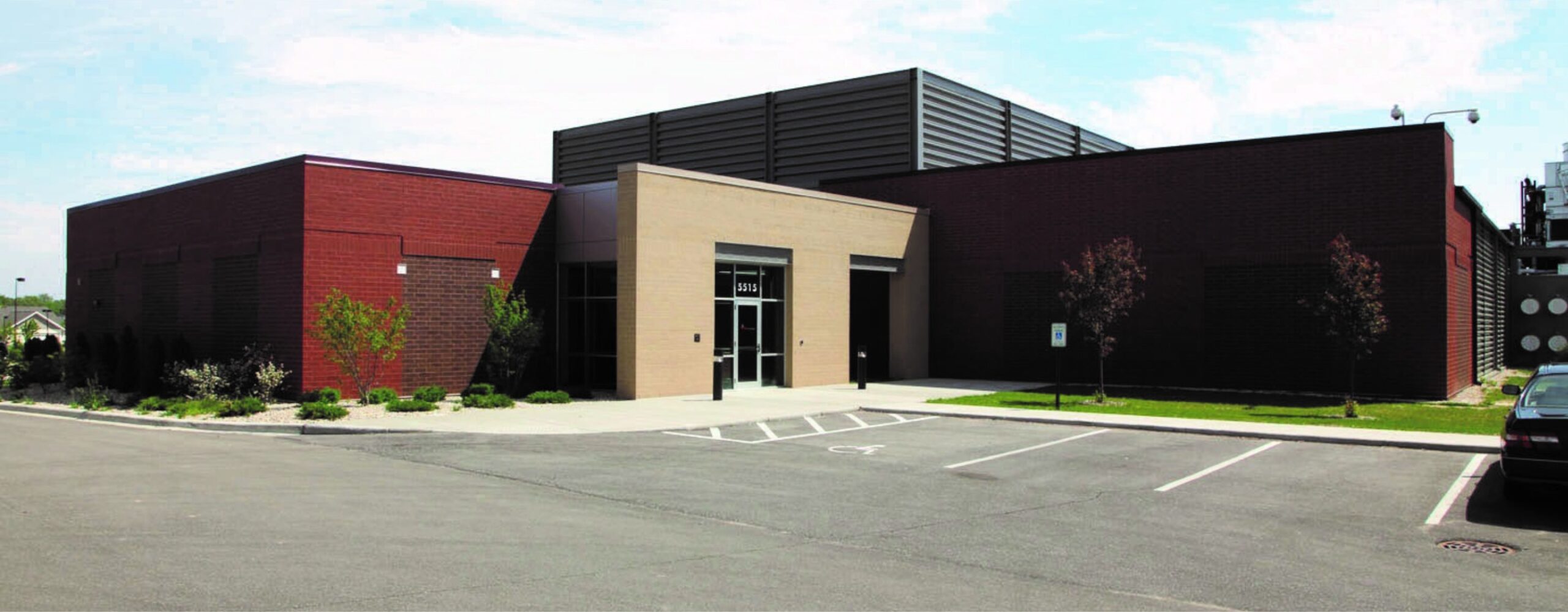
At its Tier 3 data center in Fitchburg, Wisconsin, OneNeck IT Solutions installed a MeeFog data center cooling and humidification system to reduce energy use. Combined with UPS and BAS modifications, the system significantly cut power consumption.
The MeeFog data center cooling system provided: high-pressure fogging to reduce chiller load, full redundancy (two pumps, two power feeds, two controls), simple integration with existing AHUs, and one fogging system per room handled the load. This approach provided robust reliability while lowering operational costs.
MeeFog data center cooling systems are designed to meet Tier 3 redundancy standards, with dual pumps, dual power feeds, and independent controls. This ensures continuous operation even during component failures. By integrating into existing air handling units (AHUs), MeeFog delivers precise humidity control without compromising uptime.
The ROI is typically very fast, as MeeFog reduces bothhumidification and cooling energy costs. With energy use up to 100x lower than electric steam, operators can achieve payback within 1–3 years, depending on facility size and hours of operation. At the same time, MeeFog data center cooling systems reduce operational complexity and maintenance compared to steam boilers.
Yes, MeeFog humidifiers integrate seamlessly with modern data center BAS and monitoring systems, enabling operators to control humidity levels with the same precision as temperature and airflow. At OneNeck IT Solutions, the MeeFog system worked alongside existing infrastructure while delivering measurable energy savings.