Boosting Data Center Efficiency with a MeeFog Humidification System
Case Study: OneNeck IT Solutions wanted to cut its energy costs, but still needed a humidification system that would meet its redundancy…
Existing Customers Call 626-359-4550 Or Visit Customer Care


Museums need stable indoor humidity to protect paintings, artifacts, wood, textiles, and other sensitive materials from changes caused by dry or overly humid air. MeeFog integrates a high-pressure humidification system with existing museum HVAC systems to maintain controlled relative humidity throughout galleries, storage areas, and exhibition spaces. For facilities evaluating HVAC systems for museums, MeeFog provides precise humidity control with lower energy use than traditional steam humidification.
Benefits:

Libraries store books, manuscripts, archives, photographs, and other materials that can react to changes in indoor humidity. A MeeFog humidification system adds fine water droplets to the HVAC air stream, helping libraries maintain consistent relative humidity across reading rooms, archives, and collection areas. For a library HVAC application, controlled humidification can support material preservation while improving comfort for visitors and staff.
Benefits:

Dry indoor air can affect employee comfort and increase static electricity inside commercial buildings. MeeFog works with existing office HVAC systems to add controlled moisture to conditioned air and maintain more consistent indoor humidity. The high-pressure humidification system can serve large office buildings through centralized air-handling equipment while using less energy than steam-based humidification.
Benefits:
Click the different areas of the diagram below to learn more information about our system.
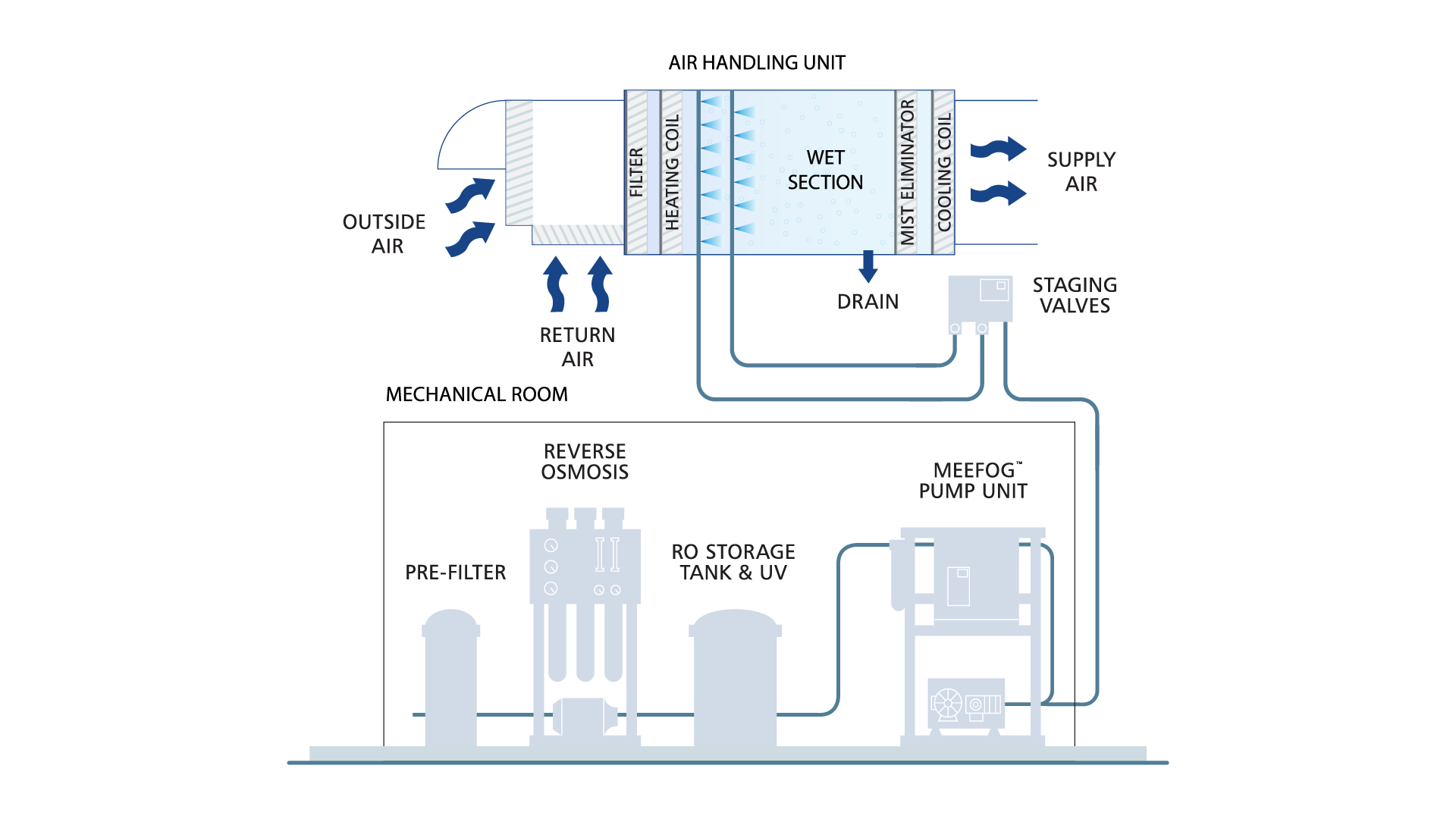
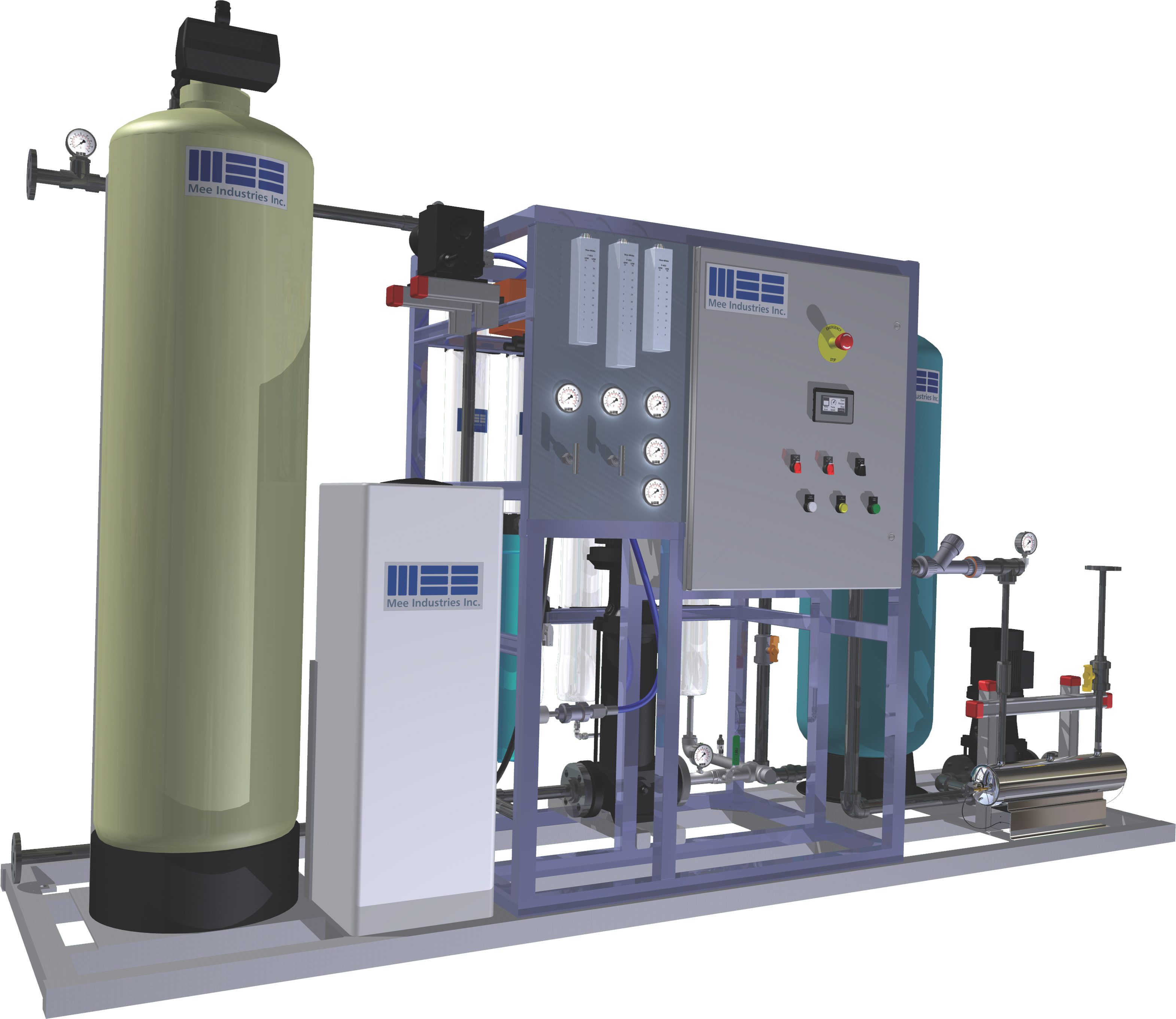
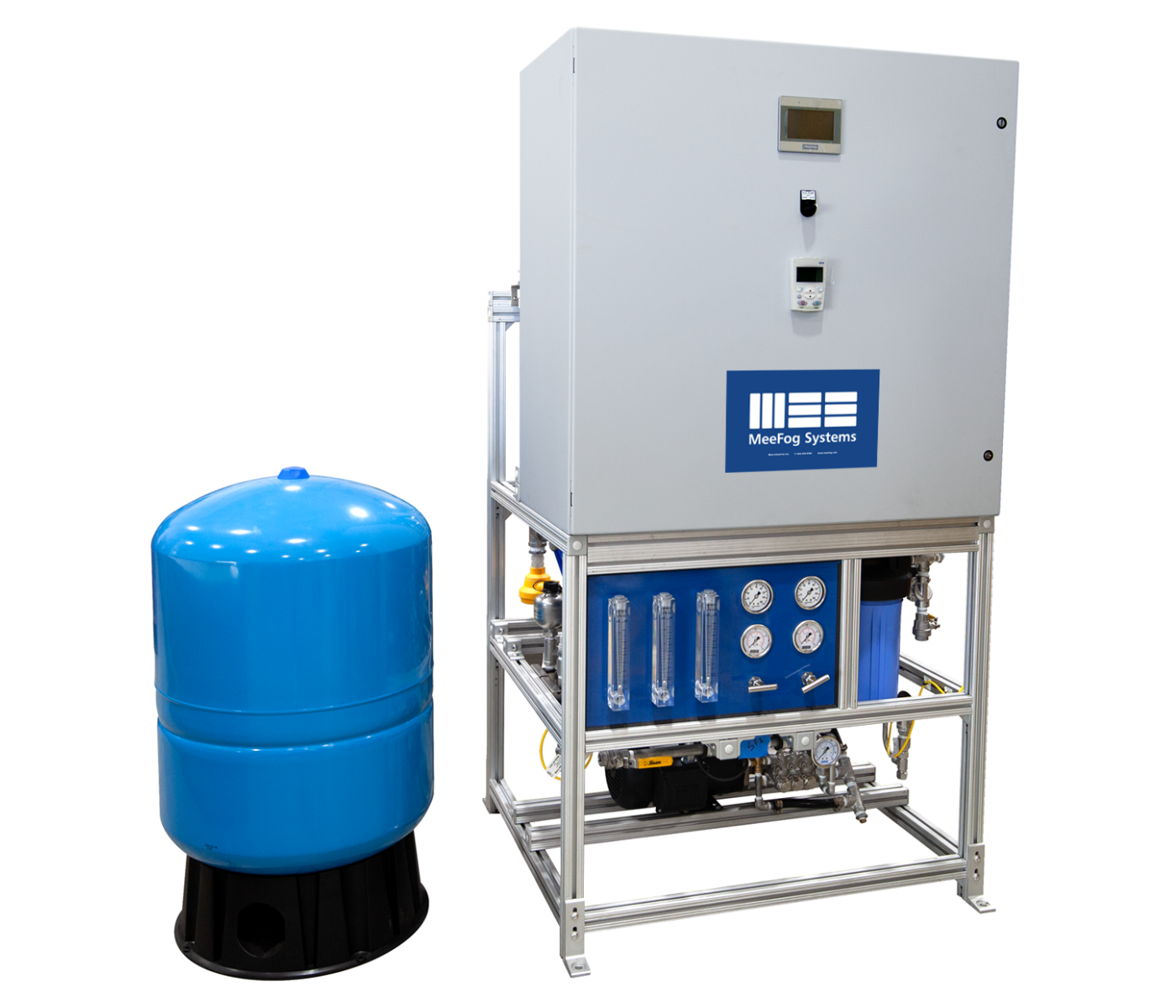
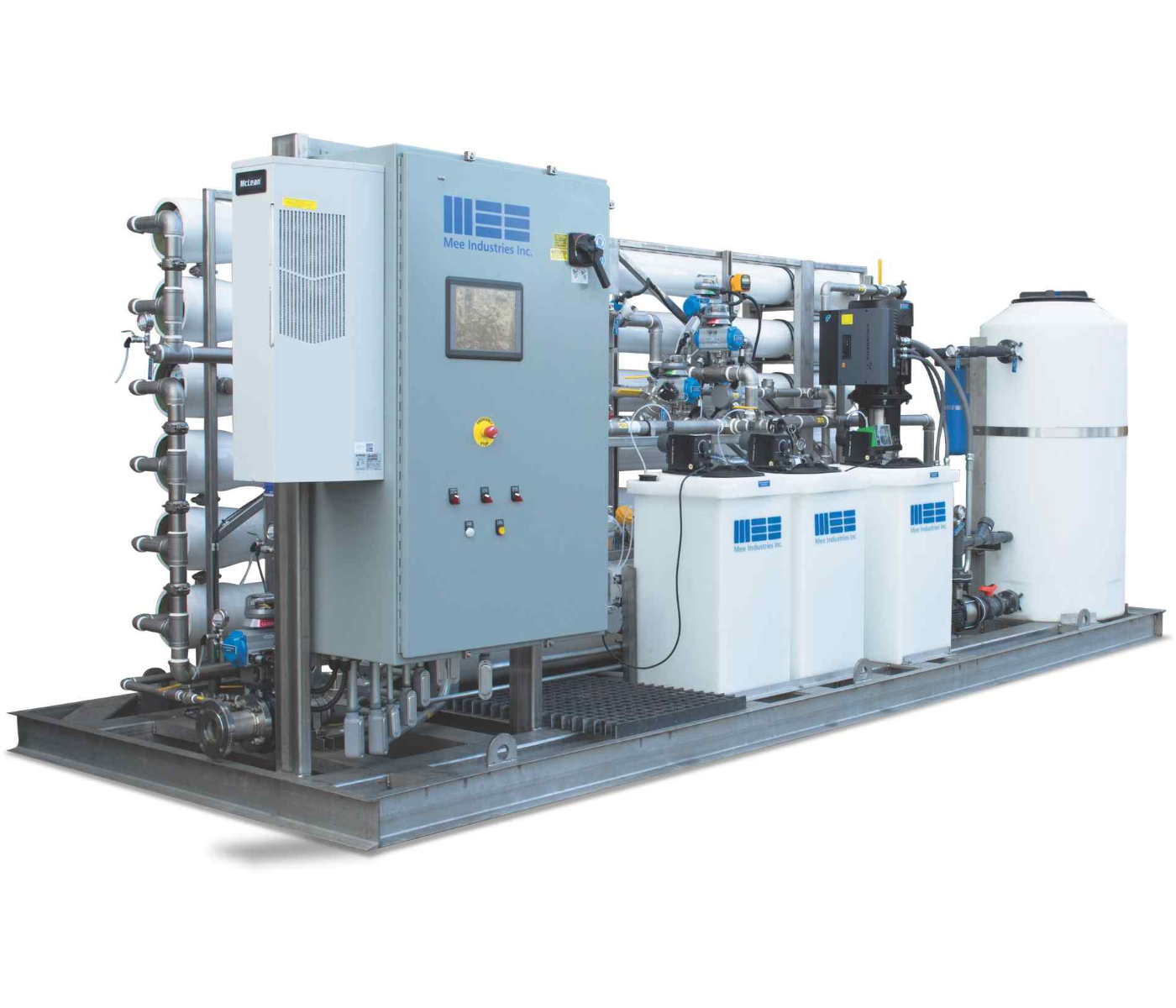
City water is treated using the Reverse Osmosis water treatment rack. This purifies the water, removing minerals, particulate, and microorganisms. Systems include automated membrane flushing, pre-treatment filtration, and UV Re-Circulation.
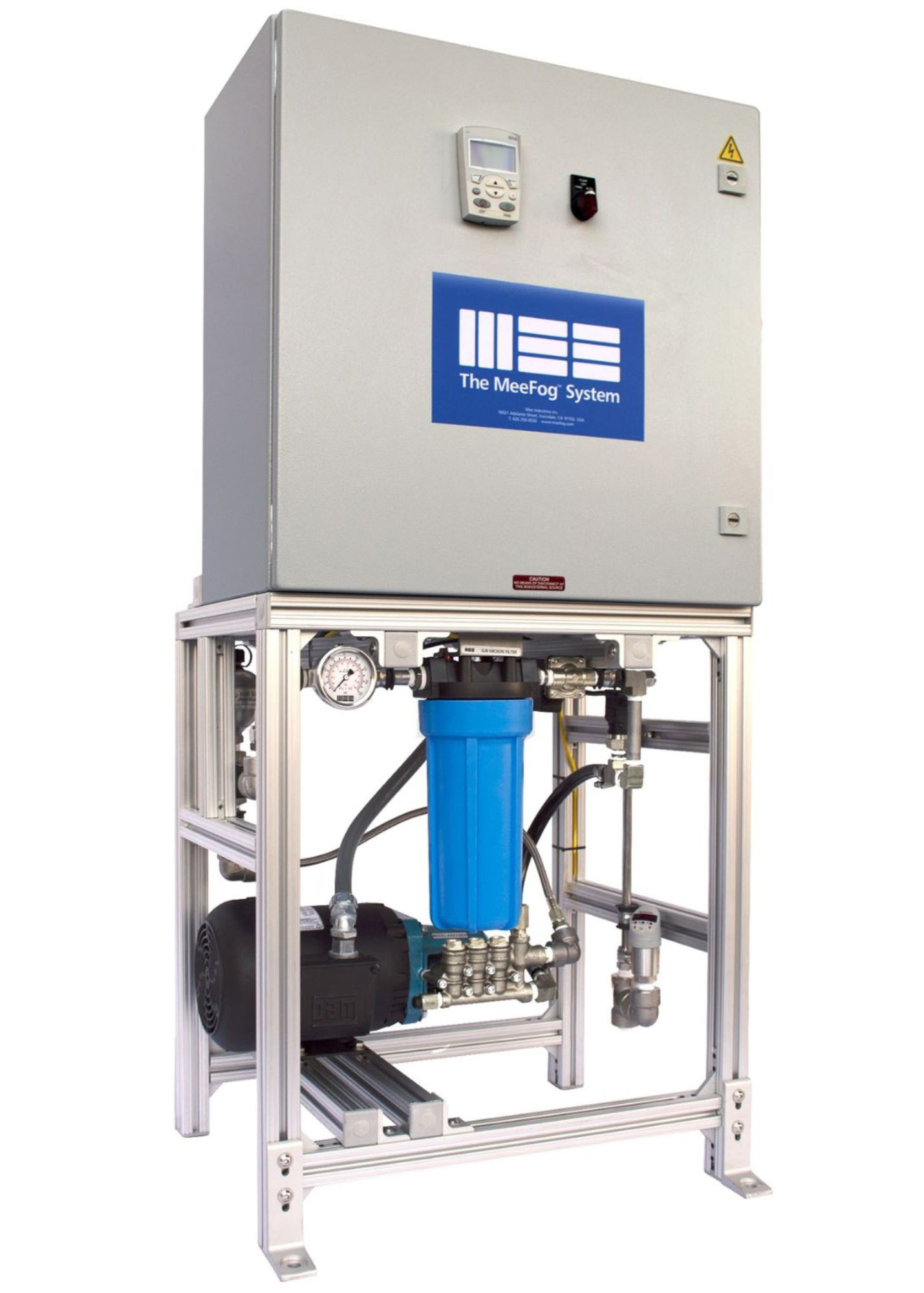
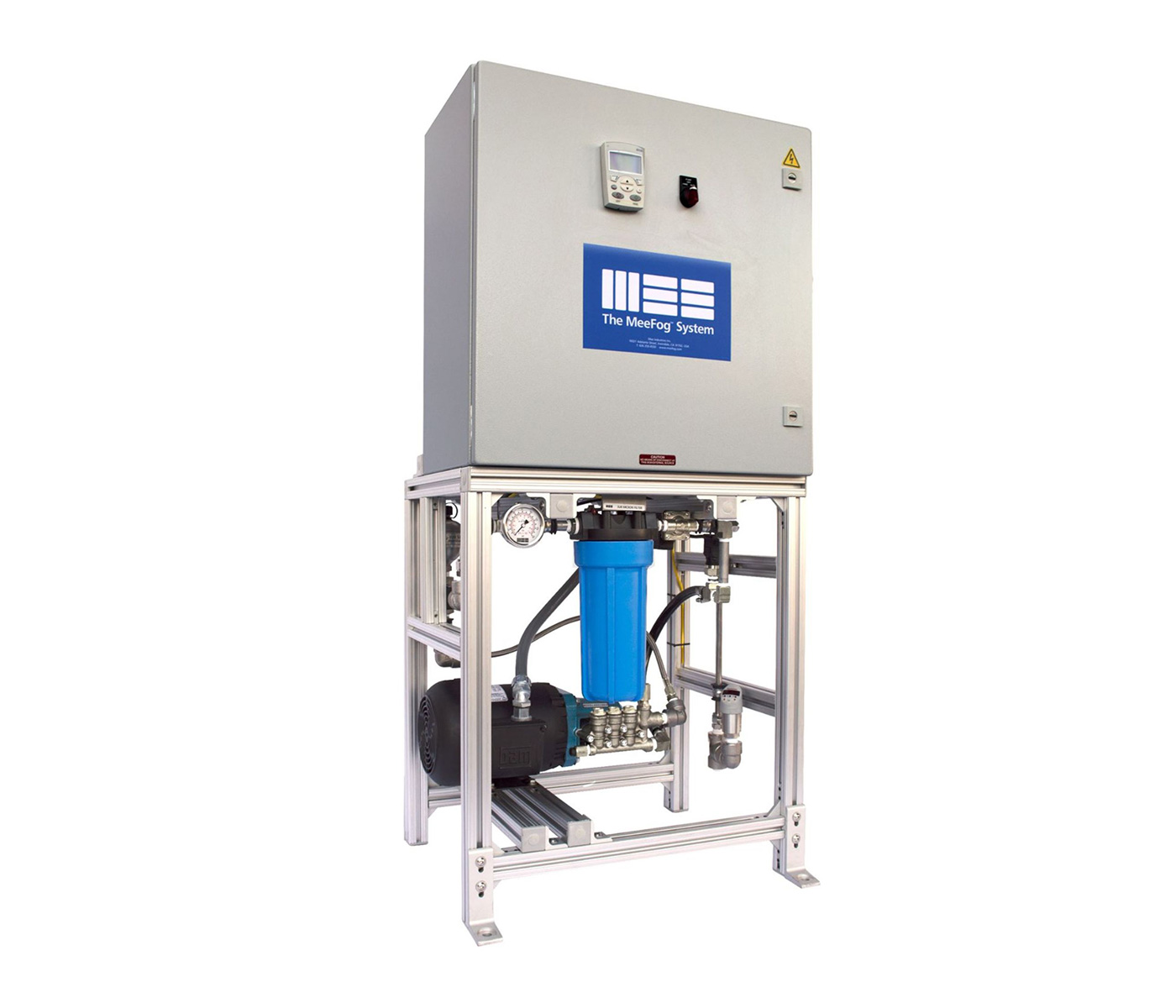
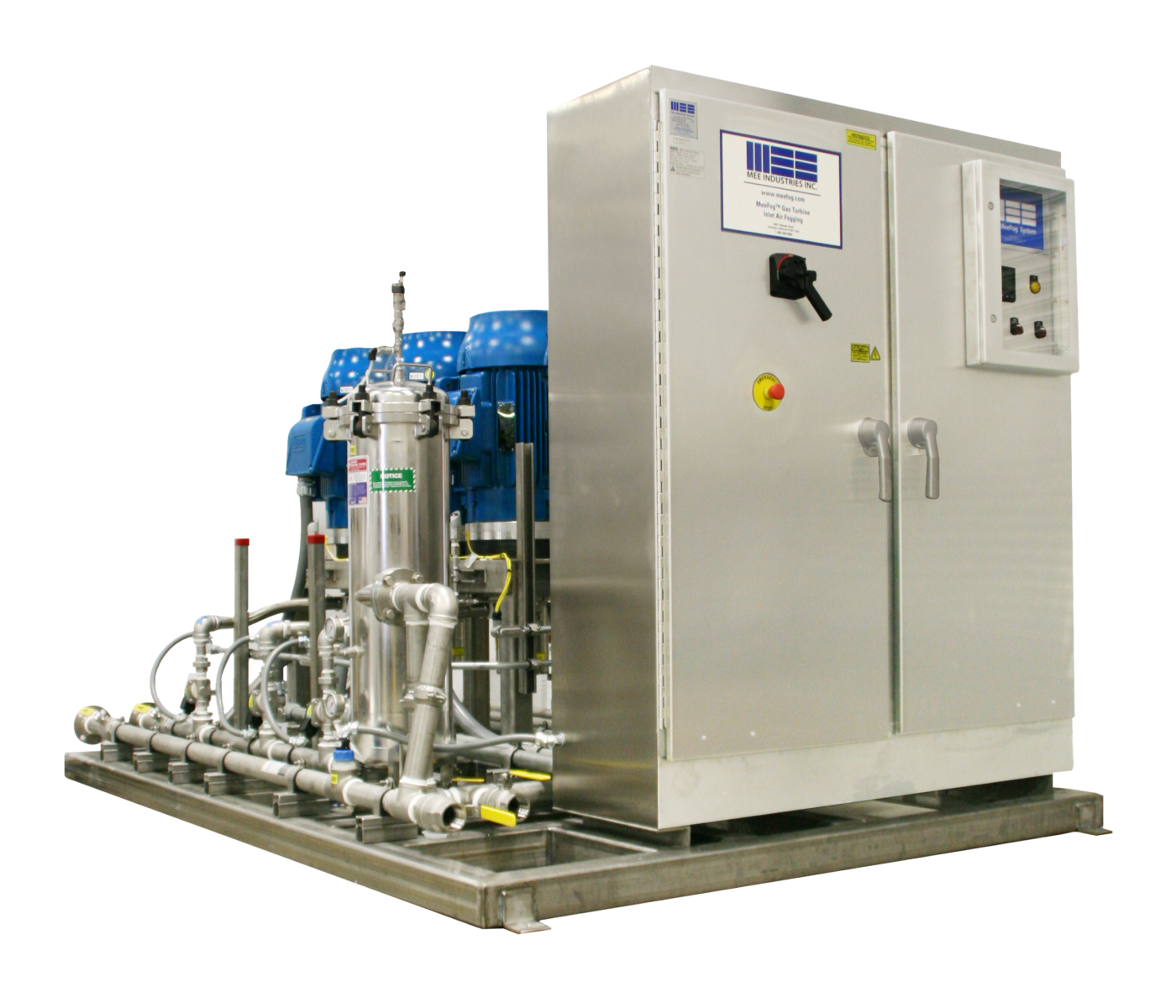
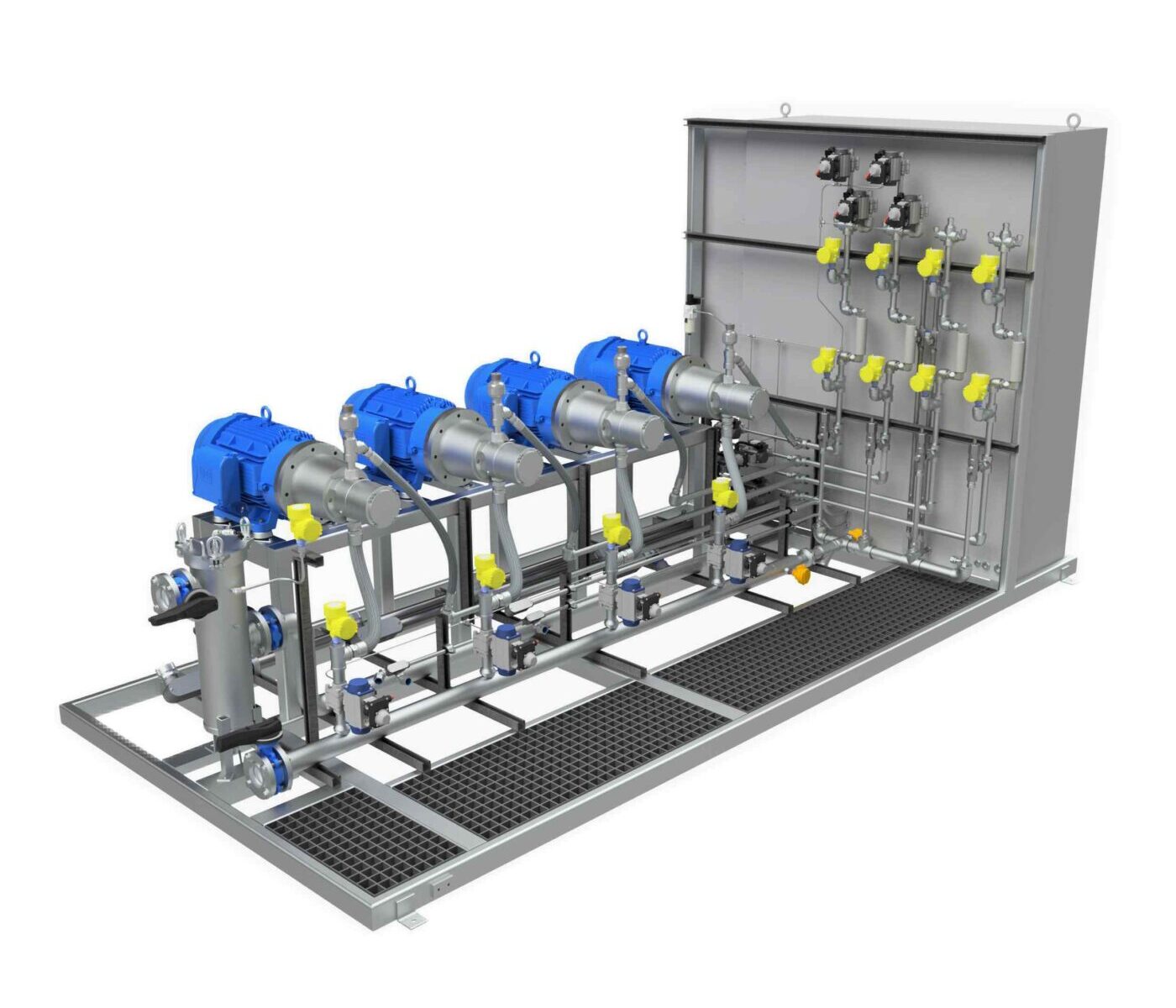
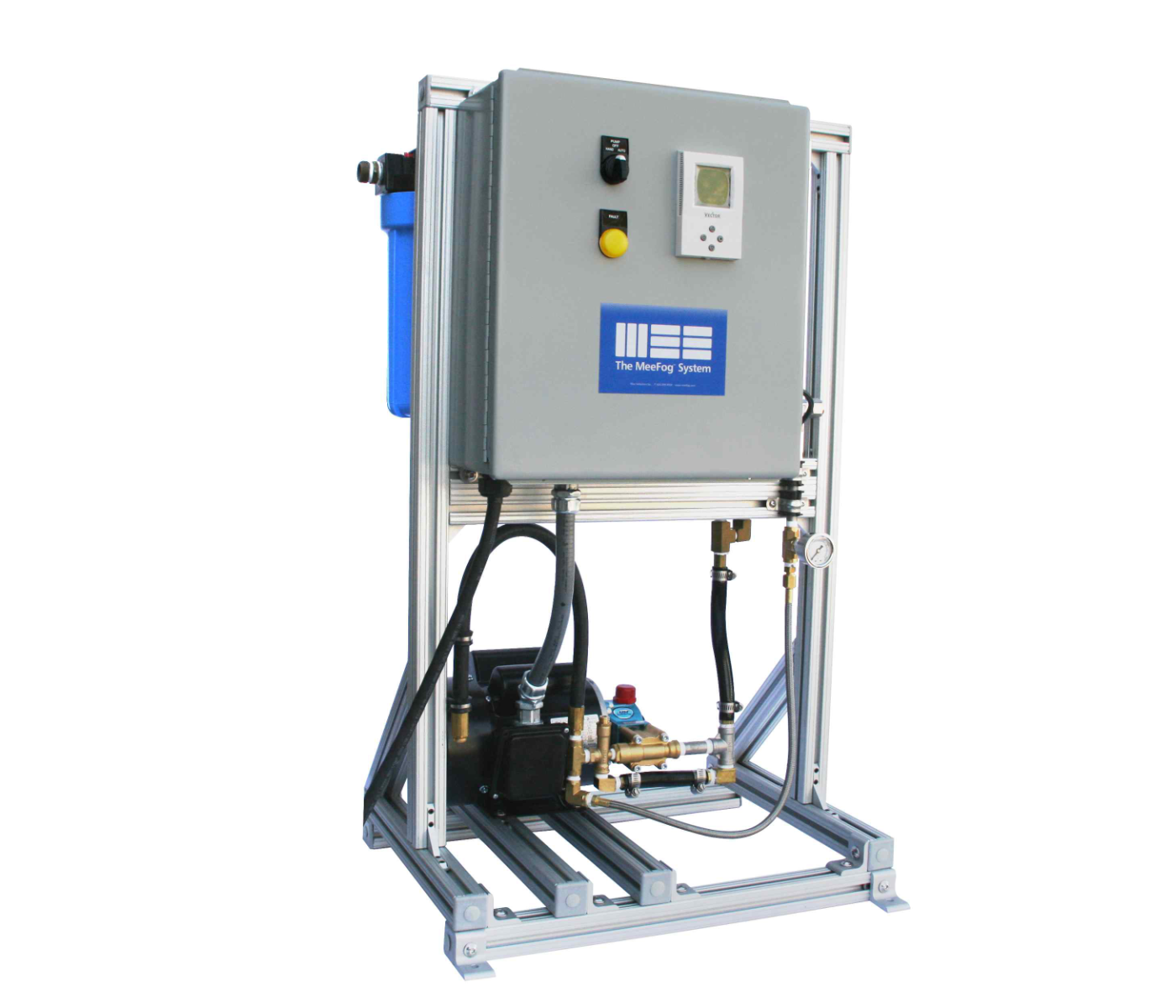
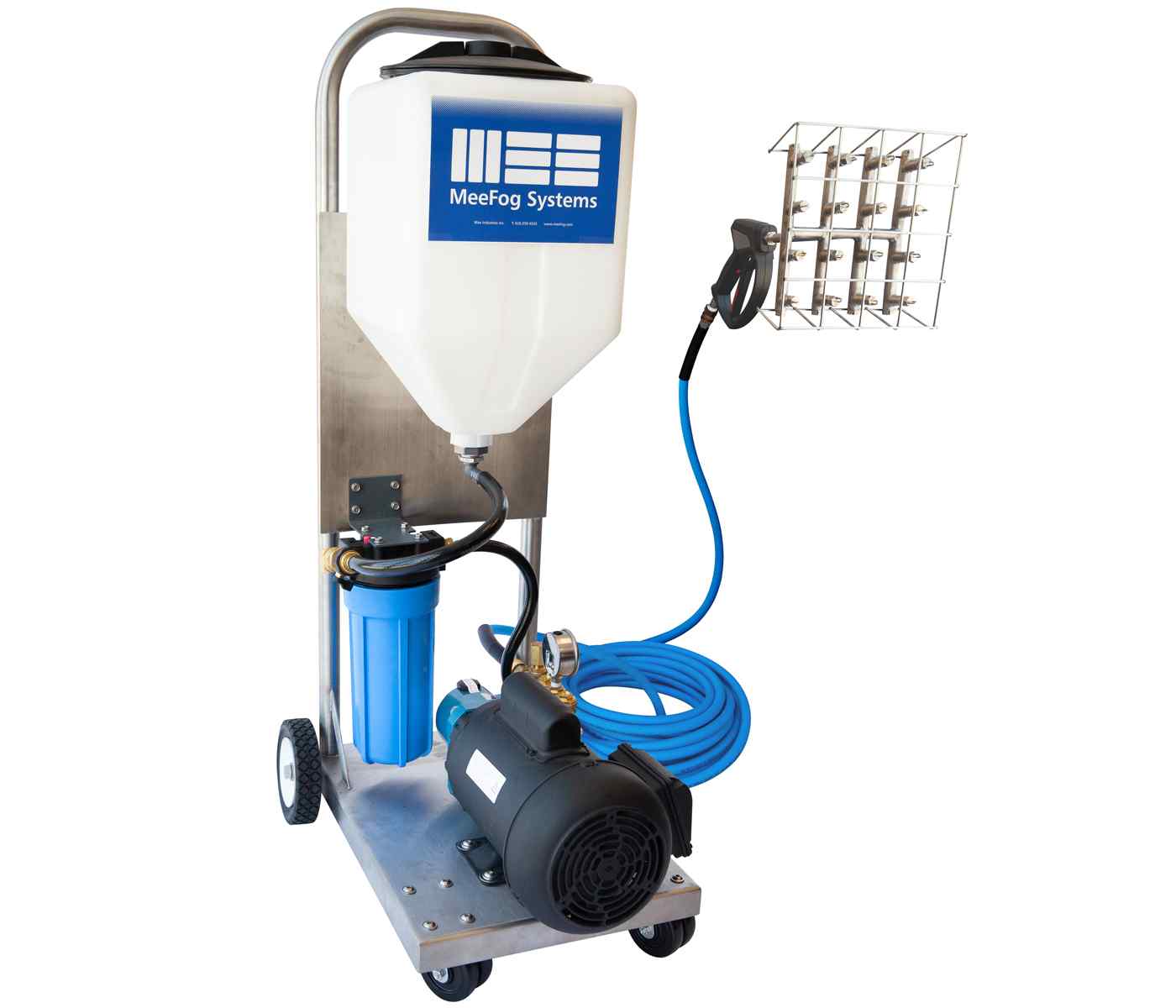
The high-pressure pump maintains 1000 psi water pressure in order to atomize the water into tiny droplets that can evaporate into the air stream. The pump rack has a VFD with panel-mounted controller that maintains pressure when staging valves open and close.
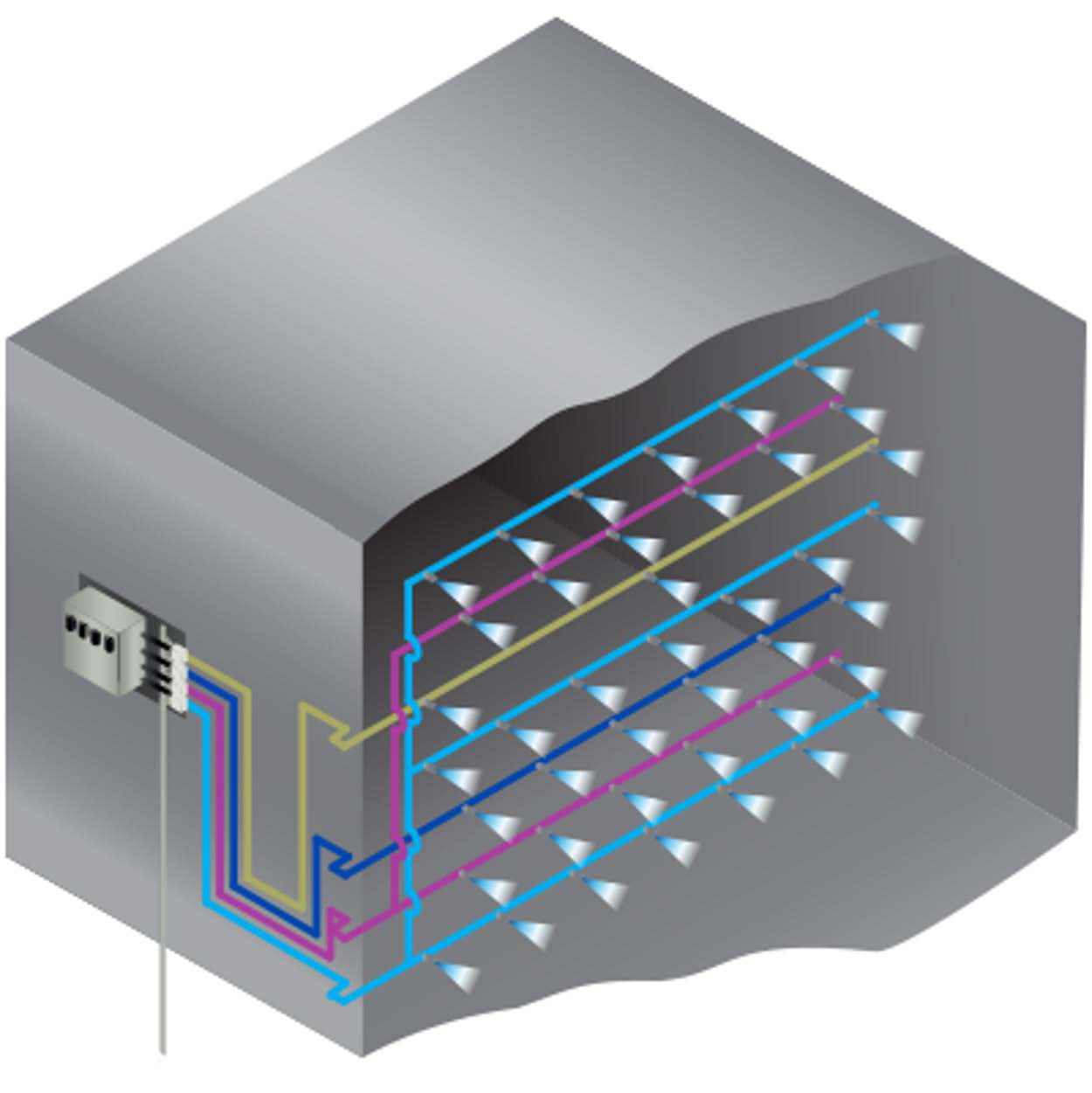
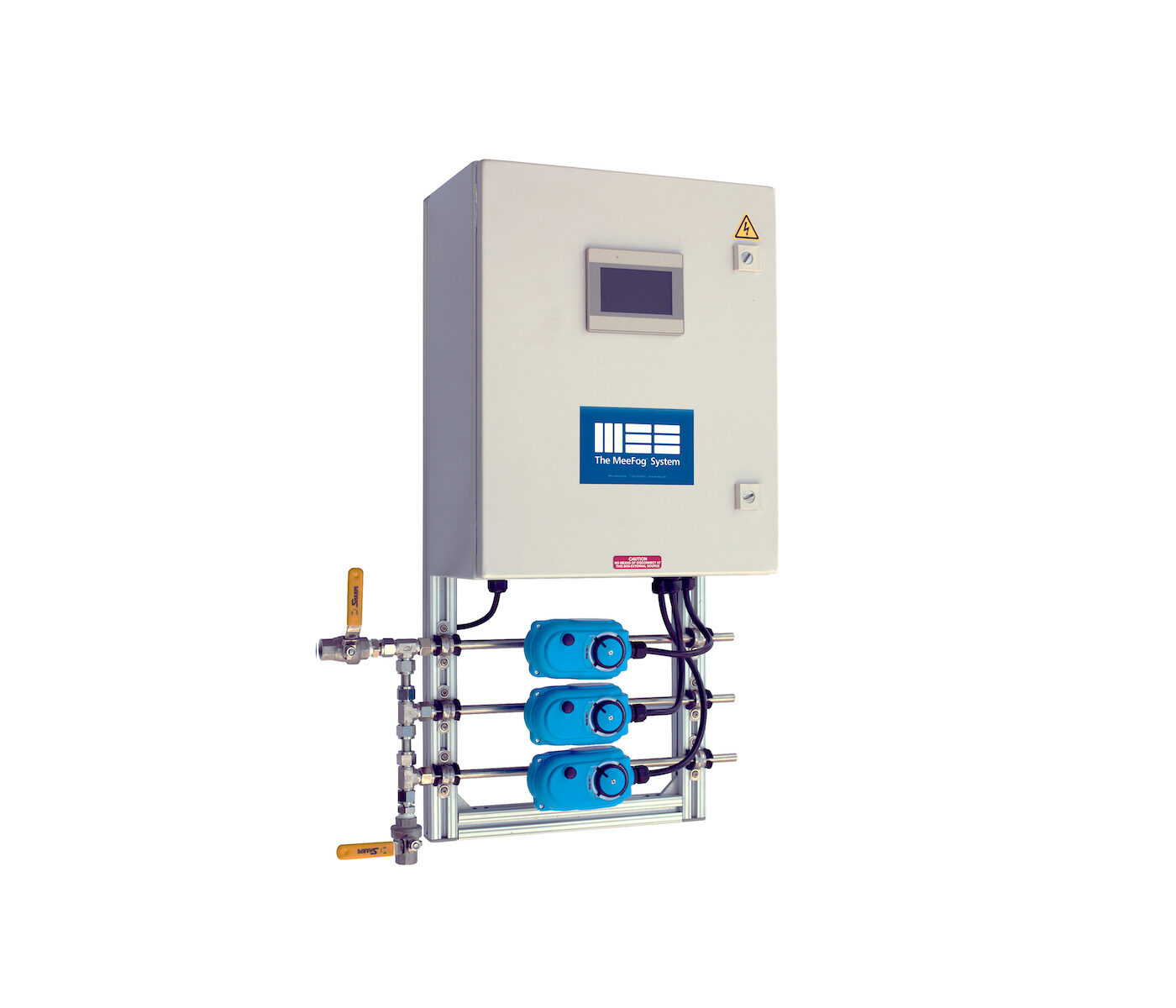
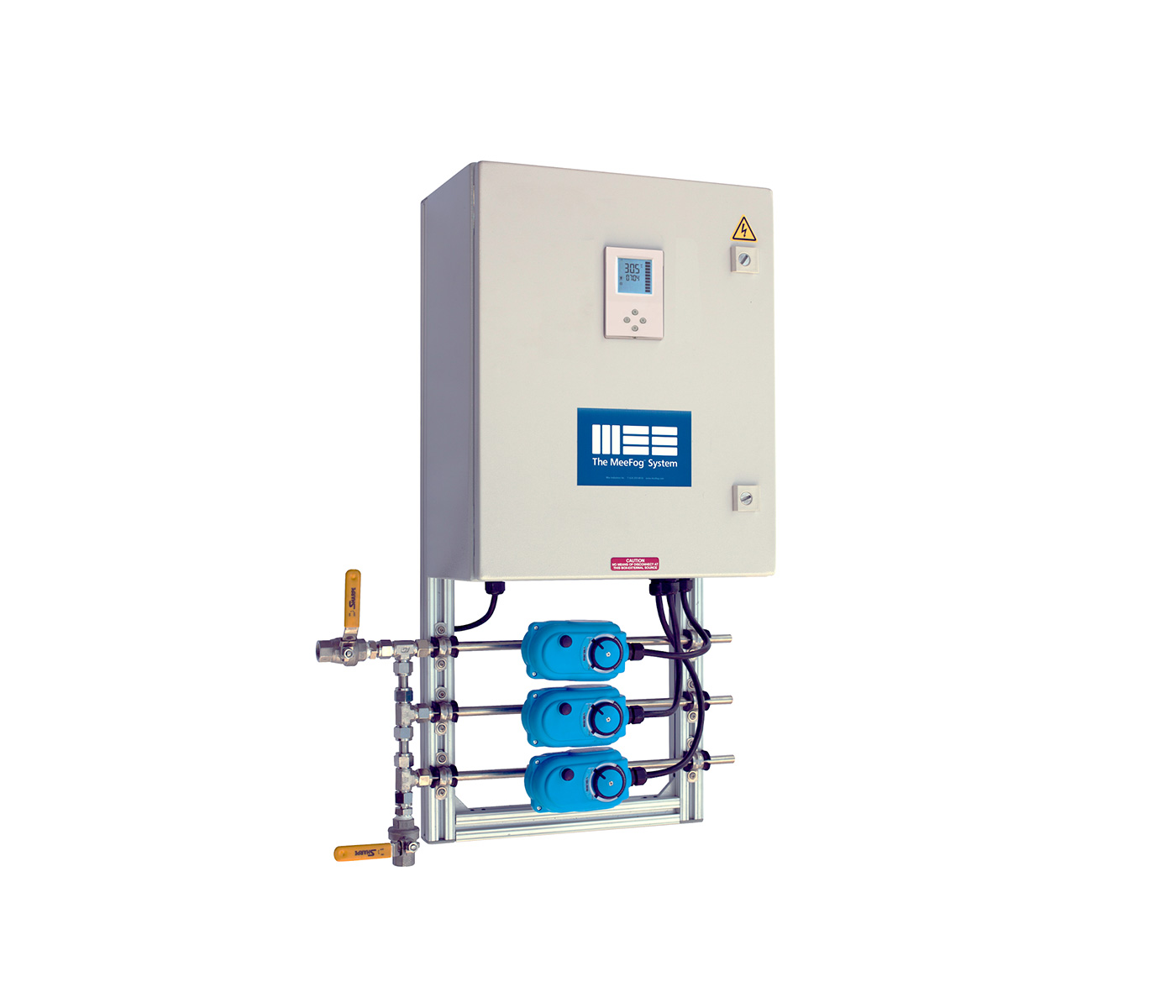
The valve panel allows precise control over how much humidification is injected into the air stream based on a signal from the BMS. It is possible to control the humidification level in the space to plus or minus 1% RH.
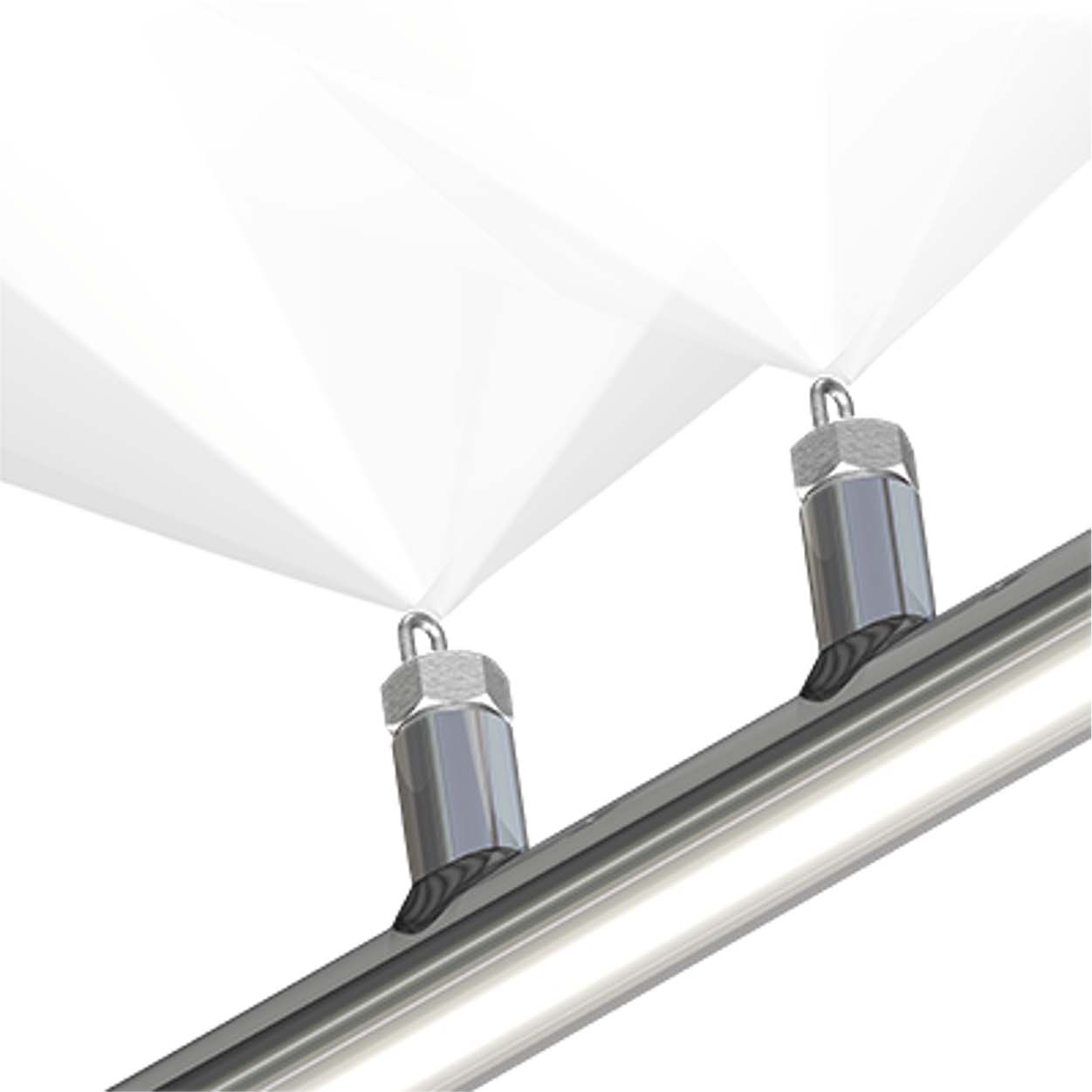
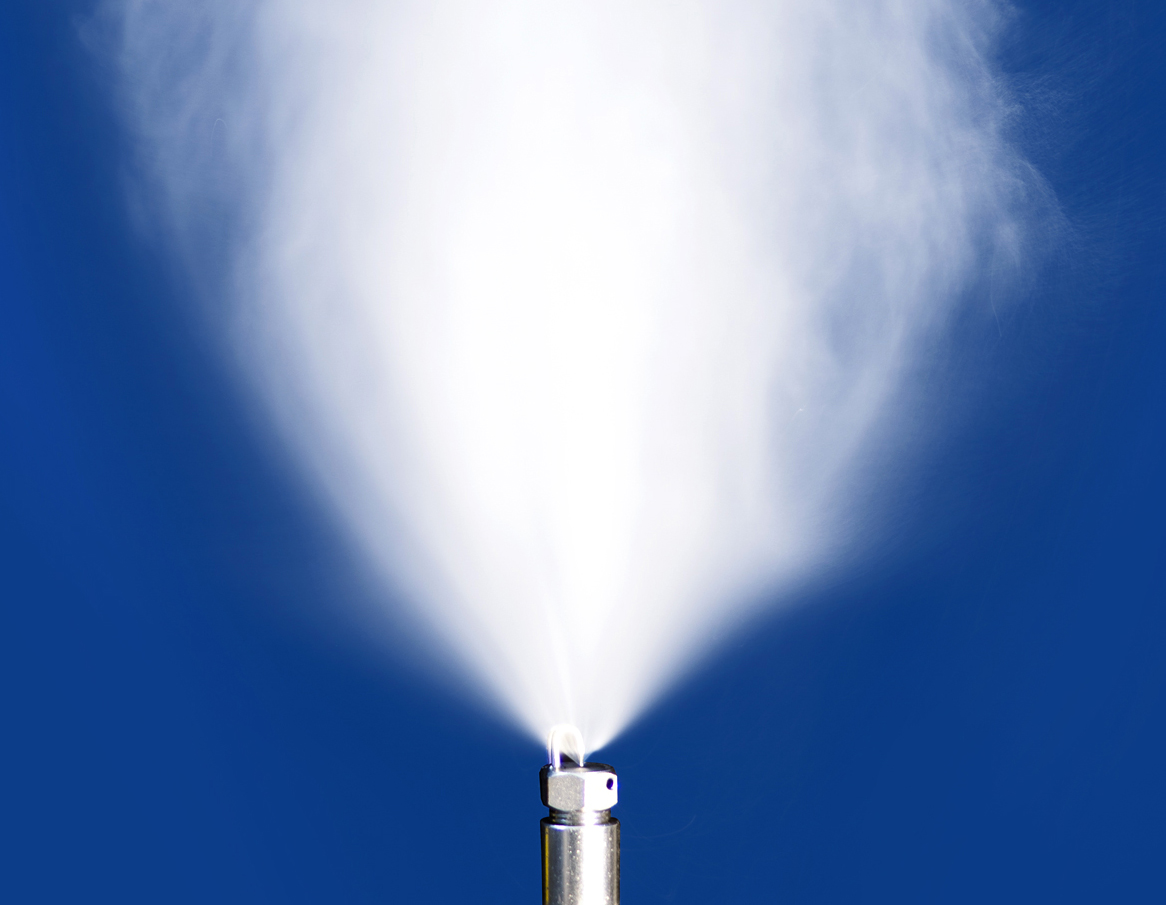
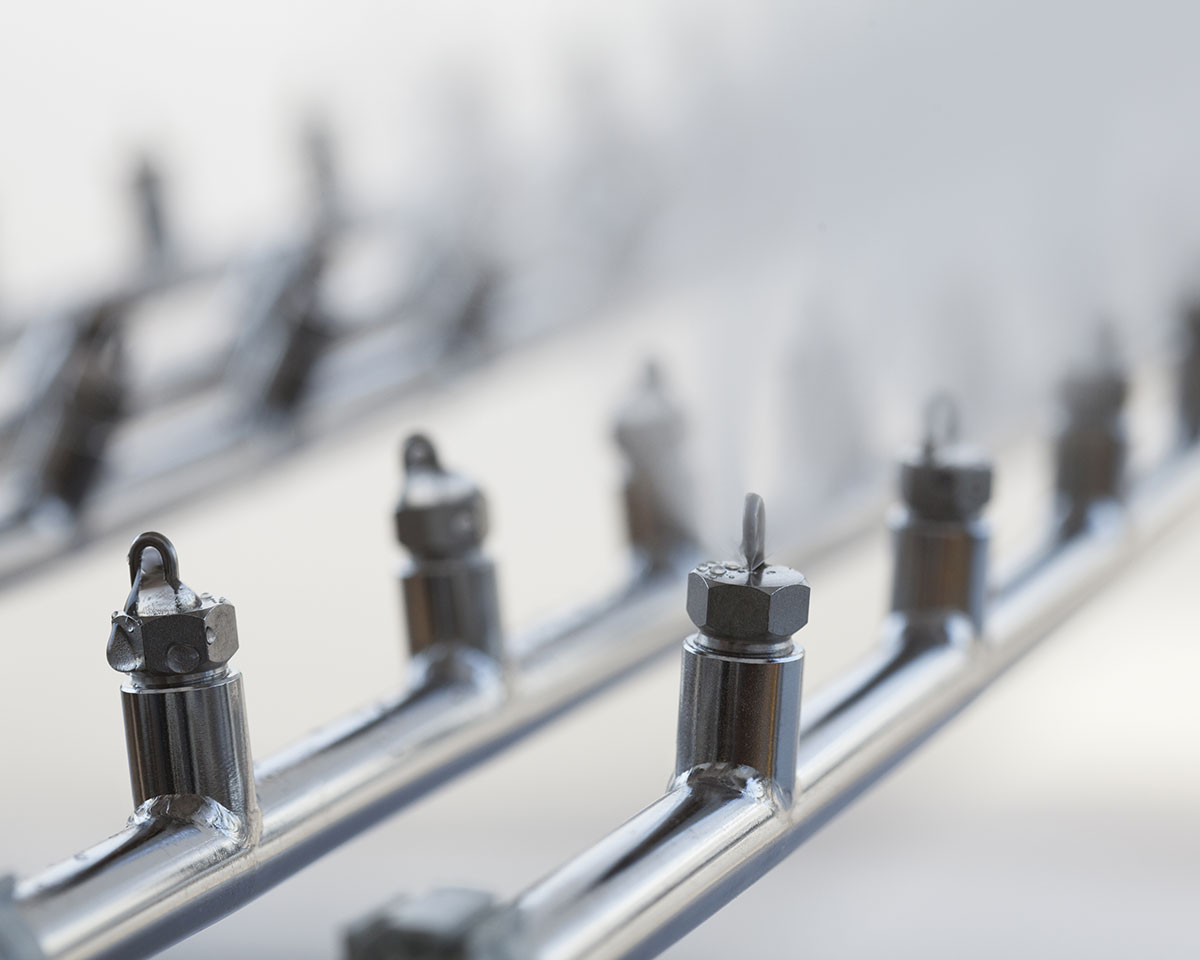
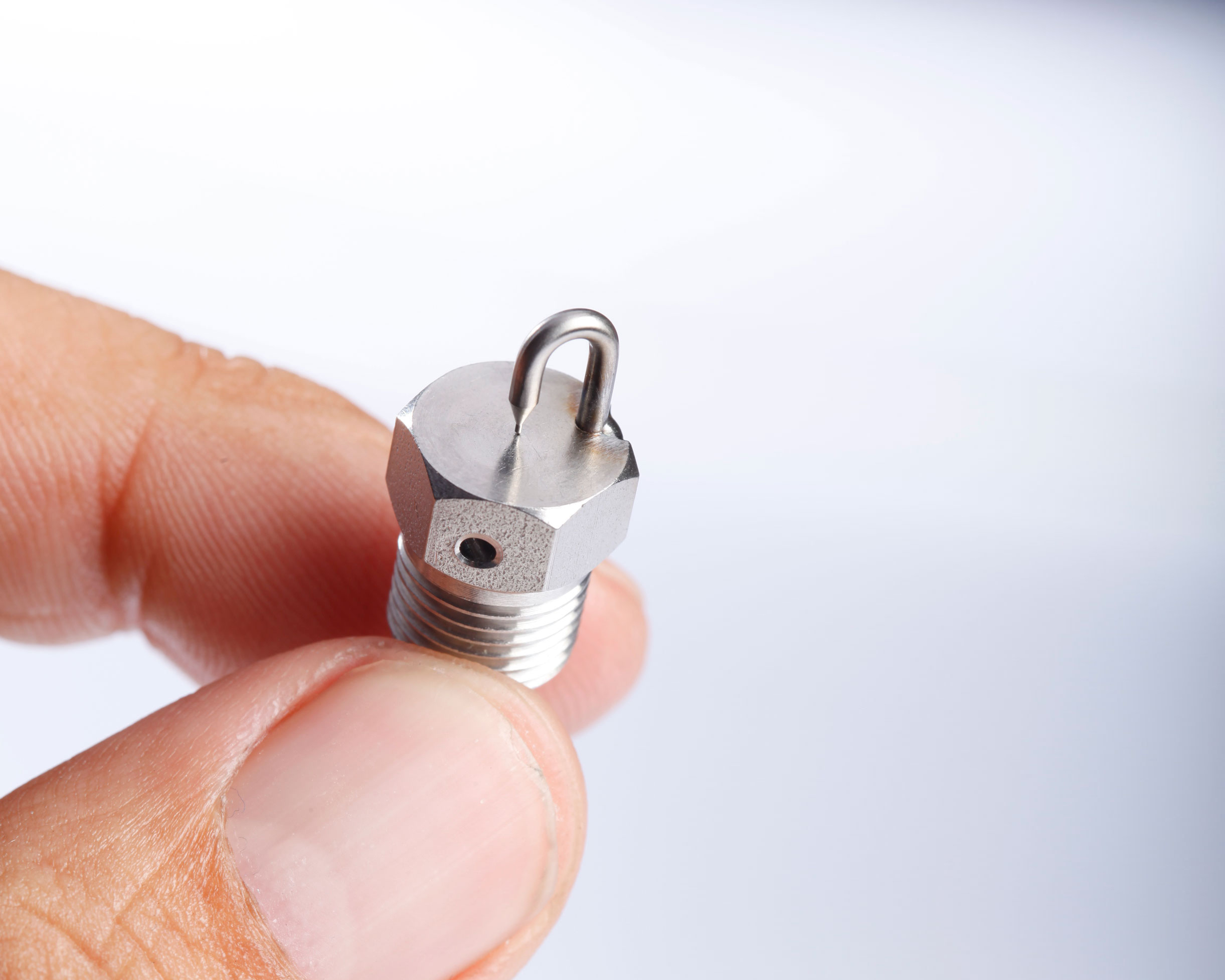
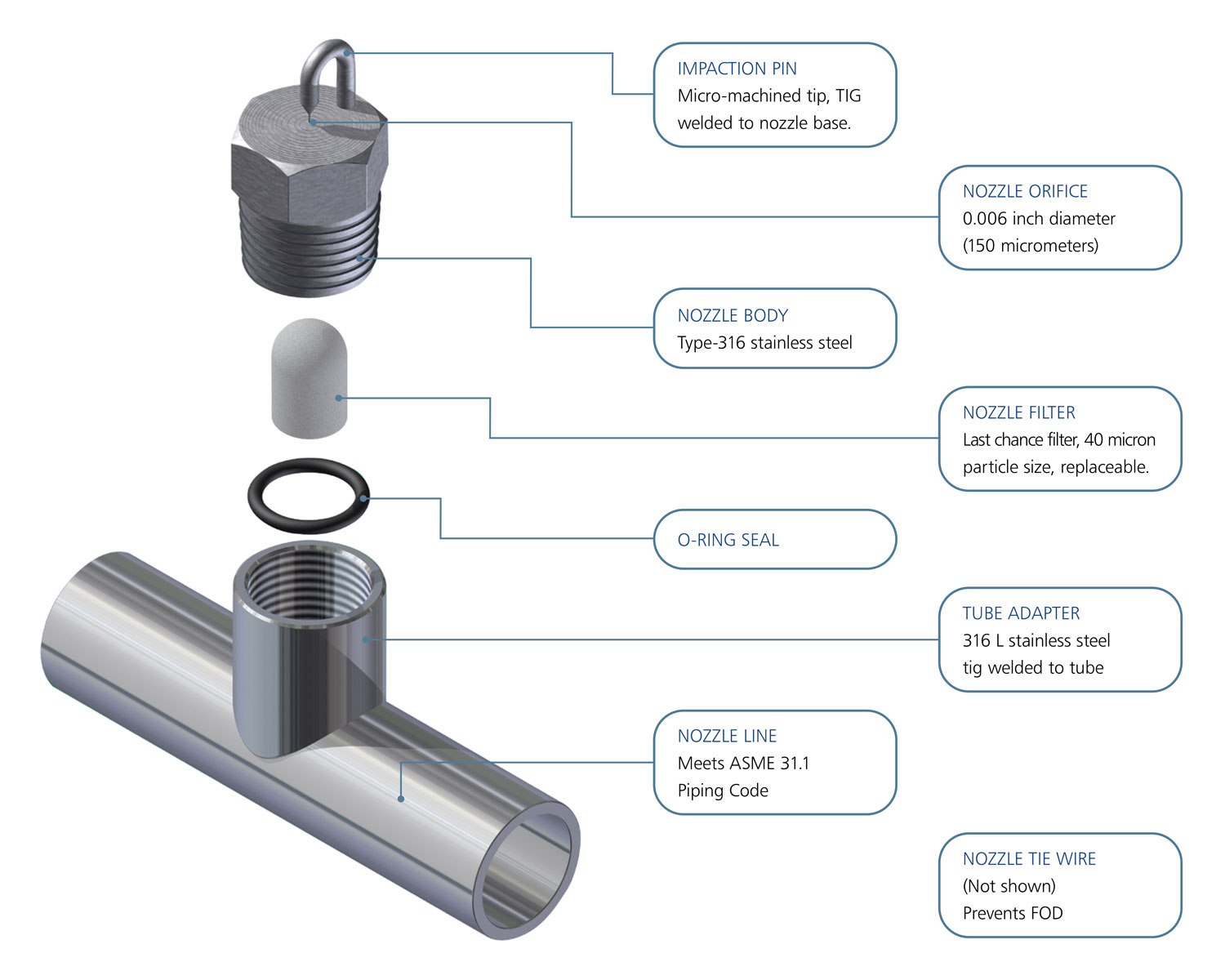
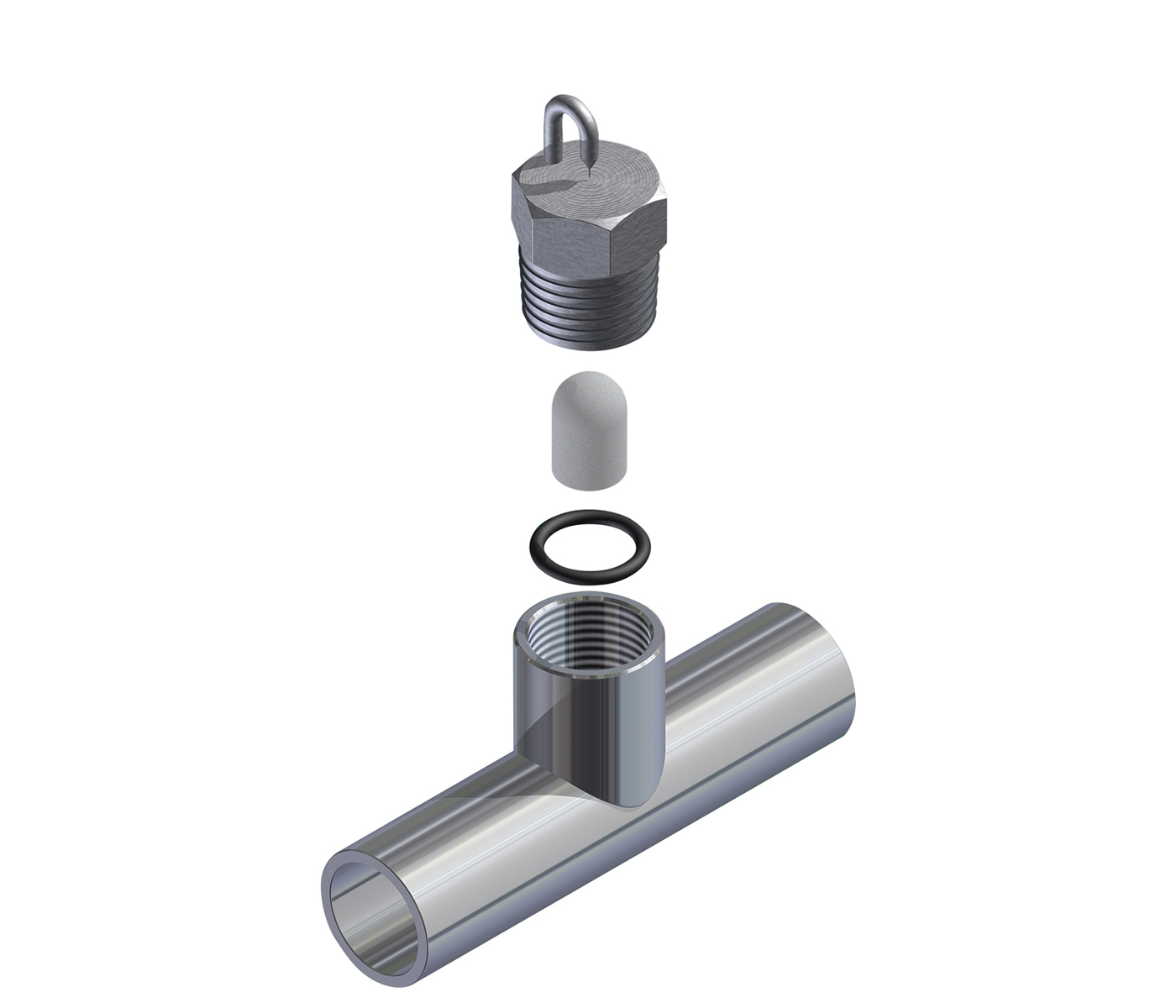
Fog nozzles are mounted on stainless steel tubing inside the air handler. These nozzles produce droplets in the 10-micron range. These precision nozzles are manufactured and tested in Mee Industries' own facility.
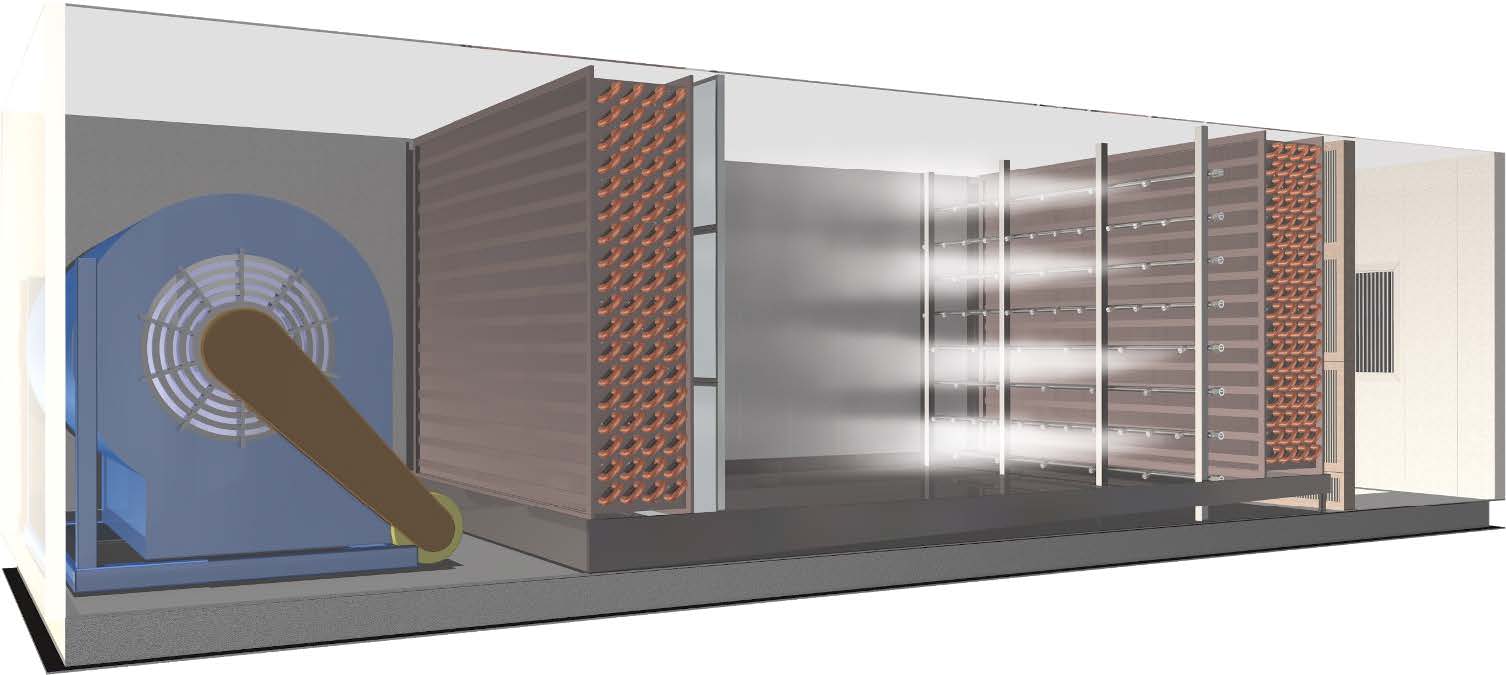
The mist eliminator removes water droplets larger than 5 microns. The filter pads can come off their stainless steel frames and can be washed or replaced easily.
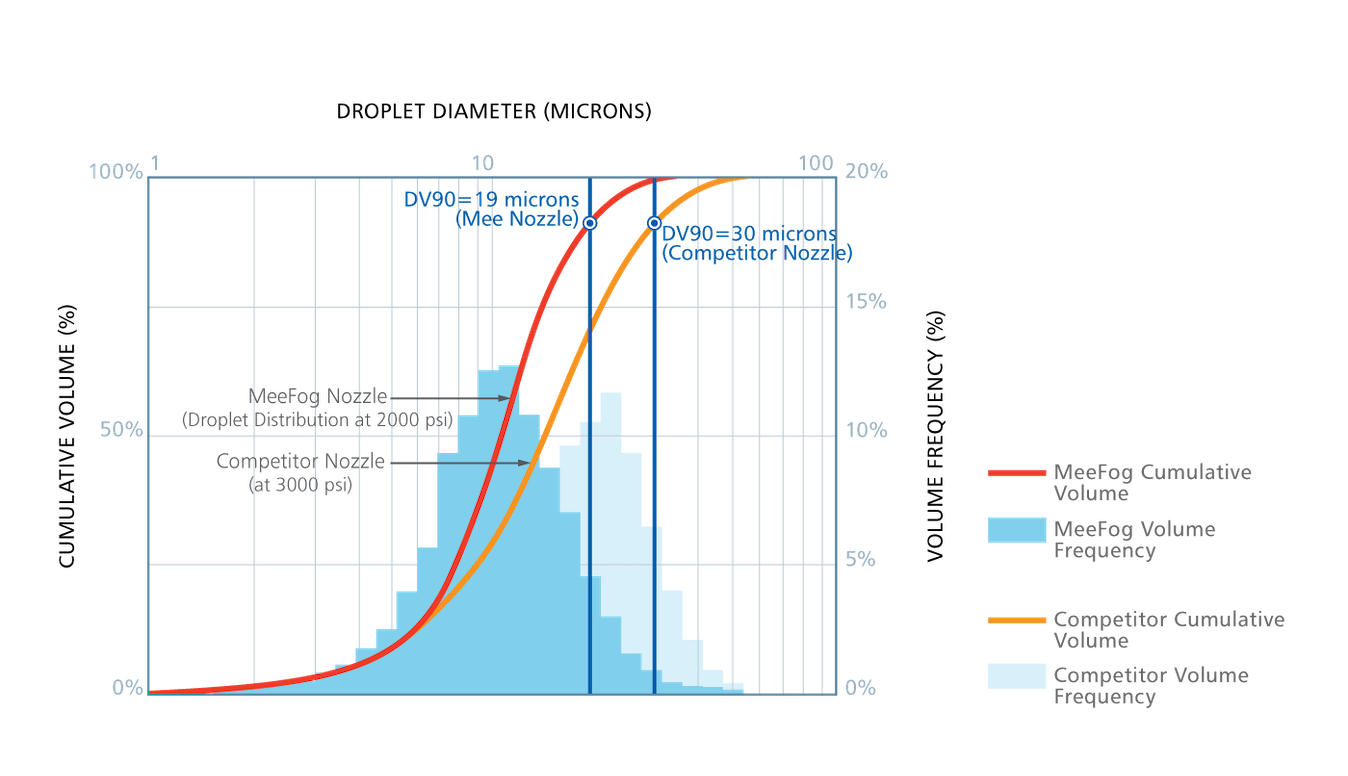
At an operating pressure of 2000 psi, the resulting average droplet size is roughly one tenth the diameter of a single strand of human hair.
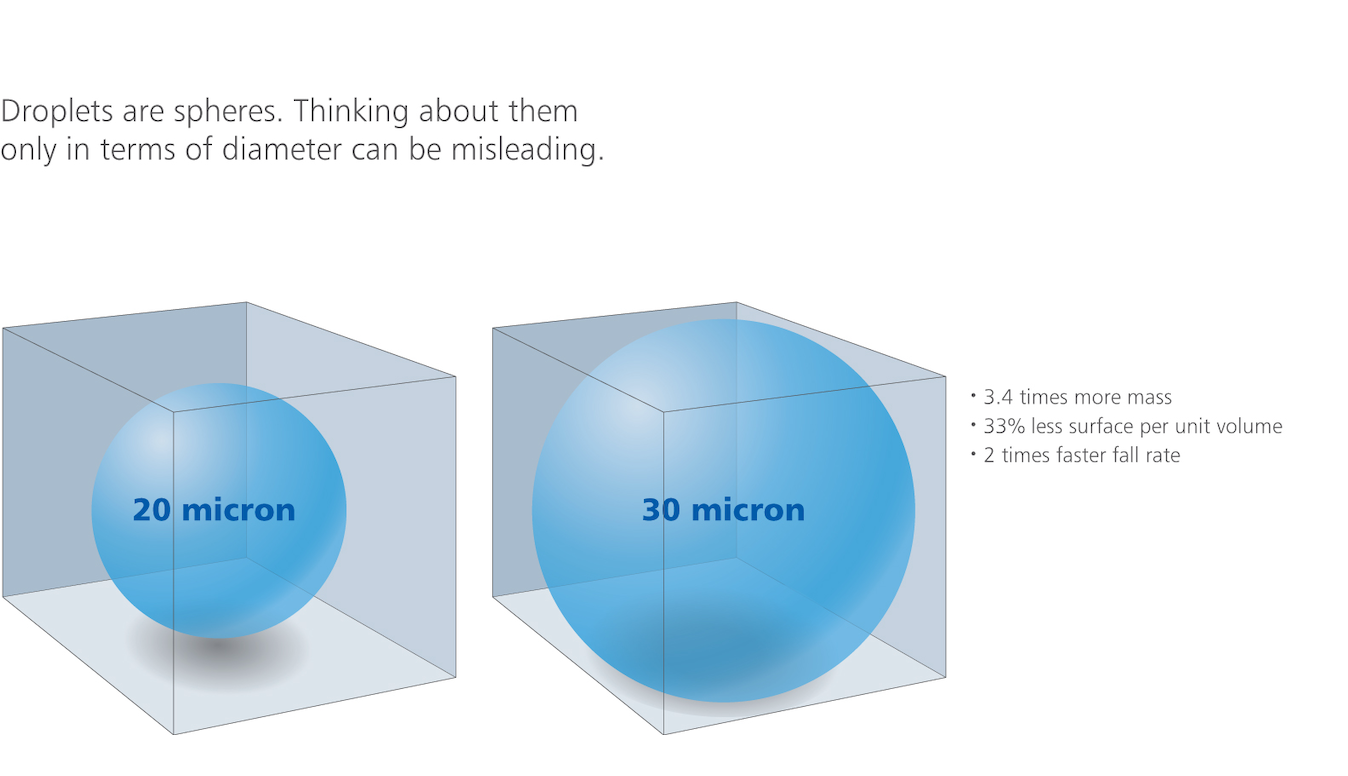
Small droplets have a larger surface to volume ratio compared to larger droplets. This allows them to evaporate much more rapidly than larger droplets.
We’ll gladly supply a detailed payback analysis report for your Hospital or Medical Center including:
Public spaces with sensitive collections, art, large crowds, or valuable assets that are highly vulnerable to environmental fluctuations, require precise humidity control. Without it, facilities experience wide humidity swings that can damage artwork, artifacts, furnishings, and even affect visitor comfort. Low humidity causes materials like paper, canvas, wood, and textiles to become brittle, crack, or fade. Controlled humidification—typically between 45–55% RH—is crucial for preserving cultural and historical assets over time. MeeFog systems help facilities meet strict standards like ASHRAE Class AA conditions, ensuring stable environments for both people and property.
MeeFog systems can consolidate dozens of distributed steam humidifiers into a single central system. For example, at the North Carolina Museum of Art, one MeeFog system replaced 92 steam humidifiers, eliminating the need for a boiler system dedicated to steam. This streamlined the HVAC design, simplified maintenance, and reduced energy costs dramatically.
Traditional steam humidifiers require natural gas or electricity to boil water, leading to high operating costs. In contrast, MeeFog systems use a high-pressure pump and fine water atomization, cutting energy use by up to 90%. At the NC Museum of Art, this translated into more than $30,000 in annual savings, plus reduced carbon emissions.
By replacing steam humidifiers with fog technology, MeeFog improves indoor air quality and ensures consistent humidity levels across large, open spaces. Visitors experience fewer comfort issues like dry air, while collections and building materials are better protected. The system also requires less maintenance, which reduces downtime and operational disruptions in public venues.
Yes. MeeFog humidification systems are designed to achieve precise environmental conditions required for sensitive spaces such as museums, libraries, and galleries. The NC Museum of Art successfully reached ASHRAE Class AA compliance with a MeeFog system, which allowed them to host national traveling art exhibits without risk of humidity-related damage.
Most facilities see payback within 1–3 years due to energy savings, reduced maintenance, and elimination of steam boilers. The NC Museum of Art’s installation not only delivered measurable savings but also simplified their HVAC system, proving that MeeFog provides both financial and operational ROI.

North Carolina Museum of Art Controlling Humidity with MeeFog
The North Carolina Museum of Art (NCMA) was experiencing variances in humidity of 30% in the winter and up to 60% in the summer. In order to host high profile traveling exhibitions, NCMA needed to tightly control the humidity in the galleries.
Hamstrung for years by budget issues that did not allow the North Carolina Museum of Art (NCMA) to spend the money it needed to maintain the mechanical system, in 2005, the museum experienced wide variances in humidity. This was hindering the ability to host many national traveling art exhibits.

After careful review of the facilities, it was determined that ASHRAE Class AA environmental conditions could be achieved through a museum HVAC system overhaul. An added benefit of the upgrade would be energy savings totaling 57% or more.
A single MeeFog humidification system was installed replacing 92 distributed steam humidifiers. The MeeFog system also eliminated the need for boiler system steam for humidification, and helped reduce the utility and operating budgets.