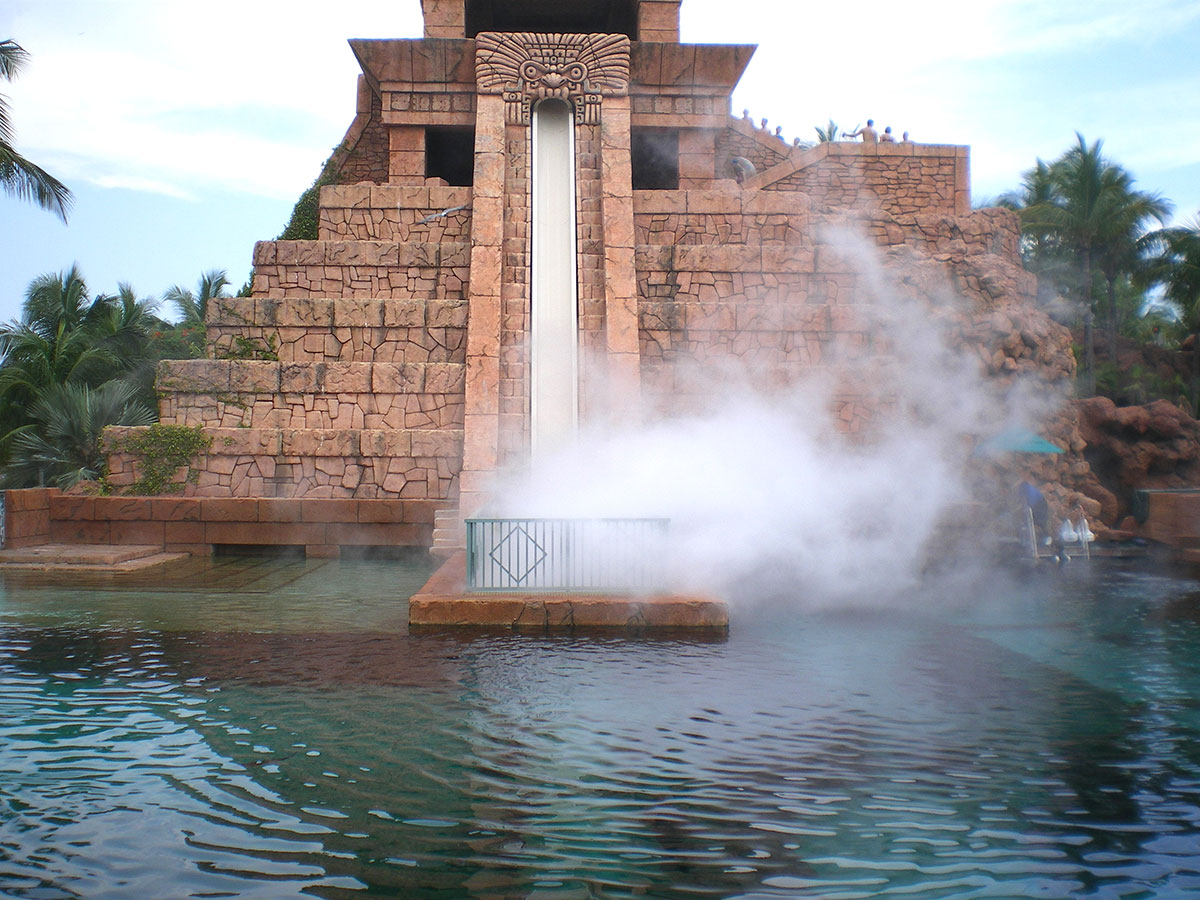
Creating Mystical Fog Effects for Theme Parks and Themed Attractions
Learn how attraction designers and operators can use high-pressure water fog as a controllable atmospheric design to...
Existing Customers Call 626-359-4550 Or Visit Customer Care


Greenhouse humidity control is vital for crop health, yield, and disease prevention. This post explains how high-pressure fogging systems create cooler, more stable growing conditions while using less energy than traditional cooling methods, helping growers improve plant performance, lower operating costs, and maintain a more efficient greenhouse environment year-round.
Running a greenhouse comes with a constant balancing act. Your crops need the right temperature and moisture levels to grow well, but traditional cooling methods can drive up operating costs fast. Fans, evaporative pads, and large HVAC systems consume significant energy, especially during hot seasons.
That’s why many growers are turning to smarter approaches for greenhouse humidity control. By managing humidity efficiently, you can support plant health, reduce crop stress, and lower your dependence on energy-heavy cooling equipment.
A well-designed greenhouse fogging system gives you better environmental control while using far less energy than many conventional cooling systems. Whether you grow vegetables, flowers, herbs, or nursery crops, maintaining stable humidity levels can improve crop consistency and reduce production problems.
Greenhouses are one of the best ways to boost your overall crop production. The US is estimated to have over 8,750 greenhouse vegetable farms. However, getting the most out of your greenhouse farm isn’t possible without proper humidity control.
Humidity directly affects how plants absorb water and nutrients. When it drops too low, plants lose moisture faster through transpiration. This can stress crops, slow growth, and increase water demand.
High humidity creates another set of problems. Excess moisture encourages fungal diseases, mildew, and poor air circulation. Pollination can also suffer in overly damp conditions.
The goal of effective greenhouse humidity control is to maintain balanced moisture levels throughout the growing environment. Most greenhouse crops perform best within a relative humidity of around 80%, depending on the plant type and growth stage.
Stable humidity helps you:
The challenge is achieving those conditions without dramatically increasing energy consumption.
Many greenhouses still rely heavily on exhaust fans, pad-and-fan systems, or refrigeration-based cooling. While these methods can reduce temperature, they often consume large amounts of electricity and water.
Pad cooling systems also lose effectiveness in humid climates. During peak summers, they may struggle to maintain consistent cooling across large growing areas.
In some cases, growers over-ventilate their greenhouse just to lower temperatures. This can remove valuable humidity from the air, forcing plants into stress conditions and increasing irrigation needs.
Energy prices continue to rise across many agricultural regions. As a result, growers are looking for cooling strategies that support both crop performance and long-term operational efficiency.
This is where modern greenhouse fogging systems become valuable.
A greenhouse fogging system designed by MeeFog uses high-pressure pumps and stainless steel nozzles to create ultra-fine water droplets. These droplets quickly evaporate into the air, increasing humidity while simultaneously reducing temperature through evaporative cooling.
Unlike traditional misting systems, MeeFog’s high-pressure fog systems create droplets small enough to evaporate before they settle on plants, benches, or floors. This helps you avoid excess moisture buildup while maintaining balanced humidity levels.
A quality fog cooling system greenhouse setup can:
High-pressure fog systems also operate with lower electrical demand compared to many conventional cooling systems.
In fact, considering the rate of 12 cents per kWh and 136.6 pounds per hour of moisture output, MeeFog’s agricultural humidification system consumes only $80 per year in energy costs for 1500 hours per year of operation. However, a compressed air system consumes around $1492 per year for the same.
Evaporative fog cooling works with the natural cooling process of water evaporation. Instead of forcing cold air through energy-intensive equipment, the greenhouse fogging system cools the greenhouse air more efficiently.
This approach reduces reliance on:
Because the cooling process is natural, operating costs remain much lower.
A properly designed greenhouse cooling system can lower temperatures by several degrees while consuming only a fraction of the power used by traditional air conditioning systems. This becomes especially valuable in large commercial greenhouses where cooling costs can significantly impact profitability.
Modern greenhouse humidification supports more than temperature control. It also creates a healthier growing environment for your plants.
Plants perform best when transpiration remains balanced. Proper humidity levels help plants absorb nutrients more efficiently and maintain stronger growth patterns. Takao Nursery, for example, managed to achieve up to two times faster turnover rate in propagation areas.
Dry greenhouse air increases moisture loss from leaves. Greenhouse fogging systems reduce this stress and help crops retain moisture naturally.
Consistent greenhouse humidity control helps in uniform crop development. You may see stronger foliage, healthier blooms, and more consistent fruit production.
Balanced humidity levels also help reduce the extreme moisture swings that contribute to fungal growth and plant diseases.
A high-pressure greenhouse fogging system distributes moisture evenly throughout the greenhouse. This helps eliminate hot and dry zones that can negatively affect crop performance.
Some growers combine fog systems with traditional ventilation equipment to create a hybrid cooling system. This approach combines:
Instead of relying on one cooling method alone, the system adjusts based on your current greenhouse conditions. For example, fogging handles humidity and initial cooling, while proper ventilation helps remove excess heat. This layered strategy gives you more flexibility while lowering overall energy use.
A hybrid adiabatic cooling system uses evaporative cooling alongside mechanical or ventilation-based cooling methods to maximize efficiency. In greenhouse applications, adiabatic cooling works by using water evaporation to cool incoming air before additional ventilation or airflow systems distribute it throughout the structure.
This setup helps you:
Instead of overworking refrigeration equipment, the evaporative process handles much of the cooling naturally. For many growers, this creates a practical middle ground between basic ventilation and expensive mechanical cooling.
Even the best equipment performs better when paired with smart greenhouse management practices.
Use reliable sensors throughout your greenhouse to track temperature and humidity in different growing zones. Conditions can vary significantly between sections. Automated monitoring helps you respond quickly to changes before they affect your crops.
Good airflow prevents stagnant air pockets where humidity can become too high. Horizontal airflow fans help distribute humidity evenly throughout the greenhouse.
Overwatering contributes unnecessary moisture to the environment. Irrigate based on crop demand instead of fixed schedules whenever possible.
A high-pressure greenhouse fogging system works best when integrated with environmental controls. Timed or sensor-based operation prevents excessive humidity buildup.
Shade curtains and reflective materials help reduce greenhouse heat loads during peak sunlight hours. Lower heat loads reduce cooling demand.
Clean nozzles, filters, and pumps regularly. Proper maintenance helps your greenhouse cooling system perform consistently and efficiently.
Managing humidity effectively is one of the most practical ways to improve greenhouse performance without relying heavily on energy-intensive cooling systems.
A modern greenhouse fogging system helps you maintain balanced humidity, support healthier crops, and reduce cooling costs at the same time. Coupled with ventilation and climate controls, fog-based systems provide efficient environmental management for a wide range of greenhouse operations.
Whether you operate a small growing facility or a large commercial greenhouse, investing in smarter greenhouse humidity control strategies can help you maintain stable growing conditions while keeping long-term operating costs under control.
MeeFog offers customized greenhouse humidification solutions. If you want to boost your plant production and reduce energy costs, you need a modern system like ours.
Contact us now to get a quote!
What is the ideal humidity level for most greenhouse crops?
Most greenhouse crops grow well around 80% relative humidity. The ideal range depends on the crop type, growth stage, and greenhouse temperature.
How does a MeeFog greenhouse fogging system reduce energy costs?
A MeeFog greenhouse fogging system cools air through evaporation. This process uses less electricity while effectively managing greenhouse temperatures.
Can greenhouse humidification help reduce plant stress?
Yes, proper greenhouse humidification helps plants maintain balanced transpiration rates, which reduces moisture stress and supports healthier growth.
Is a hybrid adiabatic cooling system suitable for large greenhouses?
Yes, a hybrid adiabatic cooling system works well in large commercial greenhouses because it combines evaporative cooling with ventilation or mechanical systems to improve efficiency and lower cooling costs.