Creating Mystical Fog Effects for Theme Parks and Themed Attractions
Learn how attraction designers and operators can use high-pressure water fog as a controllable atmospheric design to...
Existing Customers Call 626-359-4550 Or Visit Customer Care

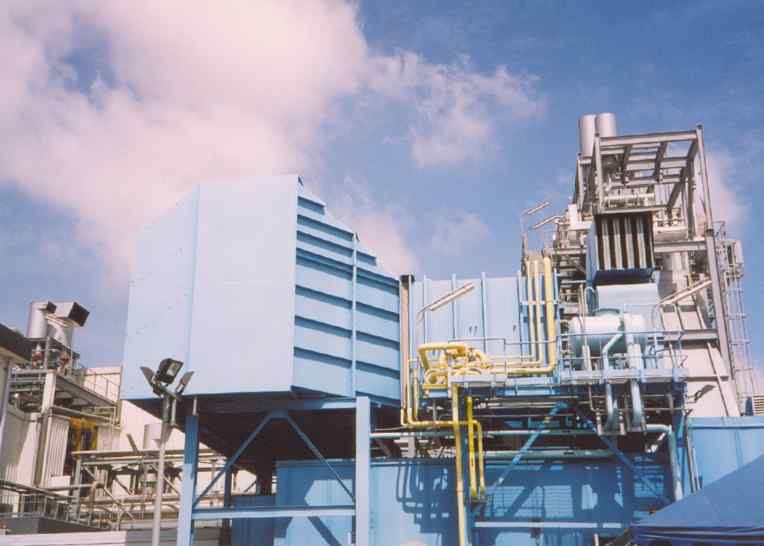
High ambient temperatures lower air density, causing gas turbines to lose significant power output just as grid demand peaks. Implementing an advanced inlet cooling system helps facilities regain 15–25% of that lost capacity, stabilizing dispatchable megawatts and improving overall heat rate.
Hot weather puts additional pressure on facilities that depend on gas turbines for power. As temperatures rise, inlet air density decreases. The compressor moves less air mass, turbine output falls, and heat rate typically worsens.This results in a significant drop in the efficiency and power output of the turbine. In utility operations, this can mean fewer dispatchable megawatts during peak demand, reduced reserve margin, lower revenue during high-price hours, or less dependable capacity from a simple-cycle, combined-cycle, mobile power, or industrial CHP asset.
To combat this challenge, a gas turbine inlet air cooling system can help recover output that would otherwise be lost to ambient heat making sure that the turbine continues to operate at optimal efficiency.
Gas turbine performance is baseline-rated against ideal ISO standard day conditions : 59°F (15°C), 60% relative humidity, and sea-level pressure. However, real-world operations rarely enjoy these perfect parameters.
In many U.S. regions, like Texas, California, and the Southeast, summer temperatures consistently push past 90°F. During extreme events, such as the prolonged, record-breaking March heatwave exceeding 100°F, the physical properties of the air become a critical liability for power generation.
As the ambient temperature rises, the power output decreases for a typical gas turbine. Warmer air means lower density. With less mass flow of air entering the turbine, it delivers less energy.
To offset the loss of efficiency caused by hot weather, power plant operators use cooling systems to lower the temperature of the air entering the turbine. One common approach is a high-pressure fogging system, which sprays a fine mist of water into the incoming air. This creates cooler, denser air, helping the turbine perform more effectively.
By reducing the impact of high outdoor temperatures, these cooling systems can recover much of the power output that would otherwise be lost—often as much as 15–25%—and help combined heat and power (CHP) plants continue operating efficiently.
| System Type | Mechanism | Key Benefits | Key Considerations |
|---|---|---|---|
| Chiller-Based | Uses mechanical refrigeration to cool inlet air. | Highly predictable; can cool air well below ambient temperatures. | High capital and operating costs; complex; large footprint; high auxiliary power usage. |
| Media-Based Evaporative | Warm air passes through wetted pads/honeycomb structures to evaporate water. | Straightforward design; cost-effective. | Cannot cool below the ambient wet-bulb temperature; limited effectiveness in humid climates. |
| High-Pressure Fogging | Atomizes pure water into fine mist via nozzles in the inlet path. | Low energy draw; minimal space/capital investment; restores output effectively in hot conditions. | Dependent on proper engineering for optimal performance and reliability. |
You can find different types of gas turbine inlet air cooling systems on the market. The right option depends on your facility’s size, local climate, and budget. Here are a few common choices and what sets them apart:
Mechanical chillers cool the inlet air before it enters the turbine. While they provide predictable results and can cool air well below ambient conditions, they carry high operating and capital costs. Additionally, chillers require greater auxiliary power consumption, system complexity, and a larger footprint than evaporative approaches.
In these systems, warm intake air passes through large wetted pads or honeycomb structures. As the water evaporates, the air temperature drops. This is a straightforward and cost-effective approach, but can usually only lower the temperature to a few degrees above the ambient wet-bulb temperature—which can be a limitation in highly humid climates.
In high-pressure fogging systems used for gas turbines, water is atomized into a fine mist through nozzles positioned in the inlet path. The fog droplets evaporate rapidly, cooling the air by several degrees. This method requires minimal space and capital investment compared to chillers, and the energy draw is significantly lower. A properly engineered high-pressure fogging system can restore lost output quickly, efficiently, and reliably, even on the year’s hottest days.
Gas turbine inlet fogging is an effective and highly cost-efficient method for cooling intake air. However, designing and maintaining a high-performing fogging system involves more than simply installing equipment.
Because water is atomized into a fine fog, impurities can cause nozzle clogging or mineral build-up on turbine blades. For gas turbine inlet fogging, operators typically rely on Reverse Osmosis (RO) to prevent nozzle fouling, compressor contamination, and blade deposits. To protect turbine components and preserve system efficiency, water treatment requirements should be based on the source-water chemistry, turbine OEM limits, and the plant’s operating strategy.
Fine, uniform droplets improve evaporation efficiency and cooling response, whereas larger droplets increase the chance of wetting, pooling, or compressor ingestion. MeeFog’s atomizing fog nozzles create billions of ultra-fine fog droplets – roughly 1/10th the diameter of a human hair. This allows the water to cool and evaporate more rapidly than alternative fogging methods.
Modern fogging systems integrate seamlessly with plant automation to match cooling output to current ambient conditions. This maximizes efficiency without wasting water or energy. By utilizing MeeFog’s gas turbine inlet fogging, facilities can boost power generation by up to 25%, even in humid climates.
At Sahara Power Station APR Energy used MeeFog’s gas turbine inlet fogging on four gas turbine units operating in extreme heat.The significantly mitigated the effects of high temperatures and improved turbine efficiency. MeeFog’s gas turbine inlet air cooling system was designed to cool inlet air by up to 20°C / 45°F, helping recover approximately 15% output under hot conditions while using half the water that the combustor would require.
During extreme weather conditions, where turbines typically face performance declines due to decreased air density, a fogging system by MeeFog provided much-needed cooling while saving water. This project highlights the effectiveness of gas turbine inlet fogging as a solution for power plants operating in hot climates.
By cooling the intake air with ultra-fine fog droplets, the gas turbine inlet fogging system increased air density, providing more mass air flow through the turbine. As a result, the plant not only improved its energy output but also saw reduced fuel and water consumption, making it a highly cost-effective solution.
Equipment Count: The project involved four FT8 MobilePac gas turbine units.
Temperature Mitigation: The MeeFog system was specifically engineered to cool the inlet air by up to 20°C (45°F) to combat the extreme Sahara heat, where temperatures frequently reached 45°C (113°F).
Performance Gains: The installation successfully recovered approximately 15% of the power output that would otherwise have been lost to high-ambient temperature conditions.
Water Efficiency: The system was chosen specifically because it could provide this performance boost while using roughly 50% less water than the standard water injection systems built into the turbines.
Hotter summers and increasing grid demand are ongoing challenges for power producers. Gas turbine inlet fogging is a highly practical solution to improve reliability and efficiency, with short installation times and no need for major construction.
By cooling the intake air, the system increases its density, providing more mass flow into the turbine. This directly translates to an improved heat rate and significant power recovery, keeping generation high even during extreme weather conditions. This results in better fuel efficiency and increased power output, even in hot weather conditions.
Compared to mechanical chillers, fogging systems are a highly cost-effective alternative, operating on a fraction of the energy and requiring minimal maintenance while maximizing turbine performance.
Because improved efficiency means less fuel is burned per megawatt generated, gas turbine inlet fogging systems directly supports facility decarbonization. So it lowers operational costs while simultaneously reducing the plant’s overall emissions profile.
Maintaining consistent power output during severe heat waves is critical, especially for facilities supporting essential industrial processes or grid stability. Stabilizing the air intake ensures dependable, year-round operation.
MeeFog’s gas turbine inlet fogging systems are designed for easy integration. They can be retrofitted to existing turbines without the need for extensive modifications. This allows operators to upgrade turbine performance with minimal downtime.
Every facility has a unique recoverable-MW profile. To determine the exact impact an upgraded intake cooling strategy will have on your plant, MeeFog evaluates your specific turbine model, ambient design conditions, inlet configuration, water quality, and operating goals.
Ready to understand your true power augmentation potential? We’d be happy to discuss your specific turbines, site conditions, and business objectives. Let’s schedule a brief, 20-minute technical discussion to determine how much performance you might be leaving on the table.
Request a quote today to get started.