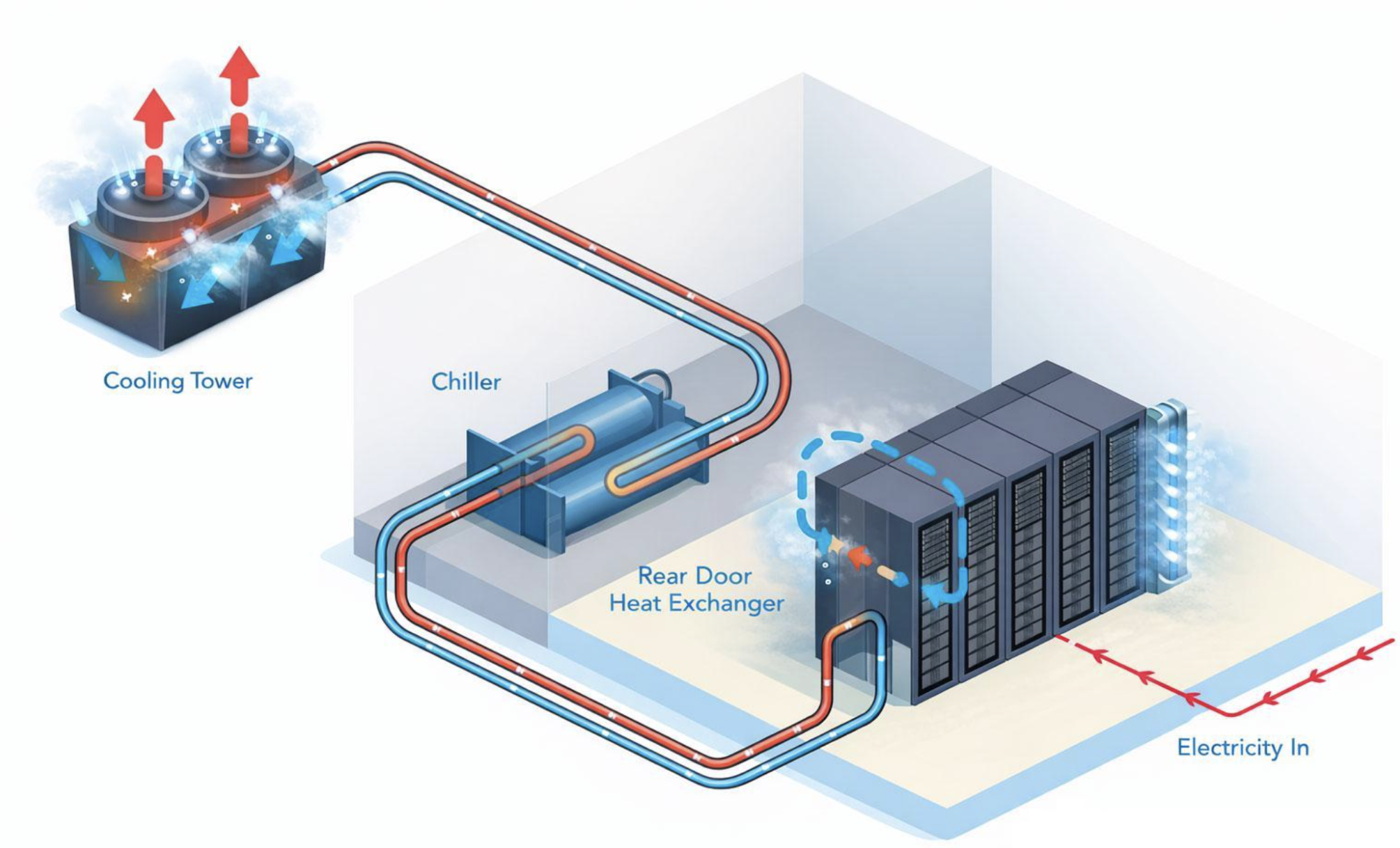
Evaporative Cooling for Data Centers: How Fog-Based Cooling Improves Efficiency and Reduces Energy Use
Cooling prevents overheating of servers, processors, and power systems in data centers so they can maintain high......
Existing Customers Call 626-359-4550 Or Visit Customer Care

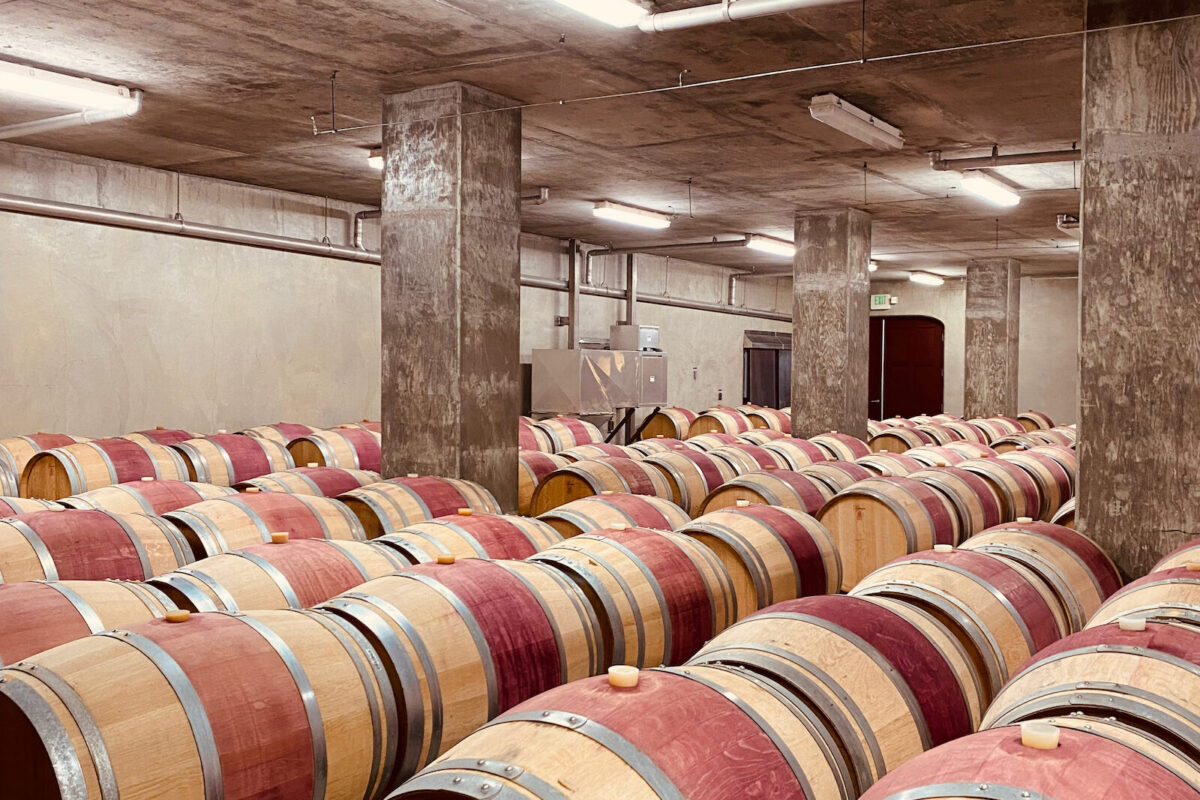
Barrel evaporation, often called the “angel’s share,” can be a significant source of product loss for winery facility managers. One widely used approach to reduce this evaporation is humidification. Despite its effectiveness, some managers hesitate to install humidification systems because they worry that higher humidity will lead directly to mold growth. While this is a valid consideration, it has also led to the promotion of so-called “dry fog” systems. The term “dry fog” can be misleading if not clearly defined.
To make an informed decision, it is important to distinguish between marketing claims and the actual physical factors involved. This includes understanding the conditions that cause mold growth in a cellar, what “dry fog” typically means in practice, and how the main commercial humidification methods perform under real operating conditions.
All humidification systems require water to increase humidity. Humidity refers to the amount of water vapor present in the air (water in its gaseous state).
The term “dry fog” is an industry/marketing label rather than a different type of moisture. In most cases, it describes a design goal: producing droplets fine enough that they evaporate into the air before they land on surfaces and settle as liquid.
While this shorthand is common, it can lead to misunderstandings. Switching to a product marketed as “dry fog” does not automatically eliminate mold risk. The real determinants are droplet size, distribution design, airflow, sanitation practices, system controls, and accurate monitoring.
It is possible to control barrel evaporation without creating conditions favorable to mold. Understanding the physics of fog and how different systems operate allows wine producers to increase humidity in a controlled, targeted way.
To understand why mold does grow, it helps to define a few basic terms:
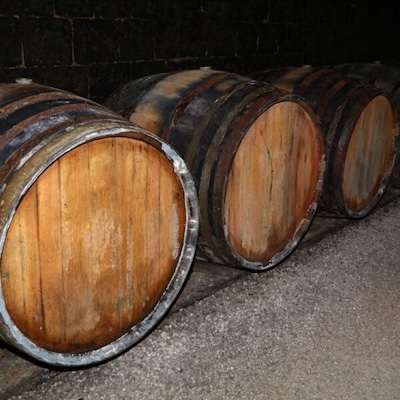
Mold spores are everywhere, but they cannot grow without sufficient moisture. While many wineries operate in a high-humidity range (often around 70–85%), high humidity alone does not guarantee mold. For example, if your cellar’s overall air is at 85% relative humidity, mold will not magically spawn in mid-air.
Mold becomes a hygiene issue only if surfaces stay damp enough to support fungal growth. The real risk rises not just from elevated humidity, but from localized saturation and condensation. However, if that 85% RH air encounters a cold spot, like an uninsulated exterior wall, a chilled pipe, or a cold concrete floor, the air temperature drops locally. If it drops below the dew point, condensation forms. (U.S. Environmental Protection Agency)
Beyond simple cold spots, persistent dampness is usually driven by poor air mixing or sanitation issues:
To prevent localized saturation, safe humidification depends on producing droplets small enough to evaporate rapidly and distributing them evenly throughout the space. A practical RH floor is commonly around 70%, but your ideal setpoint will depend on your specific wine style, cellar temperature, and operational goals—such as minimizing volume loss or controlling changes in ethanol and water composition.
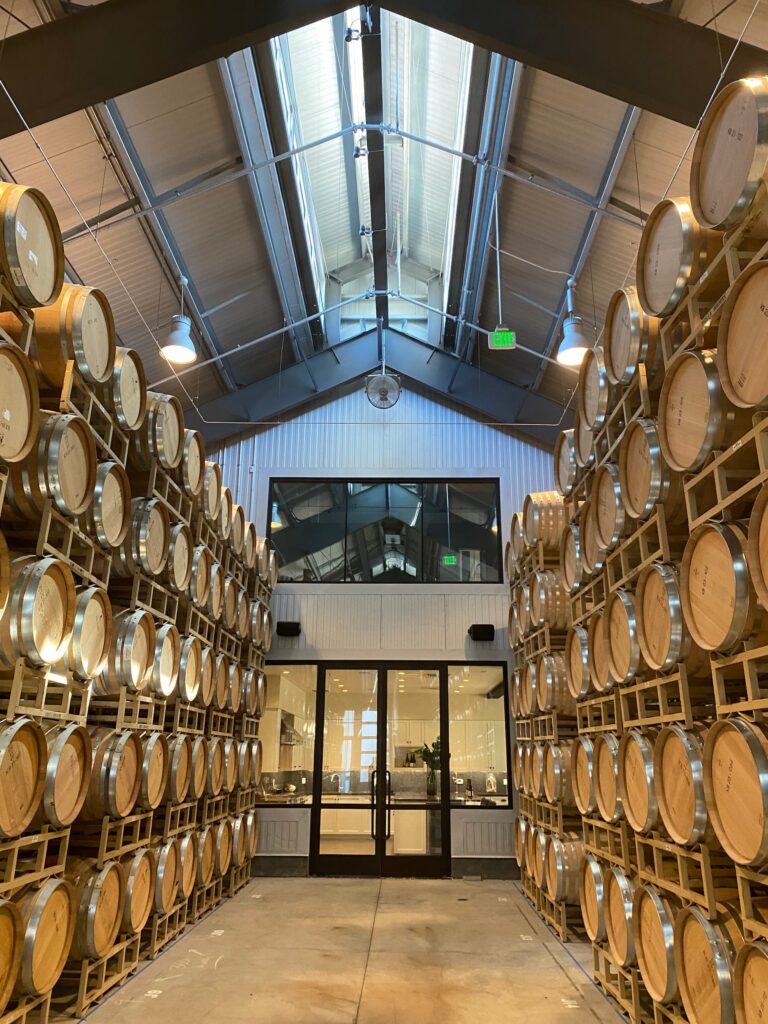
Proper humidification helps prevent evaporation, protect barrel integrity, and ensure consistent wine aging.
The three main approaches to wine cellar humidification are high-pressure, compressed air, and ultrasonic systems.
Compressed Air: Uses a combination of compressed air and water to shear water into fine droplets. While compressed air systems can produce fine droplets, they typically operate as point-source units. This means a large volume of moisture is injected into the room from one or two locations. If the cellar’s airflow isn’t perfectly calibrated to mix that heavy output, you risk localized saturation. Additionally, generating compressed air is notoriously energy-intensive, driving up utility costs. (U.S. Department of Energy)
Ultrasonic: Uses rapidly vibrating piezoelectric transducers to agitate water into a fine mist. These systems are effective at creating very small droplets. However, the primary vulnerability of ultrasonic systems is water safety. (U.S. Environmental Protection Agency) These units rely on a reservoir or pan of standing water where the transducers sit. In a cellar environment, standing water is a breeding ground for bacteria and pathogens, including Legionella. To remain safe, ultrasonic systems require strict, relentless hygiene protocols and maintenance. They also tend to be distributed through localized discharge points, which, again, raises the risk of uneven mixing and condensation.
High-Pressure Water Atomization: Specialized pumps pressurize treated supply water to 1,000 PSI through an array of tiny impaction pin nozzles mounted overhead. Because these systems distribute water through dozens of small nozzles spread across the ceiling rather than a single large output, they achieve exceptional mixing. The high pressure forces the water into a fine mist without the need for standing water reservoirs or energy-hogging air compressors
| FM-100 | FM-200 | FM-300 | FM-700 | FM-1500 | |
|---|---|---|---|---|---|
| Pump Unit Capacity GPM | 1 | 2 | 3 | 7 | 15 |
| Motor | 3/4 HP | 1.5 HP | 2 HP | 5 HP | 10 HP |
| Power | 120 V Single Phase | 120 V Single Phase | 230 V Single Phase | 230 V Three Phase | 460 V Three Phase |
| Number of Fog Nozzles | 30 | 60 | 90 | 210 | 450 |
| Cellar Area (sq. ft). | 750 to 3000 | 3000 to 6000 | 6000 to 9000 | 9000 to 21000 | 21000 to 45000 |
When selecting a humidification system for wine barrel storage, facility managers should focus on four key engineering metrics rather than rely on marketing terminology.
1. Droplet Size and Evaporation: A micron is one-millionth of a meter. For water droplets to evaporate before reaching the floor, they typically need to be between 10 and 15 microns.
2. Distribution and Mixing: You cannot effectively humidify a 10,000-square-foot barrel room from one corner.
3. Water Safety and Maintenance: A humidification system is only as safe as its water source.
4. Energy Efficiency: Energy consumption is usually measured by the horsepower required per gallon of water atomized.
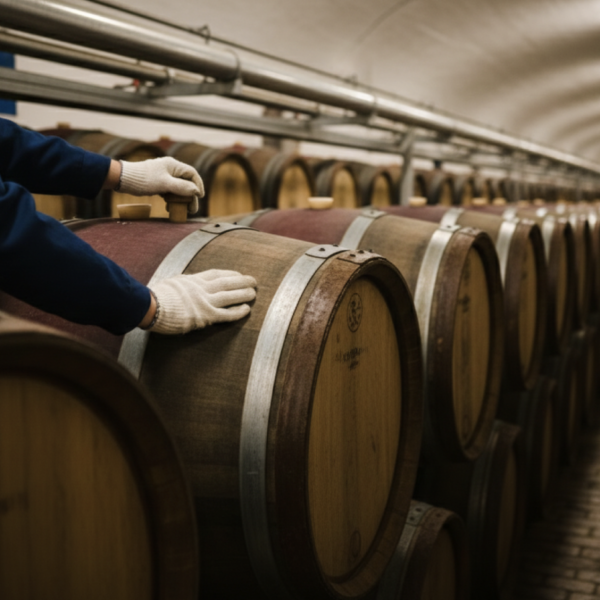
Reach out today to schedule a personalized site evaluation. For full system details, download our Wine Barrel Storage Brochure.
Or, Read More: Review the Jamieson Ranch Vineyards Case Study to see the technical layout and performance data of a mold-free, high-pressure humidification system in action.