What Is the Difference Between High-Pressure Fog Systems and Traditional Misters?
A high-pressure fogging system typically runs at pressures around 1,000 psi or higher. The system forces purified......
Existing Customers Call 626-359-4550 Or Visit Customer Care

TL: DR
Today, data centers use more energy than some small cities. Amid the AI boom, this energy consumption is likely grow more rapidly than most people imagine.
In 2024, data centers consumed 183 terawatt-hours (TWh) of electricity, which was more than 4% of the US’s total electricity consumption. It’s expected to grow by 133%, reaching 426 TWh by 2030.
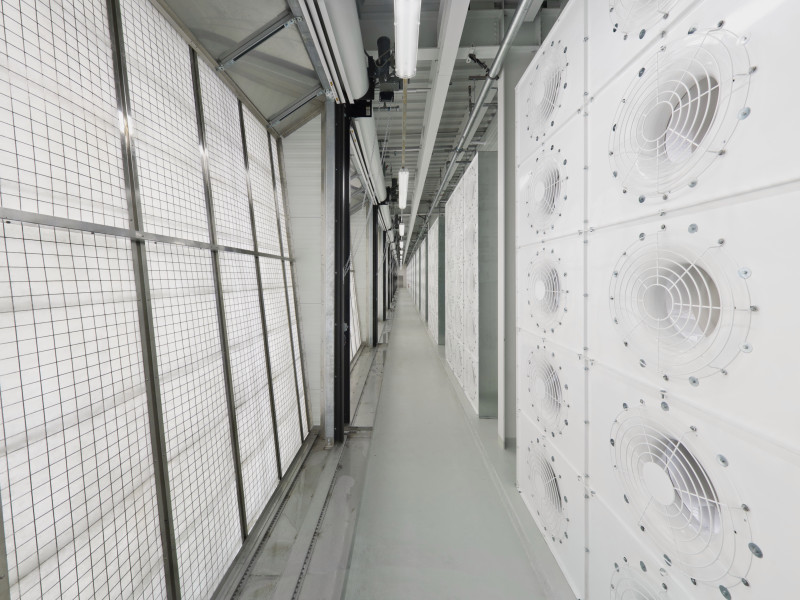
For data centers, reducing energy consumption is no longer optional. It’s a must for cost control and sustainability. And one of the most effective methods to boost data center cooling efficiency and lower Power Usage Effectiveness (PUE) is adiabatic cooling.
Let’s learn how data center adiabatic cooling works, why it significantly boosts energy efficiency, and what makes it the preferred choice for your setup.
PUE stands for Power Usage Effectiveness. It measures how efficiently a data center uses energy. A PUE of 1.0 means every watt of energy powers computing equipment directly, with no overhead.
The lower the PUE, the less energy waste you have. The average PUE for data centers remains around 1.8 based on various estimates. Those companies focusing on data center cooling efficiency typically achieve a PUE of 1.2 or less.
High PUE levels drive up utility bills and undercut sustainability targets. They also reflect how much energy goes into data center cooling rather than computing. Every percentage point of improvement directly benefits your budget and environmental standing.
Traditional data center cooling systems use chillers and compressors that require large amounts of electricity. The more power-intensive the cooling, the higher the PUE. Adiabatic cooling, however, uses evaporative cooling to draw heat out of the air, drastically reducing the need for mechanical refrigeration.
Adiabatic cooling relies on a simple thermodynamic principle: when water evaporates, it absorbs heat from the surrounding air, lowering the temperature without added mechanical energy. High-pressure humidification systems make use of this principle by introducing ultra-fine water droplets into the air. As these droplets evaporate, they pull heat away, cooling the space effectively.
In a data center, this process can lower the temperature of incoming ventilation air before it reaches servers, allowing chillers to operate less frequently or not at all under certain conditions. It improves data center cooling energy efficiency with measurable savings.
MeeFog systems, for instance, use high-pressure pumps to deliver ultra-fine droplets that evaporate quickly. The cooled air blends evenly throughout the space, maintaining stable temperatures and humidity levels across all equipment zones.
Precision and control are critical when using any cooling system for a data center. With adiabatic methods, you get the flexibility to target high-value cooling and avoid overworking your chiller plant.
High-pressure fog systems allow for fine droplet sizes, meaning water evaporates before reaching hardware, keeping risk low. Advanced automation lets you react quickly to changing outside air or server loads, maximizing data center cooling efficiency.
The main benefit of adiabatic cooling for a data center is reduced energy demand. Because fog-based systems use water’s latent heat of evaporation rather than compressor energy, power draw drops substantially.
On average, a high-pressure MeeFog system can operate at 1% of the energy required by traditional steam humidification, leading to 50–80% lower utility bills. By reducing reliance on mechanical equipment, you can achieve a direct improvement in data center energy efficiency and a noticeable reduction in PUE. This not only lowers your operational costs but also extends the lifespan of mechanical cooling units, further reducing maintenance expenses.
An adiabatic system can pre-cool the air entering a facility’s cooling coils. This lowers the coil temperature before mechanical chillers engage, reducing the compressor load. Over time, this partial cooling approach minimizes wear and extends component life.
OneNeck is quite happy with the boost in data center cooling and the minimal maintenance they need. As Eric Patterson, Facilities Manager, puts it, “We don’t have any calcification issues, no elements to burn out, no floats to get fouled or bubble indicators. We just have to change the oil, check the belts, change the filters, and we are done.”
Furthermore, if your facility uses a hybrid data center cooling system that integrates both water- and air-based cooling, you can operate more flexibly, adapting to seasonal or diurnal temperature changes with minimal energy loss.
In strictly climate-controlled data centers, managing humidity is as important as managing temperature. Too little moisture can cause static discharge that damages sensitive electronics. Too much leads to condensation and corrosion.
Fog-based systems maintain stable humidity while cooling, helping you protect equipment integrity. MeeFog technology produces precise droplet sizes that evaporate instantly, avoiding any risk of wet surfaces or corrosion near racks or sensors. The controlled humidity also helps minimize airborne dust, keeping filters cleaner and airflow steady.
The NCAR Wyoming Supercomputing Center uses a MeeFog humidification system to protect its tens of millions of dollars of equipment from static discharge. The system can provide very precise humidification control, around +/- 1% or better.
Adiabatic cooling uses very little water relative to its cooling output, particularly when integrated with a closed-loop system or advanced water filtration. Because the system relies on evaporation rather than refrigerants, it avoids the environmental risks associated with traditional gases.
By combining energy savings with responsible water use, data centers can make meaningful progress toward sustainability goals. Efficient systems such as those from MeeFog reduce both electrical consumption and greenhouse gas emissions, aligning operations with modern environmental standards.
From hyper-scale facilities to edge computing environments, data center cooling solutions using adiabatic principles can be scaled efficiently. Modular designs can handle varying thermal loads, making it easier to expand capacity without overhauling existing infrastructure.
Through integrated staging and zone-specific control, high-pressure fog systems allow you to adjust humidity and cooling levels independently across zones. This dynamic control eliminates overcooling and balances airflow precisely where it is needed.
Data center cooling systems using an adiabatic process are highly cost-effective and easy to maintain. These systems consist of different components, each one playing a key role in delivering reliable, efficient cooling customized to your facility’s needs.
MeeFog has specialized in high-pressure fog systems for over five decades. Their technology is engineered for reliability and performance under demanding conditions.
When integrated into your existing infrastructure, a MeeFog data center cooling solution provides:
The result is a better PUE, fewer mechanical interventions, and a more resilient data center climate environment.
In the drive to improve data center cooling efficiency, adiabatic technology stands out for its simplicity, sustainability, and performance. It replaces mechanical cooling with natural processes that use less power while protecting system reliability.
By integrating a MeeFog system, you get precise control over environmental conditions, reduce energy costs, and extend the life of your infrastructure. As data demand grows in an increasingly AI-driven world, every watt counts. Adiabatic cooling turns water and physics into your most effective tools for reducing PUE and driving efficiency.
MeeFog provides customized cooling solutions for data centers across the globe. If you need a better cooling system for your data center, don’t hesitate to reach out to our experts.
Request a quote now to see how we can help you.