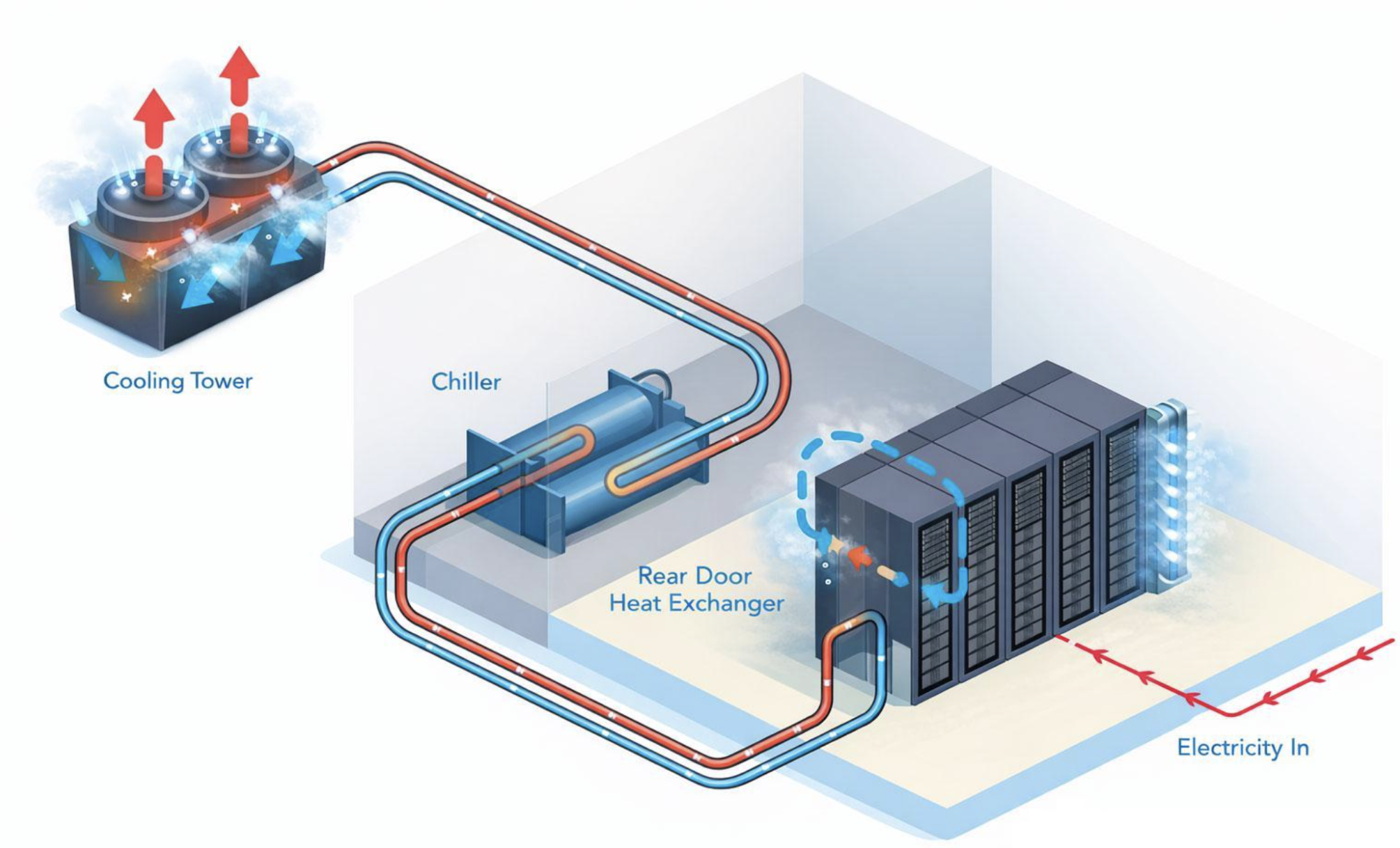
Evaporative Cooling for Data Centers: How Fog-Based Cooling Improves Efficiency and Reduces Energy Use
Cooling prevents overheating of servers, processors, and power systems in data centers so they can maintain high......
Existing Customers Call 626-359-4550 Or Visit Customer Care

TL;DR
The MeeFog high-pressure fogging system keeps printing facilities at an ideal 45% relative humidity, preventing paper distortion and ink issues that lead to rejects. Using ultra-fine mist, it stabilizes moisture evenly across production areas without wetting paper or equipment, delivering reliable industrial humidification for consistent results.
At Dixie Consumer Products, MeeFog’s industrial fogging system improved print quality and reduced energy consumption through precise zone control and efficient humidity regulation. Compared to traditional humidifiers, it uses up to 180 times less energy, helping printers maintain performance, cut costs, and achieve better consistency year-round.
Maintaining the right humidity level is a must for top-quality printing. In many printing facilities, both temperature and moisture levels directly affect paper, ink adhesion, and color consistency.
A high-pressure fogging system provides precise control by dispersing ultra-fine water droplets that quickly evaporate, stabilizing humidity without wetting paper or equipment. This process prevents warping, curling, and ink irregularities that lead to costly rejects.
For operations printing on corrugated, coated, or specialty papers, the balance between dryness and moisture makes all the difference. By using an industrial fog system like MeeFog’s, your facility can maintain stable conditions, reduce waste, and increase productivity year-round.
Industrial printing environments face ongoing challenges in maintaining the ideal 45% relative humidity, as humidity levels in North America and elsewhere can change rapidly, daily, seasonally, or annually. That directly impacts industrial humidification systems and overall printing performance.
When humidity levels change, paper products tend to:
The external climate is only one factor. Operational conditions also affect humidity. When bay doors remain open, sudden drops or spikes in relative humidity can occur. Stable industrial humidification is critical for maintaining consistent print quality, reducing paper waste, and improving overall productivity.
Industrial printing, corrugated paper, and other hybrid print environments can benefit from high-pressure fogging systems to accurately control humidity throughout the workspace. This precision is achieved through a customized nozzle distribution designed for the layout of the facility and the specific requirements of printing equipment. The right selection and spacing of nozzles are crucial for consistent performance.
Your facility can maintain an exact humidity set point ideal for each production line, regardless of external or operational changes. The MeeFog high-pressure fogging system integrates a network of FogStat humidity sensors to deliver the precise humidity needed at all times.
As a facility manager, you can decide the desired set point, while signals from the sensors adjust water flow through the high-pressure fogging pump to maintain that humidity. The system seamlessly connects to building management systems for centralized control.
A key factor in keeping a constant level of humidity in a printing environment is proper distribution of the industrial humidification system throughout the facility. Compressed air, electric steam, and ultrasonic systems typically provide humidification control in certain parts of the room. However, other areas become too dry or too humid. MeeFog’s high-pressure fogging system addresses this problem by evenly spacing nozzles throughout the room to deliver uniform humidity.
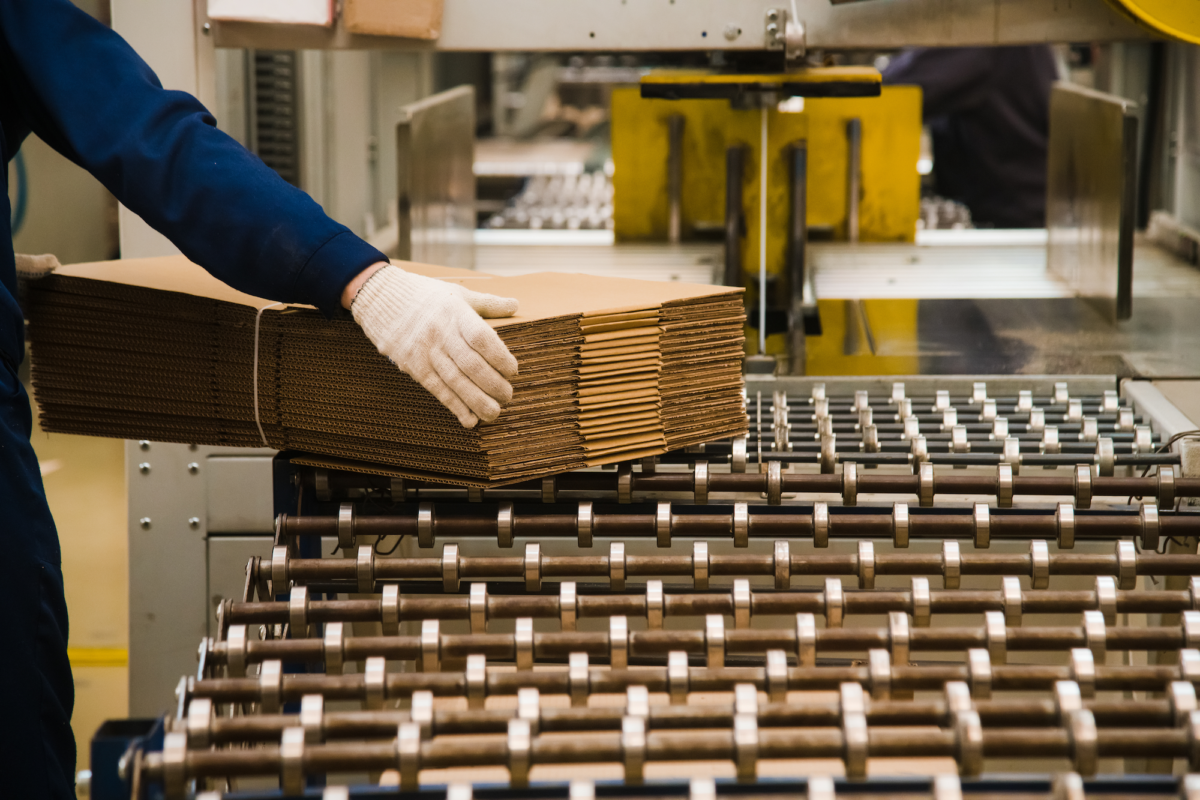
Dixie Consumer Products LLC, a Georgia-Pacific company, operates a 6,300-square-foot printing facility that requires precise humidity control. The target was a constant 45% relative humidity to prevent paper distortion and meet production goals by minimizing rejects. The facility faced major seasonal variations, including extremely dry conditions in winter and high humidity in summer. They needed a stable internal environment regardless of outdoor fluctuations.
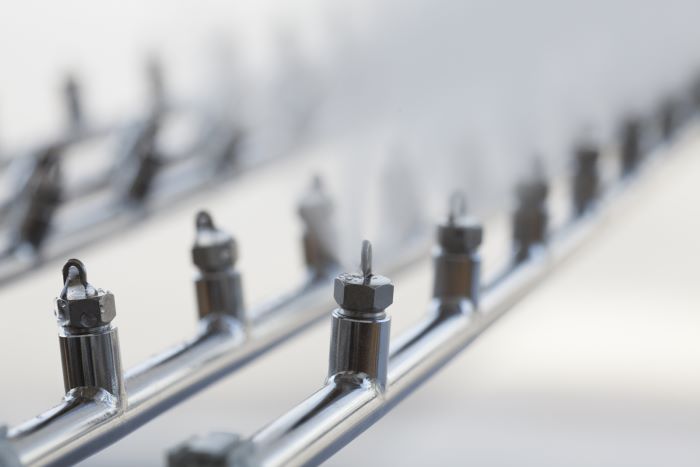
MeeFog’s high-pressure fogging system came with ceiling-mounted nozzle lines, which were strategically installed for full coverage across four plant zones. The result was accurate, evenly distributed industrial humidification, improved print quality, and better press consistency. Tight humidity regulation proved most valuable during dry winter conditions, helping maintain board moisture and preventing warping.
The industrial fogging system consisted of a MeeFog 2500 MFP rack with a pump that outputs up to 5 GPM, supplying high-pressure fog to four zones at the facility through independent valves.
An onboard Variable Frequency Drive (VFD) saves energy by adjusting power based on which zones are running, which lowers operating costs. Each of the four production zones in the plant can operate independently, so humidity can be controlled precisely for specific processes.
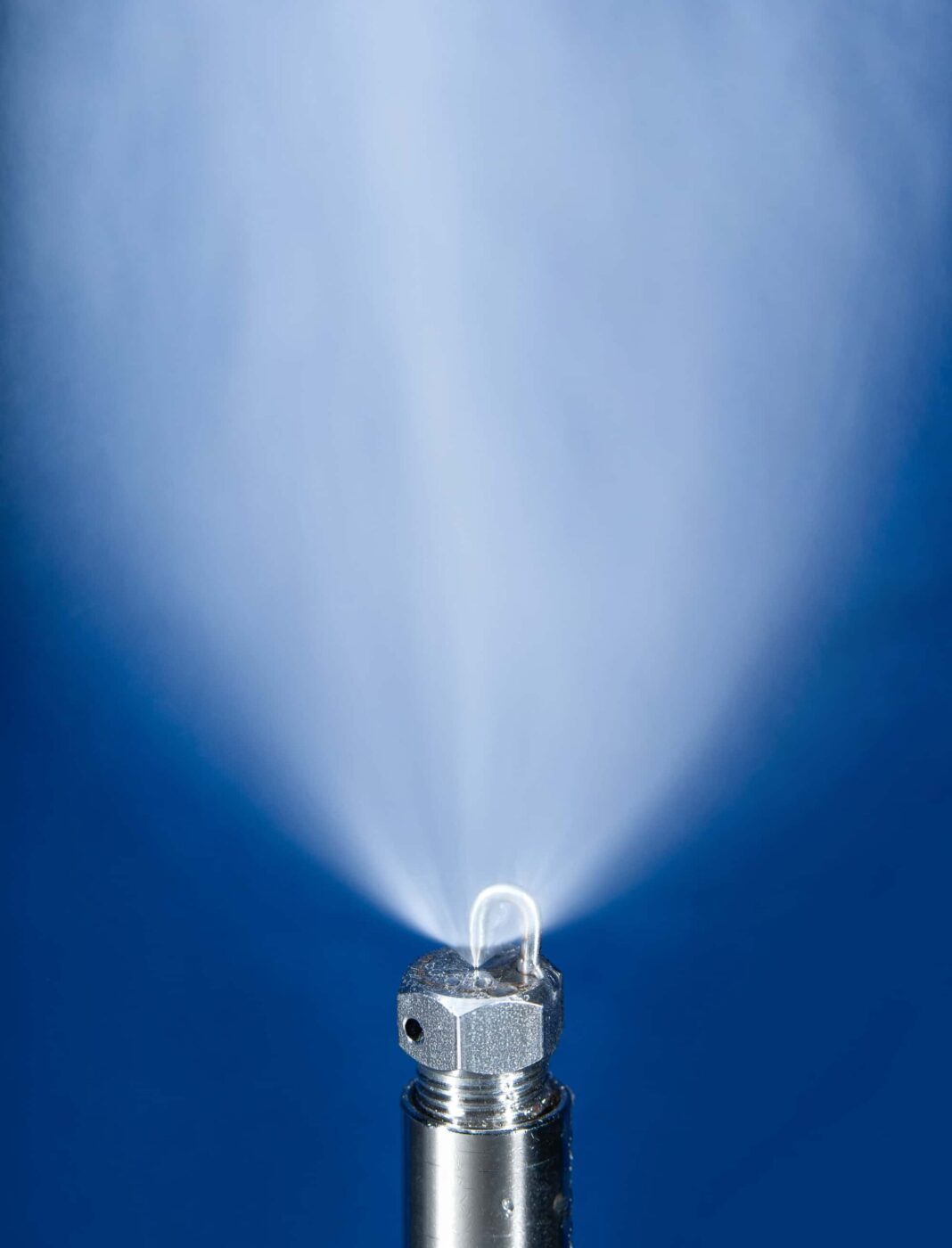
The MeeFog industrial fogging system delivers filtered water at 1000 psi via a ceiling-mounted piping network. Fog nozzles convert this water into a fine mist for accurate humidity control.
Each MeeFog impaction-pin nozzle is made from high-grade stainless steel. The standard nozzle features a 0.006-inch (150-micrometer) diameter orifice, which produces billions of ultra-fine droplets per second.
Droplet size averages are around 20 micrometers, or one-tenth the diameter of a single strand of human hair. This industrial fogging system uses one horsepower of energy for every 500 pounds of water dispersed. This is roughly 8% of the energy usage of ultrasonic systems and about 5% of the energy required by compressed air systems.
Printing quality improved, and the number of rejects was substantially reduced. The biggest benefit, though, was the cost savings. A MeeFog industrial fogging system designed for 1,000 lbs./hr output, running 3,500 hours/year, costs around $700 per year to operate. In comparison, compressed air atomizers cost $14,350, and electric steam humidifiers cost $128,800 for the same output. That’s up to 180 times less energy used for the same humidity.
Maintaining the right humidity levels makes reliable printing possible. The MeeFog high-pressure fogging system creates the optimal climate for consistent ink adhesion, smooth print operation, and reduced equipment wear. With precise control and energy reduction compared to conventional humidifiers, it provides both performance and sustainability. Investing in a MeeFog system means better productivity and measurable annual savings.
Ready to improve your print consistency and reduce energy costs? Contact MeeFog today to design an industrial humidification system that fits your printing facility’s exact needs.
Request a quote now to get started.