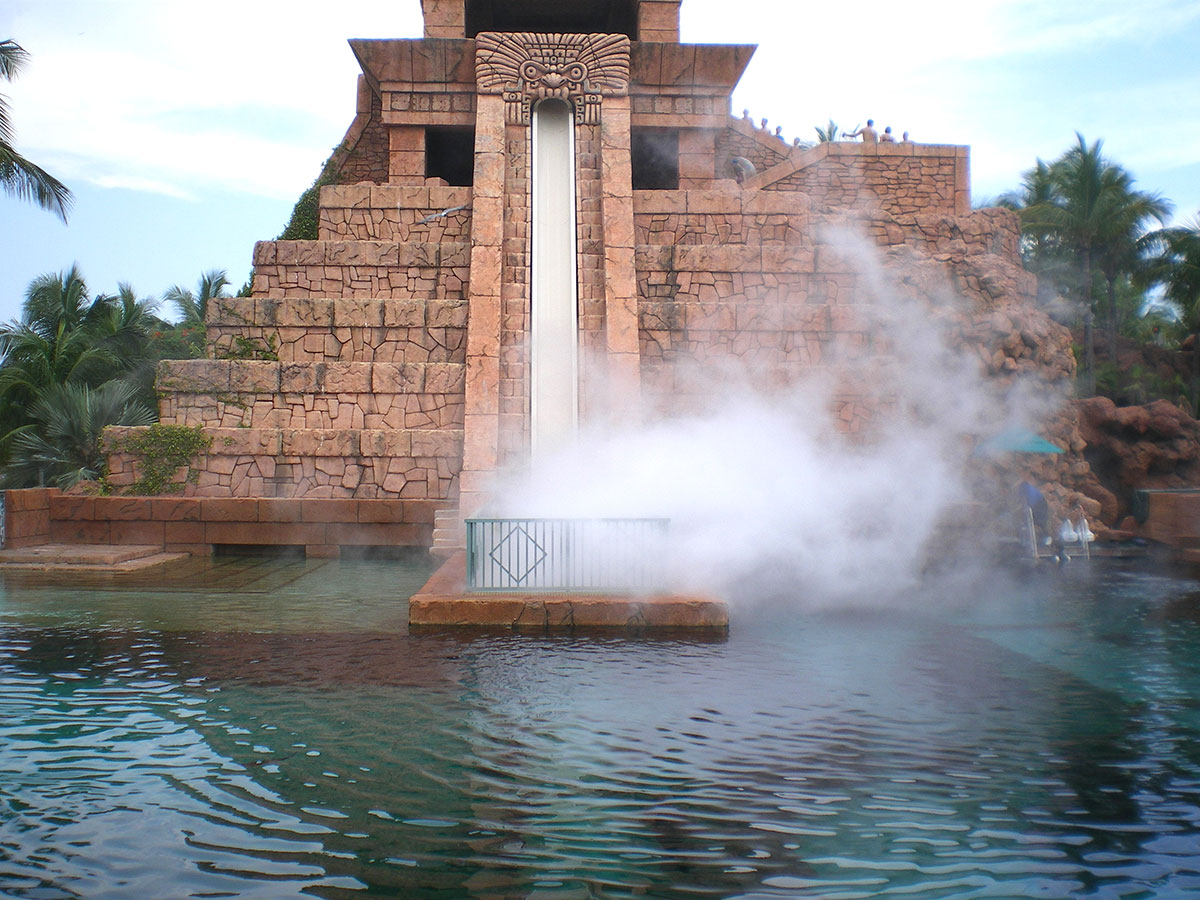
Creating Mystical Fog Effects for Theme Parks and Themed Attractions
Learn how attraction designers and operators can use high-pressure water fog as a controllable atmospheric design to...
Existing Customers Call 626-359-4550 Or Visit Customer Care

Hospitals are, by design, places where sick people gather in close quarters, which makes airborne infection transmission a persistent operational challenge.
According to the CDC’s 2023 point-prevalence survey, an estimated 518,000 healthcare-associated infections (HAIs) occurred in the country’s acute care hospitals that year, with roughly 1 in 38 patients affected on any given day. Behind that number is a factor facilities teams often overlook: the moisture content of the air itself.
Hospital humidification is not a comfort feature. It is a measurable, evidence-backed part of infection prevention. It works alongside hand hygiene, sterilization, and isolation protocols rather than replacing any of them.
Airborne pathogens do not behave the same way in every environment. When relative humidity (RH) drops below 40%, respiratory droplets stay suspended in the air longer, giving viruses and bacteria more opportunity to travel between patients, staff, and visitors.
Dry air also dries out the mucous membranes that normally trap and filter incoming pathogens, making people more susceptible to infection in the first place. The opposite extreme creates its own risks. Push RH too high, and hospitals invite mold growth inside air ducts, condensation on equipment, and spore contamination in the airstream.
That narrow window, roughly 40% to 60% RH, is where droplets can’t remain airborne for very long and cannot be inhaled by other patients. Maintaining that bandwidth consistently, across every wing and every season, is the real challenge for healthcare facilities.
Humidity control for healthcare facilities carries much higher stakes than a typical office building or a school. Hospitals care for immunocompromised patients, newborns in neonatal units, and post-surgical patients recovering from procedures who have a lower tolerance for airborne contaminants.
That’s why a humidifier used in a hospital must hit precise RH targets, hold them steady, and do so without introducing new contamination risks of its own. That’s something older humidification methods often struggled with.
Traditional steam humidifiers, for example, can introduce chemical additives into the airstream through the boiler feedwater, which is why ASHRAE requires those additives to meet FDA standards when steam is used in a health care facility. Ultrasonic units can produce mineral dust (“white dust”) if water purity is not tightly controlled. These are solvable problems, but they add layers of maintenance and risk that hospitals would rather avoid.
Using high-pressure humidifiers in hospitals, especially those developed by MeeFog, can help you address these gaps directly. In a MeeFog high-pressure fogging system, water is treated through a reverse osmosis process, run through a submicron filter, and passed under a UV-C sterilization light before it ever reaches the nozzles.
Located downstream, a mist eliminator catches any droplets larger than 5 microns before they can travel further into the duct system. The filter pads inside the eliminator come off their stainless steel frames easily, so they can be washed or replaced without pulling the whole unit apart.
On the control side, a valve panel reads a signal from the building management system (BMS) and adjusts how much fog is injected into the airstream accordingly. This helps control humidity in a healthcare facility within plus or minus 1% RH of the target.
That level of precision is what lets an advanced healthcare humidification system stay inside the 40-60% RH range consistently, rather than drifting with occupancy or outdoor conditions and needing constant manual correction.
Not every humidification product is built for the demands of a healthcare facility. A commercial humidifier for hospitals needs to handle continuous operation across large air handling units. We’re talking about covering tens of thousands of cubic feet per minute, while meeting strict water-purity and infection-control standards.
At Grand River Hospital in Ontario, for example, a fogging system was installed across nine air handlers with a combined airflow of roughly 157,000 CFM. It replaced the old steam system that had been introducing chemical additives into the air. The switch improved air quality while also cutting their hospital humidification energy use.
This energy difference is often significant industry-wide. High-pressure fogging is a low-energy process by design, since it relies on mechanical pressure rather than heat to convert water into humidity, unlike steam systems, which have to boil water continuously to produce vapor.
It translates into lower operating costs over time, particularly in buildings that already have compressed air or basic plumbing infrastructure in place. That generally makes high-pressure fogging systems a go-to for humidity control in healthcare facilities.
Like other systems, you can’t use a new humidifier in a hospital based on marketing claims alone, and you don’t have to. Addendum M to ANSI/ASHRAE/ASHE Standard 170-2013, approved by ASHRAE and ANSI in late 2016, formally added adiabatic high-pressure water atomizing humidifiers as an approved alternative to steam for health care facility air-handling systems.
The addendum spells out specific requirements, including reverse osmosis treatment with UV-C sterilization, submicron filtration, continuous water circulation, dedicated ports for water-quality testing, and moisture eliminators sized to prevent accumulation in ductwork.
If you want to add a new humidifier in your hospital, you should weigh a few factors beyond the price tag. Here’s what you must consider:
Infection prevention in hospitals rarely comes down to a single intervention. Hand hygiene, surface disinfection, ventilation design, and staff training all play a role. But indoor humidity is underneath all of it, determining how long airborne pathogens survive and how far they travel before settling. A well-specified hospital humidification system does not replace any of those protocols. It removes one more variable that can undermine them.
For hospitals reviewing HVAC upgrades, replacing aging steam infrastructure, or simply trying to bring humidity levels into that 40-60% target range, high-pressure fogging offers a clinically sound and financially sensible alternative.
MeeFog has spent over five decades designing and installing high-pressure fogging systems for hospitals, labs, and medical centers. Every system is built around the same core standards outlined above.
Ready to see what a MeeFog system could do for your facility? Request a quote and get a personalized recommendation for your hospital’s air handling setup.